If you’re in the early stages of planning a wedding, one of the first decisions you’ll hit is whether to have a civil ceremony or a religious ceremony. Most couples have a vague sense that one involves a church and the other doesn’t, but beyond that it gets foggy. What can you actually say in each one? Can you have your own vows? Can you have hymns at a civil ceremony? What about readings? What’s the cost difference? And does it change where you can get married?
The difference between a civil ceremony and a religious ceremony isn’t just about whether you’re religious. It affects your venue options, what’s included in the ceremony, the length, the cost, and how much you can personalise. This guide breaks it down plainly so you can figure out which one actually suits what you’re trying to do.
What Is a Civil Ceremony?
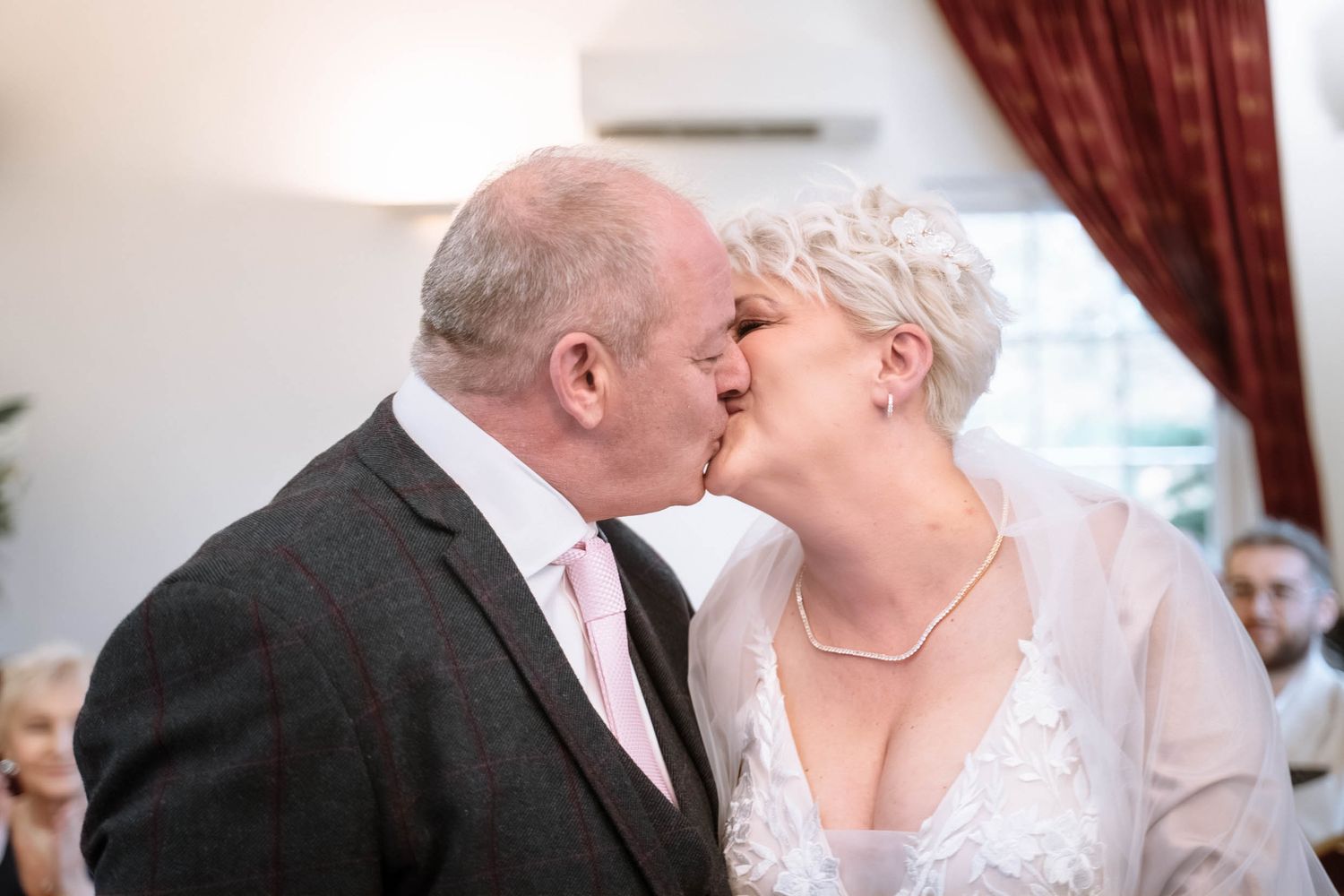
A civil ceremony is a non-religious, legally binding marriage ceremony conducted by a registrar. It can take place at a register office or any venue that’s been approved by the local council for civil marriages. That includes hotels, country houses, barns, restaurants, historic buildings — there are over 8,000 licensed venues across England and Wales.
The key rule with a civil ceremony is that it cannot include anything religious. No hymns, no prayers, no readings from the Bible, the Torah, the Quran, or any other religious text. No blessings. The music, readings, and vows must all be secular. This is a legal requirement, not a preference — the registrar will check your ceremony content in advance and will flag anything that crosses the line.
What you can include: your own personal vows (as long as they’re not religious), non-religious readings, poems, songs, live music, and whatever personalisation you want within those boundaries. You’ll also need to recite two legally required declarations — the declaratory words confirming you’re legally free to marry, and the contracting words where you take each other as husband and wife (or spouse, or partner). These are non-negotiable.
Civil ceremonies are open to both opposite-sex and same-sex couples. They typically last about 20 to 30 minutes, though bespoke ceremonies at some venues can run longer if you add readings and music. Two witnesses are required.
After the ceremony, you and your partner sign the marriage schedule along with your witnesses and the registrar. This is sent to your local register office and added to the official register. You can then order your marriage certificate.
What Is a Religious Ceremony?
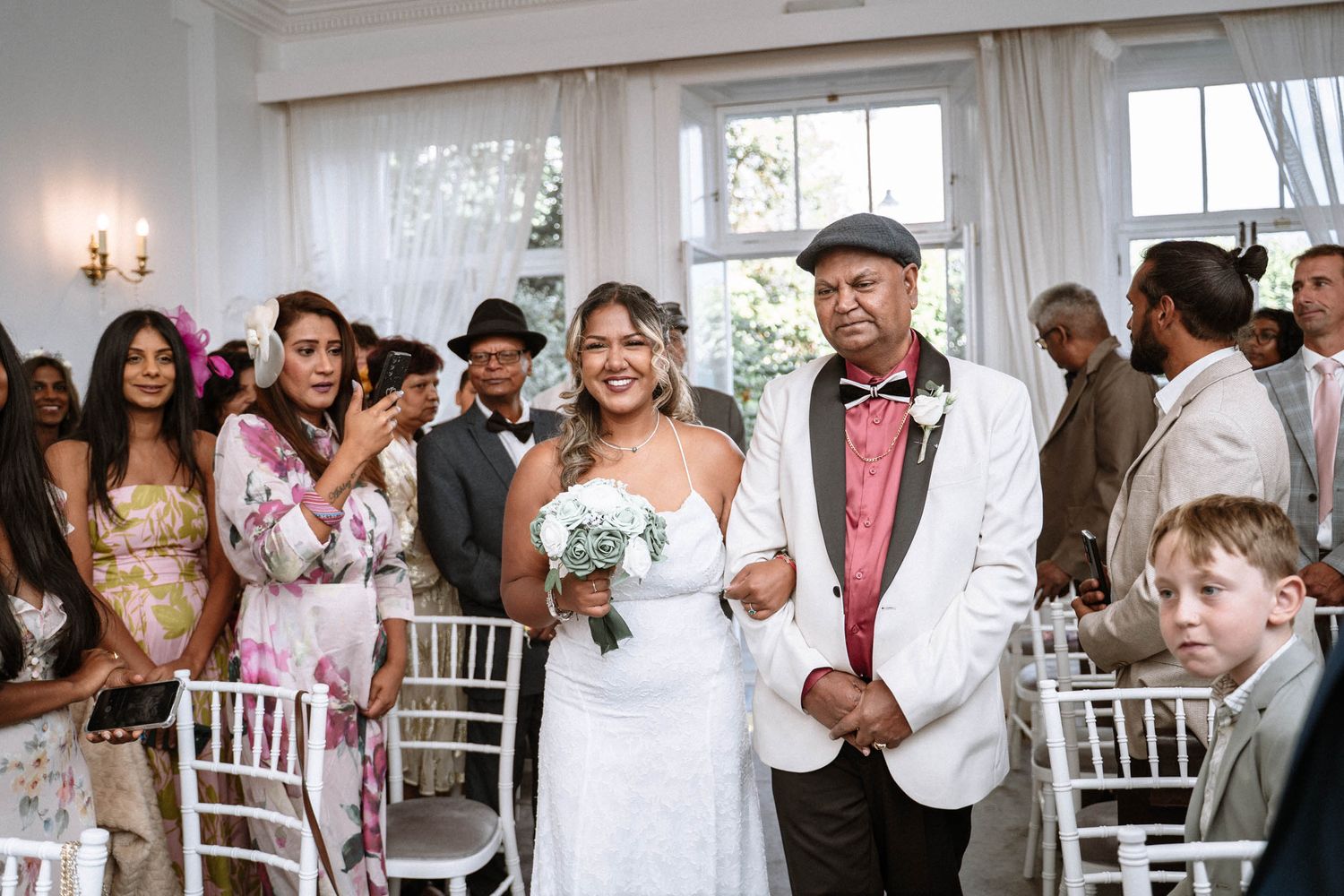
A religious ceremony is a marriage conducted according to the rites of a particular faith, officiated by an authorised religious figure — a vicar, priest, minister, imam, rabbi, or other religious leader depending on the denomination. It takes place in a registered religious building such as a church, chapel, synagogue, mosque, or temple.
The content of a religious ceremony is determined by the faith tradition. A Church of England wedding, for example, follows the Book of Common Prayer or Common Worship liturgy and includes hymns, prayers, readings from scripture, and a blessing. A Catholic ceremony may include a full mass.
In England and Wales, Church of England and Church in Wales weddings are automatically legally binding — the vicar acts as both the religious officiant and the legal registrar. For all other religious denominations, the marriage must be registered by an authorised person present at the ceremony, or you may need a registrar to attend as well. Check with the religious building in advance to understand their specific requirements.
Religious ceremonies tend to be longer than civil ones — typically 30 to 60 minutes depending on the denomination and whether a full service or mass is included. They often have more structure and less room for personalisation compared to civil ceremonies, though this varies significantly between faiths and individual officiants.
Same-sex religious marriages are possible but only in religious buildings that have opted in and are registered for same-sex ceremonies. At the time of writing, relatively few places of worship have opted in compared to the total number registered for opposite-sex marriages.
The Key Differences at a Glance
Religious content: Civil ceremonies cannot include any religious content whatsoever. Religious ceremonies are built around it.
Venue: Civil ceremonies can take place at any licensed venue or register office. Religious ceremonies happen in registered religious buildings. A Church of England wedding must take place in a church in the parish where one of you lives (with some exceptions).
Officiant: A registrar conducts a civil ceremony. A religious leader conducts a religious ceremony. For Church of England weddings, the vicar handles both the religious and legal elements. For other faiths, you may need an authorised person or a registrar present to handle the legal registration.
Personalisation: Civil ceremonies allow significant personalisation of vows, readings, and music as long as nothing is religious. Religious ceremonies follow the structure of the faith, with varying degrees of flexibility depending on the denomination and the individual officiant.
Cost: A simple civil ceremony at a register office starts from around £46-57. A registrar attending a licensed venue costs £400-600+ depending on the area and day. A Church of England wedding is around £300-500 for the legal fees including the church, vicar, and certificate. Venue hire costs for civil ceremonies are separate and vary enormously.
Length: Civil ceremonies typically last 20-30 minutes. Religious ceremonies typically run 30-60 minutes depending on denomination.
Same-sex couples: All civil ceremony venues are open to same-sex couples. Religious venues are only available if they’ve specifically opted in and are registered for same-sex marriages.
Legal standing: Both are equally legally binding. There is no legal difference between a civil marriage and a religious marriage once the register is signed.
Can You Have Hymns at a Civil Ceremony?
No. A civil ceremony in England and Wales cannot include hymns, prayers, religious readings, or any content with religious connotation. This is a legal restriction, not a venue preference. Even if your venue is a converted chapel or a building that looks like a church, if the ceremony is civil, religious content is not permitted.
If you want hymns or prayers but don’t want a full religious ceremony, one option is to have a civil ceremony for the legal part and then a separate blessing or celebrant-led ceremony that includes the religious elements you want. The blessing isn’t legally binding but it allows you to include whatever content matters to you. Many couples do this, particularly those who aren’t regular churchgoers but still want some spiritual or traditional elements in their day.
What About a Celebrant Ceremony?
There’s a third option that sits outside both civil and religious ceremonies: a celebrant-led ceremony. A celebrant is an independent officiant who creates a fully personalised ceremony with no restrictions on content. You can include religious elements, secular readings, personal vows, rituals from different traditions, or anything else that feels meaningful to you. There are no rules about what you can or can’t say.
The catch is that celebrant ceremonies are not legally binding in England and Wales (they are in Scotland). This means you’ll still need to do the legal bit separately — either at a register office or a licensed venue — before or after your celebrant ceremony. Many couples who elope or have outdoor ceremonies use this approach: a quick legal ceremony at the registry office, then a celebrant-led ceremony at their chosen location with full creative freedom.
How Do You Decide Which Is Right for You?
If faith is central to your relationship and you want your marriage to be recognised within your religious community, a religious ceremony is the natural choice. The structure, the traditions, and the spiritual significance are part of what makes it meaningful to you.
If you’re not religious, or you’re from different faith backgrounds, a civil ceremony gives you a legally binding marriage without any religious framework. You get full control over venue, content, and personalisation.
If you want the best of both — complete creative freedom plus spiritual or traditional elements — a civil ceremony for the legal part combined with a celebrant-led ceremony gives you everything. No restrictions, no compromises.
If budget is the main factor, a simple register office civil ceremony is the cheapest legal option. A Church of England wedding is also relatively affordable for the ceremony itself, though the overall cost depends on what you add.
If venue matters most, civil ceremonies give you over 8,000 licensed venues to choose from. Religious ceremonies are limited to registered religious buildings. If your dream venue isn’t a religious building, civil is your route.
There’s no wrong answer here. Both ceremonies are equally legally valid. The choice comes down to what the ceremony means to you, where you want it to happen, and how much flexibility you want over the content.
What's next to read on your planning guide?
Thinking about eloping instead of a traditional ceremony? Our complete Gretna Green elopement guide covers venues, costs, legal paperwork, and what the day actually looks like from start to finish. Read Here
Want to get married outdoors without a licensed venue? Our guide to getting married on a beach in the UK covers exactly how the two-ceremony approach works in practice. Read Here
Wondering what to actually expect if you go registry office? Our registry office wedding guide walks through the full ceremony experience so nothing catches you off guard. Read Here
Leaning towards a civil ceremony at the registry office? See our dedicated page for registry office wedding photography in Birmingham. Read Here
Considering eloping in Cornwall? Our complete Cornwall elopement guide covers the two-ceremony approach, best locations, and costs. Read Here
Prefer mountains? Our Lake District elopement guide covers the best fell and lakeside locations, costs, and timing. Read Here