Getting married on a beach in the UK is one of those ideas that sounds obvious until you try to find out how to actually do it. Then you hit venue directories, law firm FAQ pages, and a load of Caribbean destination wedding content that has nothing to do with what you're imagining. Which is probably somewhere on the Cornish coast, or a Scottish island, or a windswept headland in October.
The honest answer is that you can do it. Whether it's legally straightforward depends almost entirely on which part of the UK you're in — Scotland and England operate under different laws, and that difference matters more than most guides let on. The good news is that whichever route fits your situation, there's a clear path to having the ceremony you're imagining: outdoors, barefoot, waves behind you, no function room.
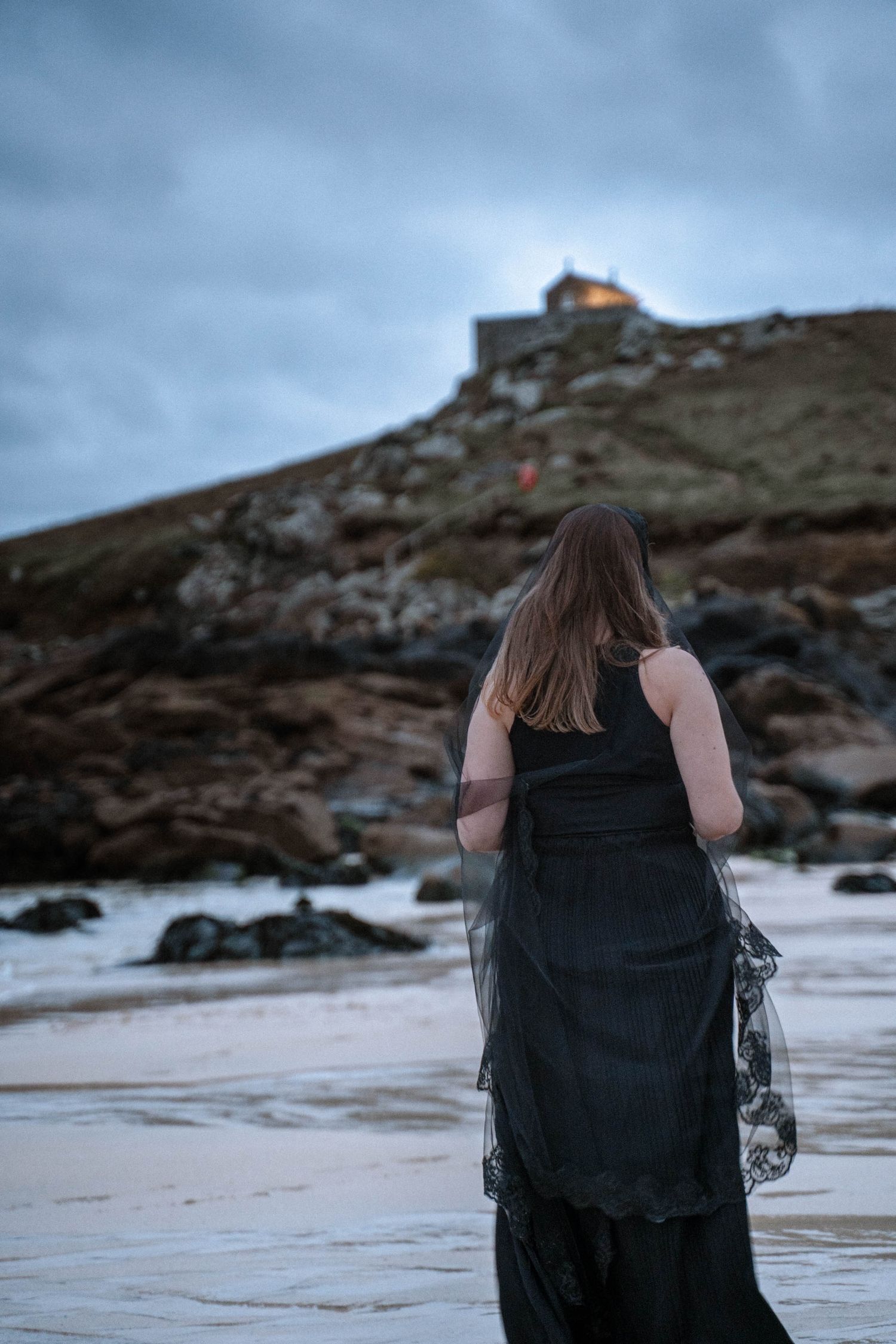
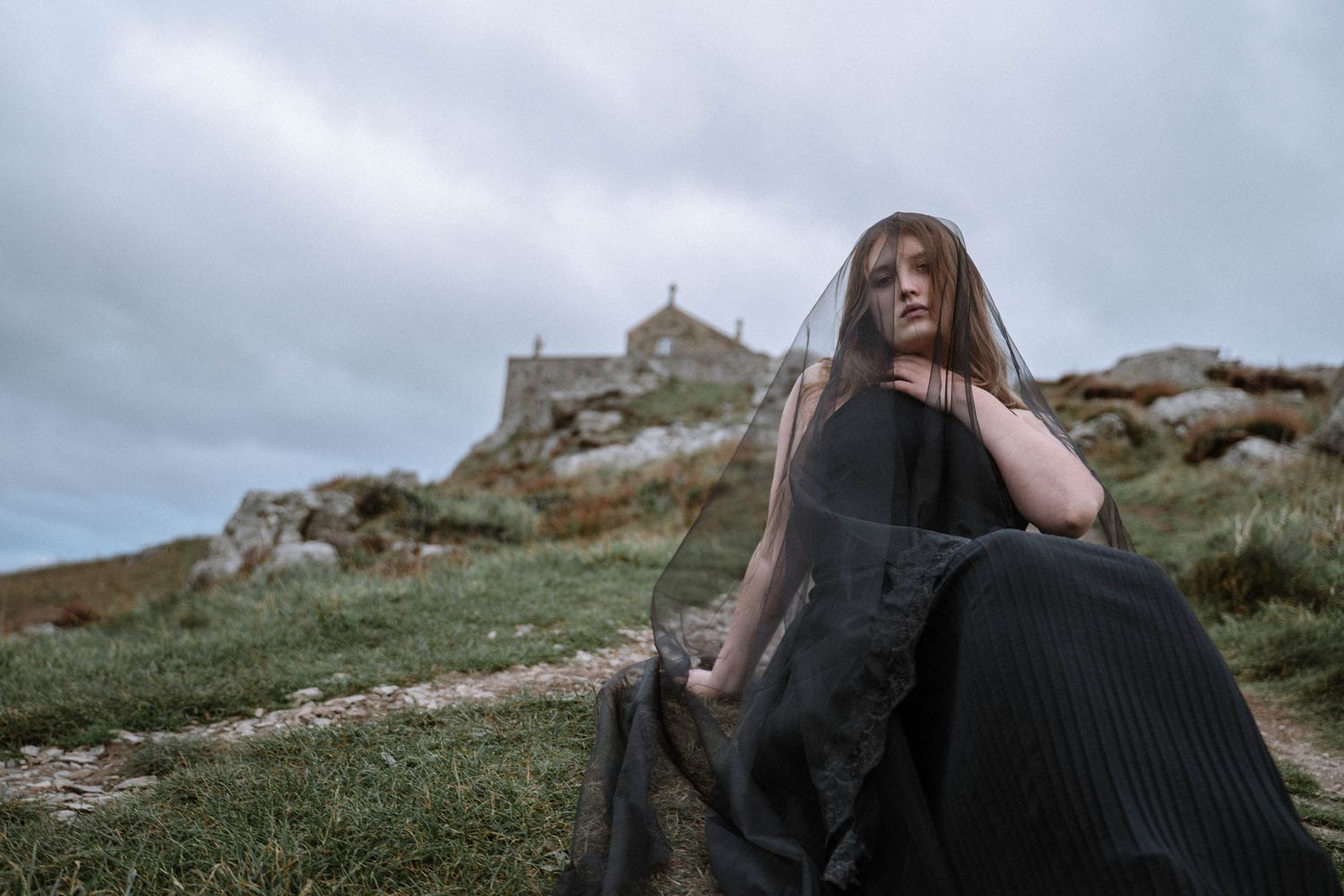
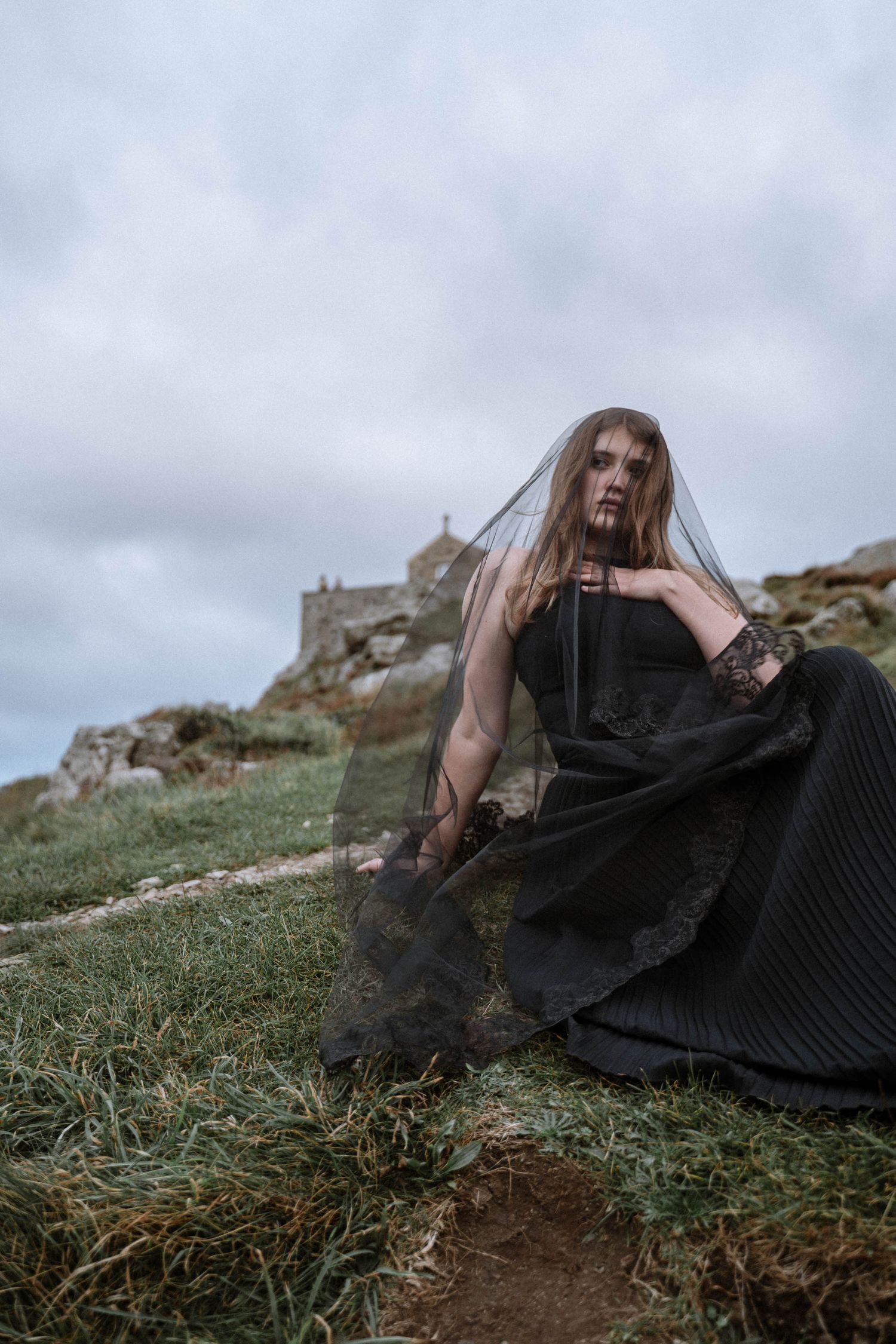
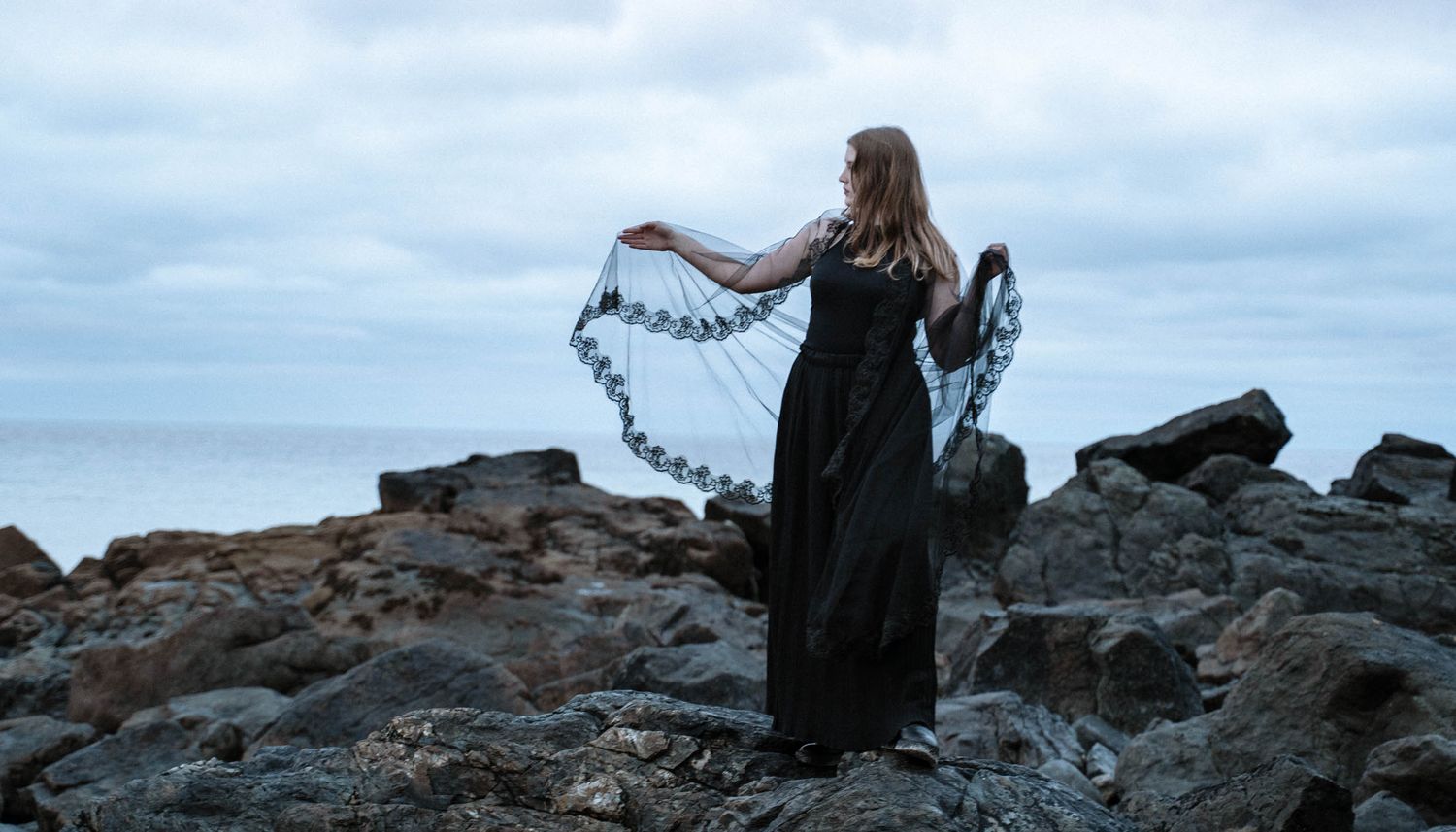
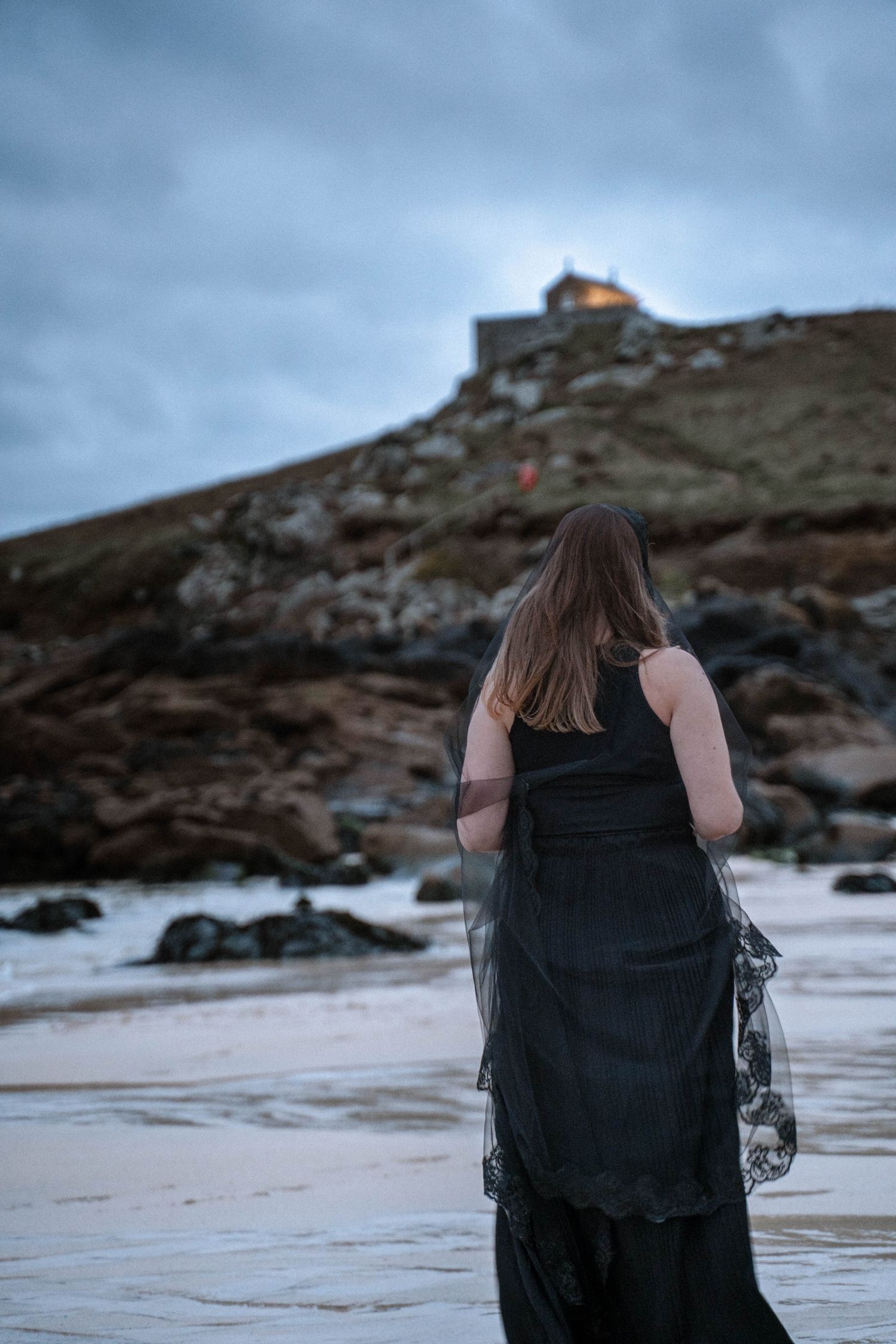
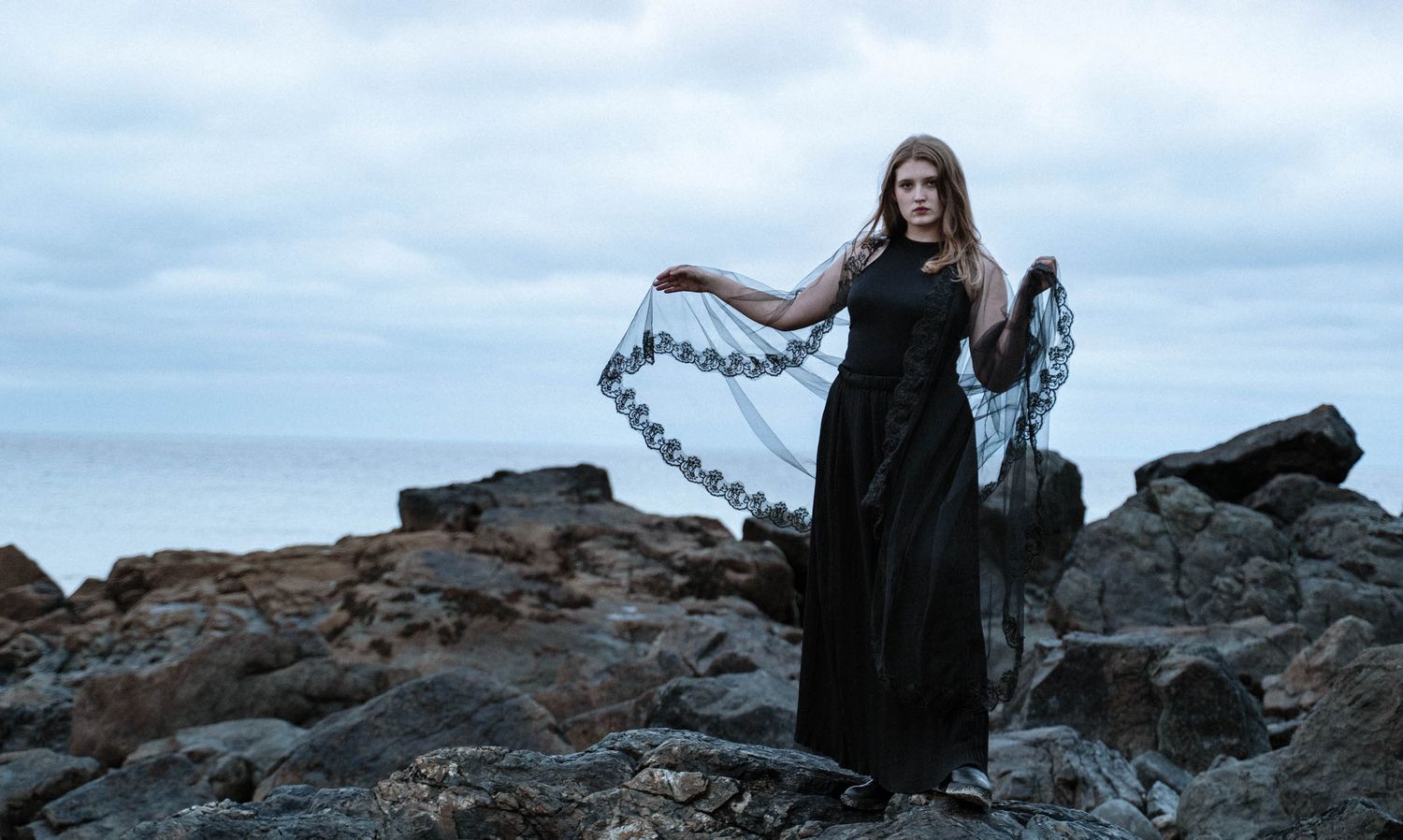
I've photographed on the Cornish coast in the conditions that make a beach ceremony worth having — blue hour on the cliffs at St Ives, the light going heavy and cold, wind doing what it does to fabric and hair. It's some of my favourite work. This guide covers how the legal side actually works, where in the UK you can go, what time of year makes sense, and what the day looks like from start to finish.
Can You Actually Get Married on a Beach in the UK?
Short answer: yes, but where you are determines how straightforward it is.
England and Wales
The Marriage Act 1949 requires a legal ceremony to take place at a licensed venue; a permanent, approved structure. Public beaches don't qualify. So the image of a registrar legally marrying you on the sand while the tide comes in isn't currently possible on most UK beaches under English law. That's not a rumour or a technicality. It's just how the legislation sits. You could do a celebrant ceremony (more on that later!)
There are genuine exceptions. Lusty Glaze beach in Newquay, Cornwall holds one of the very few licences in England to legally marry couples directly on the sand. The ceremony happens on the beach, it's legally binding, you don't need a separate registry office visit. It's unusual precisely because the licensing is unusual as the overwhelming majority of beaches in England and Wales can't offer this. Don't ask me why, but if you don't want to stand inside saying "I do" under beige walls this beach is your go to.
A tidbit: the Law Commission published recommendations in 2022 for a wholesale overhaul of marriage law in England and Wales, which would allow ceremonies almost anywhere including public beaches. As of 2026 those recommendations haven't passed into law. Check GOV.UK for updates before planning gets too far along.
Scotland
Scotland works under the Marriage (Scotland) Act 1977 and it's a completely different picture. You can legally marry almost anywhere: a beach, a clifftop, a castle, a field, as long as an approved celebrant conducts the ceremony. You just submit an M10 form to the local registrar covering the area where you're marrying, at least 29 days before the date. Two witnesses. That's it. One ceremony, one location, legally married on the sand.
This is why Scotland pulls so many elopement couples. It's not just the landscape, it's that the law actually lets you use it. The Outer Hebrides, the Fife coast, Dunnottar Castle above the North Sea, they're all legitimate ceremony locations without any workarounds.
How It Works in England and Wales
Most couples marrying on a beach in England or Wales use a two-ceremony structure. The legal ceremony happens at a registry office. Then the ceremony they actually planned happens on the beach with a celebrant, in the location they chose. This happens separately, duh. It sounds like a compromise. It usually ends up feeling like the better option.
The Registry Office
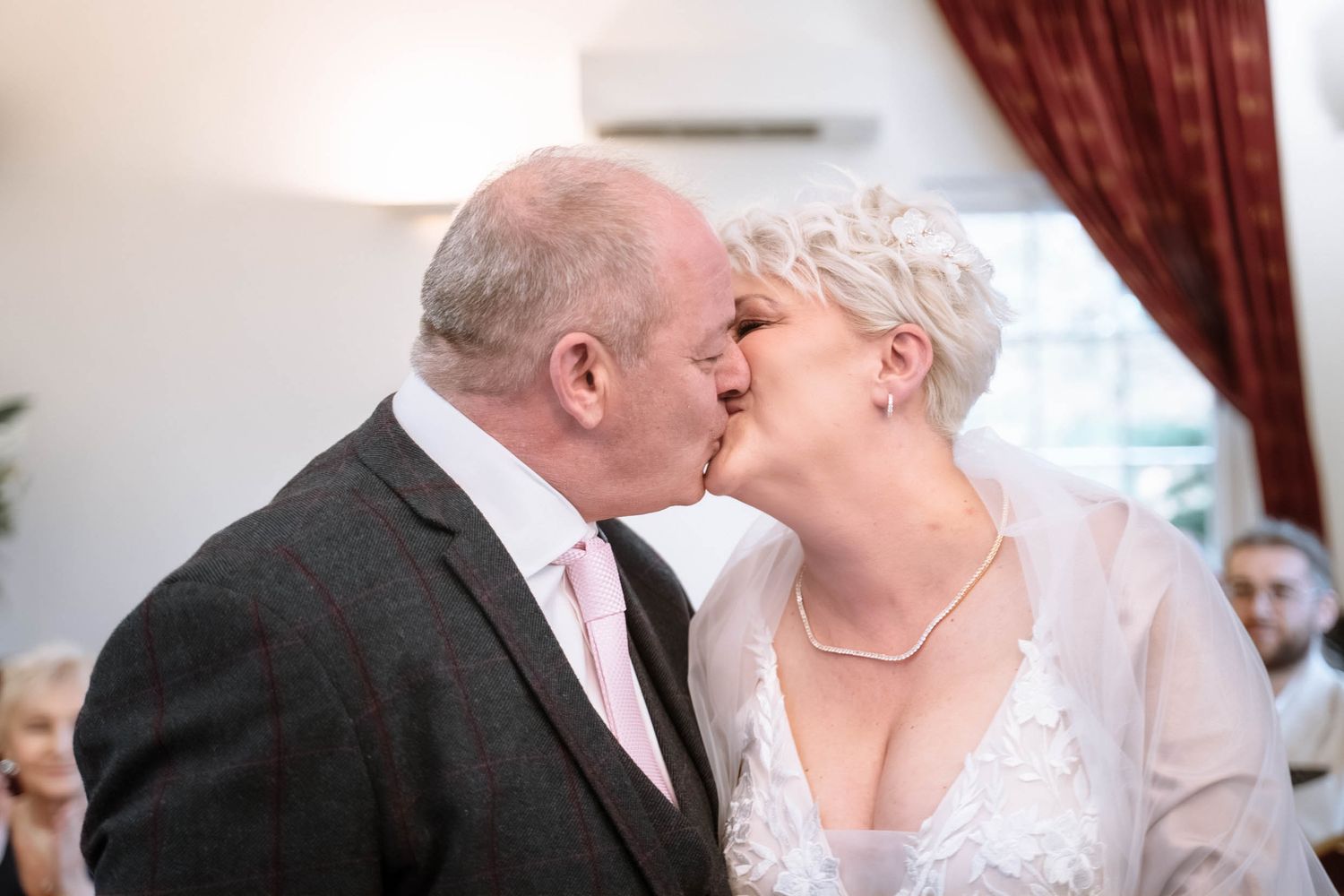
This is the legal bit. You book a civil ceremony at your local registry office, or the registry office nearest to your location. Penzance Register Office, for example, charges around £46–£57 for a ceremony room depending on the day and that covers the ceremony, the registrar, and the signing. The whole thing takes about fifteen minutes. You say the legally required words, sign the register, your witnesses sign alongside you, and that's it. You're legally married.
Some couples do this a week before the beach day and keep it entirely separate, they treat it as admin, move on. Others do it the morning of. Neither approach makes the other one less real. The registry office handles the paperwork. The beach ceremony handles everything else. Personally, if you want that real and authentic "elopement" do this a week earlier, in and out, and then do the beach ceremony with the vows and such.
The Beach Ceremony
This is led by a celebrant or an independent officiant (or heck even a friend) as its not bound by the legal requirements that govern registrars. This means the ceremony can happen anywhere, include any vows, any readings, any ritual, run as long as you want. It's not legally binding in itself because you've already handled that. It is, however, the ceremony that appears in every photograph and the one you'll describe when people ask about your big day.
Good celebrants along the Cornish coast and southwest typically charge between £400 and £600. The Association of Independent Celebrants and the Fellowship of Professional Celebrants both have searchable directories if you're starting from scratch. It's always worth finding someone who's actually worked on beaches before as wind, tides, and acoustic conditions are all things they'll need to have thought about.
Where to Get Married on a Beach in the UK
England and Wales: Licensed Beach Venues
If you want the legal ceremony and the beach in one place in England, the options are EXTREMELY limited. These are the venues worth knowing about.
Lusty Glaze in Cornwall is one. It's a private cove licensed for ceremonies on the sand. The cliff setting means the beach is sheltered on three sides and thus is less exposed than open headlands. This matters to you if wind is a concern. The venue holds up to 120 guests, but the beach ceremony space works best at much smaller numbers. Late afternoon light hits the water directly in summer and autumn. It's the most logistically complete option in England if you want everything in one location, from signing to the elopement feel.
Tunnels Beaches, Ilfracombe, Devon is another one. It's a series of sea caves carved through the cliff leading to a private beach. The ceremony can happen in the cave tunnels or on the beach itself depending on the package. It's licensed, it's dramatic, and the Victorian-carved tunnels give you something that doesn't look like anything else. Venue hire starts around £1,500 for the ceremony space. So it's not cheap, but the setting is genuinely unusual.
Polhawn Fort, Whitsand Bay, Cornwall is the third and final option on this list. It's a Napoleonic fort on a clifftop with access to the beach below. The ceremony can happen in the fort or on the sand depending on guest numbers and tide. Exclusive hire means nobody else is there. It's also so remote that getting guests there requires some coordination, but that remoteness is also the point of the aesthetic of eloping. It lets you go away from everyone.
Scotland: Anywhere an Approved Celebrant Can Reach You
Scotland doesn't have a shortlist. The entire coastline is viable. But some locations come up repeatedly for good reason.
The Outer Hebrides: Specifically the beaches around Luskentyre on Harris are unlike anything else in the UK. White sand, turquoise water, mountains behind you. It looks like somewhere else entirely, which is exactly why couples make the trip. The logistics are real however: ferry crossings, limited accommodation, weather that changes fast. It's extremely worth it, but plan ahead.
Dunnottar Castle, Stonehaven, Aberdeenshire. It's technically a ruin on a sea stack above the North Sea rather than a beach, but the dramatic coastal setting is worth including. You can legally marry in the grounds with an approved celebrant. The cliff walk down to the castle is part of the experience. If you want a more gothic approach this is for you.
The Fife Coastal Path offers several accessible beaches within easy reach of St Andrews, Edinburgh, and Dundee. They're less remote than the Hebrides, but it's much easier for guests travelling from England.
East Neuk villages like Elie and Crail have beaches that photograph well and don't require a full expedition to reach.
For the most stripped-back option? Just find a beautiful beach and marry on it. The area around Plockton and the Applecross Peninsula on the west coast gives you sea, mountains, and complete flexibility without the logistics of island travel.
What a Beach Wedding Day Actually Looks Like
The shape of the day depends on which route you're taking. Here's how both versions tend to run.
England and Wales: Two-Ceremony Day
If you're doing the registry office in the morning, build in more time than you think you need. Registry offices run back to back. You may pass the previous couple coming out as you arrive. That's normal - it just catches people off guard if they haven't accounted for it. - Arrive fifteen minutes early, expect the ceremony itself to take fifteen minutes, allow ten minutes outside for a few photos, and budget an hour total including travel.
Then you have time. Most couples build in a couple of hours between the registry office and the beach ceremony. It's just enough to change, eat something, and get to the location without rushing. The celebrant ceremony can happen any time you choose, which means you can plan it around the light rather than around a venue's schedule. For beach photography in the UK, that means late afternoon into early evening, ideally in the hour before sunset. In summer that's anywhere from 7pm onwards. In autumn it arrives earlier, sometimes by 4pm, which changes the planning considerably.
After the ceremony, give yourselves time to just exist in the location. The photographs that matter from a beach elopement aren't the posed ones immediately after the ceremony, they're the ones twenty minutes later when you've both stopped thinking about the camera and started thinking about the day. That requires time. Don't plan anything for the two hours after the ceremony.
Scotland: One-Ceremony Day
Cleaner structure. One location, one ceremony, everything in the same place. The logistics that change are around the M10 paperwork - handled in advance, not on the day - and the celebrant who manages the legal side as part of the ceremony itself.
Getting ready at your accommodation rather than rushing to a registry office first means the morning feels different. Slower. You're not working to a clock until the ceremony itself. Use that. The walk to the beach, the time before the celebrant arrives, the twenty minutes after, it's all apart of the day and all of it can be photographed.
The one thing to flag for Scotland is tide times. If your chosen beach shrinks significantly at high tide, plan the ceremony around the low tide window, not the light and then adjust. The UK Hydrographic Office tide predictor at ukho.gov.uk covers every beach in the country and it's free. Check it before you book anything.
When to Go: What Each Season Actually Gives You
There's no universally right answer on timing, but there is a right answer for the kind of photographs you want to come home with.
Summer (June–August)
This is the most practical choice and the most popular for obvious reasons. Long days give you flexibility, the golden hour arrives late which means portrait time isn't a race against the clock. Warmer conditions make it so being outdoors for an extended period of time is comfortable. If you're bringing any guests, summer logistics are easier across the board as its easier to get time off from work too.
The trade-off is light quality. Midday summer light on a beach is flat and harsh. Direct sun creates hard shadows, blown-out skies, and a look that's more holiday snapshot than editorial. To get the good light, you need to be at the location by late afternoon and stay through sunset. That's achievable in summer as golden hour in Cornwall in July runs from around 8pm but it requires planning the day around it.
Crowds are the other factor. Popular beaches in Cornwall and Devon in August are not intimate. Lusty Glaze and Tunnels Beaches are private, so that's handled. But if you're planning a more informal beach ceremony on a public stretch, weekday dates in early June or late August give you breathing room that peak season weekends don't.
Autumn (September–October)
This is the season most elopement photographers would quietly recommend if you asked them off the record. The crowds thin out. The light is softer in the sky and becomes warmer in colour and this lasts longer into the afternoon in a way that summer light doesn't. The landscape shifts into something richer. There's darker water, clearer skies between weather systems. It's a scene that photographs differently.
September in particular is underrated. Still warm enough to be comfortable, far quieter than August, and the light from mid-afternoon onwards is consistently good. October pushes further as the atmosphere gets heavier and the conditions more dramatic. But if that's the aesthetic you're drawn to, October on a Cornish headland or a Scottish beach delivers it without any effort. Costs also come down. Venue hire at licensed coastal venues tends to drop after September. Weekday dates in October at somewhere like Lusty Glaze are noticeably cheaper than a Saturday in July.
Winter (November–February)
This is brutal. The days are cold and short ones. You'll get weather that requires genuine flexibility. Also this is the season that produces the most atmospheric beach wedding photography in the UK. Stone goes darker in the rain. Low cloud sits on the water. The 45 minutes before sunset in December are unlike any other time of year in terms of light quality. It's heavy, directional, and with a quality that golden hour in July simply doesn't have.
One thing. You need to be realistic about conditions. Wind strong enough to make a beach unsafe is a genuine possibility in winter, particularly on exposed Scottish coastlines and Cornish headlands. Build a contingency. Know what your backup is. And dress accordingly (everyone included).
Weekday winter dates are the cheapest you'll find anywhere in the UK. If budget matters and atmosphere matters more than comfort, this is the season.
Spring (March–May)
Variable and slightly unpredictable, which is either a problem or not depending on your approach to uncertainty. March can be genuinely wintry. April is a coin toss. May starts to settle. By late May the conditions are reliably good and the summer crowds haven't fully arrived yet.
Spring light is clean and bright without the harshness of high summer. The landscape is coming back and the colour in the vegetation can be seen. You also get clearer skies after winter. For Scotland specifically, May is often cited as one of the best months to visit: The long days start to come in, midges aren't yet out in force, and the Hebridean beaches at stunning but not overcrowded.

The Practical Things That Catch People Out
Tide Times Run the Day
More than the light, more than the weather. If your beach shrinks to nothing at high tide, the ceremony window is whenever low tide gives you sand to stand on. Work out the tide times for your date first, then build the rest of the day around that window. The UK Hydrographic Office tide predictor at ukho.gov.uk covers every location and is updated regularly. Use it before you book anything else.
The 29-Day Notice Period Is Fixed
England, Wales, and Scotland all require at least 29 clear days between giving formal notice and the ceremony. In England and Wales that means an in-person appointment at your local register office with passports, proof of address, and the details of where you're marrying. In Scotland it's the M10 form to the registrar covering your ceremony location. Miss the window and you can't legally marry on that date. It's not flexible.
Most Public Beaches Don't Need a Permit for Two People and a Photographer
A small ceremony on a public beach (two people, a celebrant, two witnesses, a photographer), isn't an event in the legal sense and generally doesn't require a permit. Some National Trust beaches and managed coastal areas have their own guidance around commercial activity, so a quick check with the relevant body for your specific location is worth doing. For most open public beaches in England, Wales, and Scotland, it won't be an issue.
Wind Is Not a Problem. Storm-Force Wind Is.
Regular coastal wind (not the harsh ones in your city) but the kind that moves fabric and hair is a feature, not a drawback. It photographs better than still air. The question is degree. If you're marrying on an exposed headland on the north Cornish coast in January, check the forecast the week before and have a clear backup conversation with your celebrant about what conditions trigger a reschedule. Most celebrants who work on UK beaches already have this conversation with every couple.
Footwear
Heels sink into sand. Long trains drag and collect wet sand quickly, which makes them heavy. Both are solvable! Boots look right on a beach, flat sandals work, bare feet work if the sand isn't too cold. If a specific pair of shoes matters to you, bring them for a few shots on solid ground and change. It's not complicated, but it's the thing that most dress decisions don't account for until the day.
Which Option Is Right for You?
Choose Scotland If You Want It Simple
One ceremony, one location, legally married on the beach. Scotland's marriage law makes this possible anywhere a celebrant can reach you. If the idea of the legal ceremony and the meaningful ceremony being the same thing matters, and for a lot of couples it does then Scotland is the answer. The Hebrides, the Fife coast, the Aberdeenshire cliffs, the west coast around Applecross. All viable. All beautiful.
Choose the Two-Ceremony Route in England If You Have a Specific Beach in Mind
The registry office in the morning, beach ceremony in the afternoon. Simple. The legal bit and the ceremony you actually designed don't have to be the same event. Most couples who go this route find they prefer it to have the beach ceremony on another day which is entirely theirs. This means no prescribed wording, no registrar's schedule. If there's a specific stretch of Cornish coastline or a Devon headland you've already decided on, this is how you get married there. Just go in on an off day to sign the paperwork and legally get married.
Choose a Licensed Venue If You Want Guests
Lusty Glaze, Tunnels Beaches, Polhawn Fort. All are legal ceremonies with coastal access and have capacity for a wedding rather than just an elopement. You're trading flexibility and intimacy for structure and the ability to have everyone in the same place. Worth it for the right couple. Not the right answer for everyone.
Planning a Beach Wedding or Elopement?
If you're planning a beach ceremony in the UK and want it documented properly from the light, the conditions, the moments between the two of you that make the day feel real then I'd be happy to have a conversation about it. I've shot on the Cornish coast and I understand what these conditions ask of a photographer. No pressure. Just figuring out whether the approach fits what you're trying to do.
What's next to read on your planning guide?
Planning a beach elopement in Cornwall specifically? Our complete Cornwall elopement guide covers the locations, the two-ceremony approach in detail, and what the day actually looks like. Read Here
If Scotland is the plan, our Gretna Green elopement guide covers the full M10 process as it applies to any Scottish beach ceremony too. Read Here
Unsure what the registry office ceremony actually looks like? Our registry office wedding guide walks through the full experience so nothing catches you off guard. Read Here
Not sure whether Scotland's the answer? Our complete Gretna Green elopement guide covers the full M10 process, venues, and costs. Read Here.
Wondering whether you need a celebrant or a registrar? Our civil vs religious ceremony guide breaks down the difference and helps you decide. Read Here