Most elopement guides in the UK will point you towards golden hour on a beach, a wildflower meadow, or a soft-focus woodland path. And there’s nothing wrong with that if it’s what you want. But if you’re searching for gothic elopement locations in the UK, you probably don’t.
You want wind. Exposed stone. Ruins that don’t try to look pretty. Coastlines that feels like it could swallow you whole. You want architecture that’s heavy and old and slightly unsettling. An atmosphere that’s dramatic without being performed. Something that feels more than just another page in a bridal magazine. You want you.
The UK is genuinely one of the best places in the world for this. We have crumbling castles, clifftop chapels, underground caverns, ruined abbeys, and entire stretches of coastline that look like they were designed for couples who want their elopement to feel darker, moodier, and more real than the pastel version everyone else is selling.
This guide covers six locations across England, Wales, and Scotland that work for gothic elopements (not gothic weddings with 200 guests and a venue booking), but actual elopements. Two people, maybe a couple of witnesses, a celebrant or a registry office, and a photographer. Small, intentional, atmospheric.
I’ve shot at one of these locations myself (St Ives in Cornwall), and the rest are places I’d genuinely recommend based on terrain, light, accessibility, and how they photograph.
What Actually Makes a Location “Gothic”?
Gothic isn’t a costume. It’s not black dresses and fake cobwebs (though if that’s your thing, go for it). In the context of an elopement location, gothic is about atmosphere, it's the feeling a place creates without any styling. You can't get that from good photo editing alone, the location needs to also match the aesthetic you want, than just you wearing all black.
The locations that naturally lean gothic in this list will tend to share a few things: exposed stone, a sense of age or decay, and scales that makes humans feel small. Along this, weather is important as it shapes the experience rather than just being something that happens. A ruined abbey with no roof does this. A clifftop in November does this. An underground cavern lit by candles does this. A neatly maintained stately home with a car park and a gift shop does not.
The other element is light. Gothic atmosphere almost always comes from low, directional, or absent light. Blue hour. Overcast skies. Candlelight. The golden hour that every photographer chases is beautiful, but it’s warm and soft, the opposite of what you want if the goal is darker and heavier. If you’re planning a gothic elopement, think about when you’re shooting as much as where. The same location at midday and at dusk can feel like two completely different places.
Season matters too. Most of these locations are at their most atmospheric between October and March. Less foliage, more exposed structure, shorter days with faster light transitions, and far fewer people. If you’re planning a gothic elopement in July, you’re fighting the conditions rather than working with them. You'll also get cheaper prices for some photographers as it's considered an off-season. Gothic photographers see that as their peak season.
St Ives, Cornwall
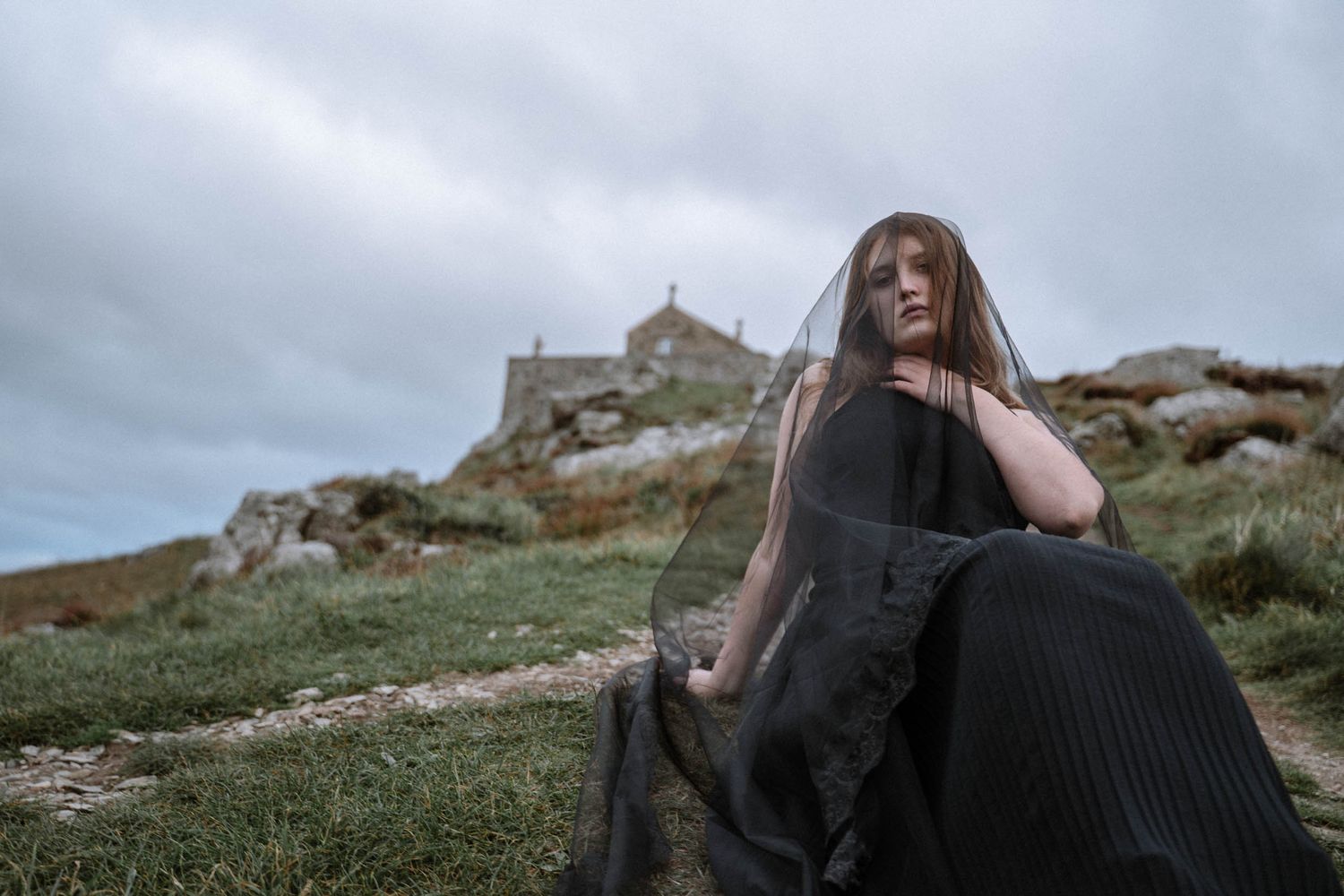
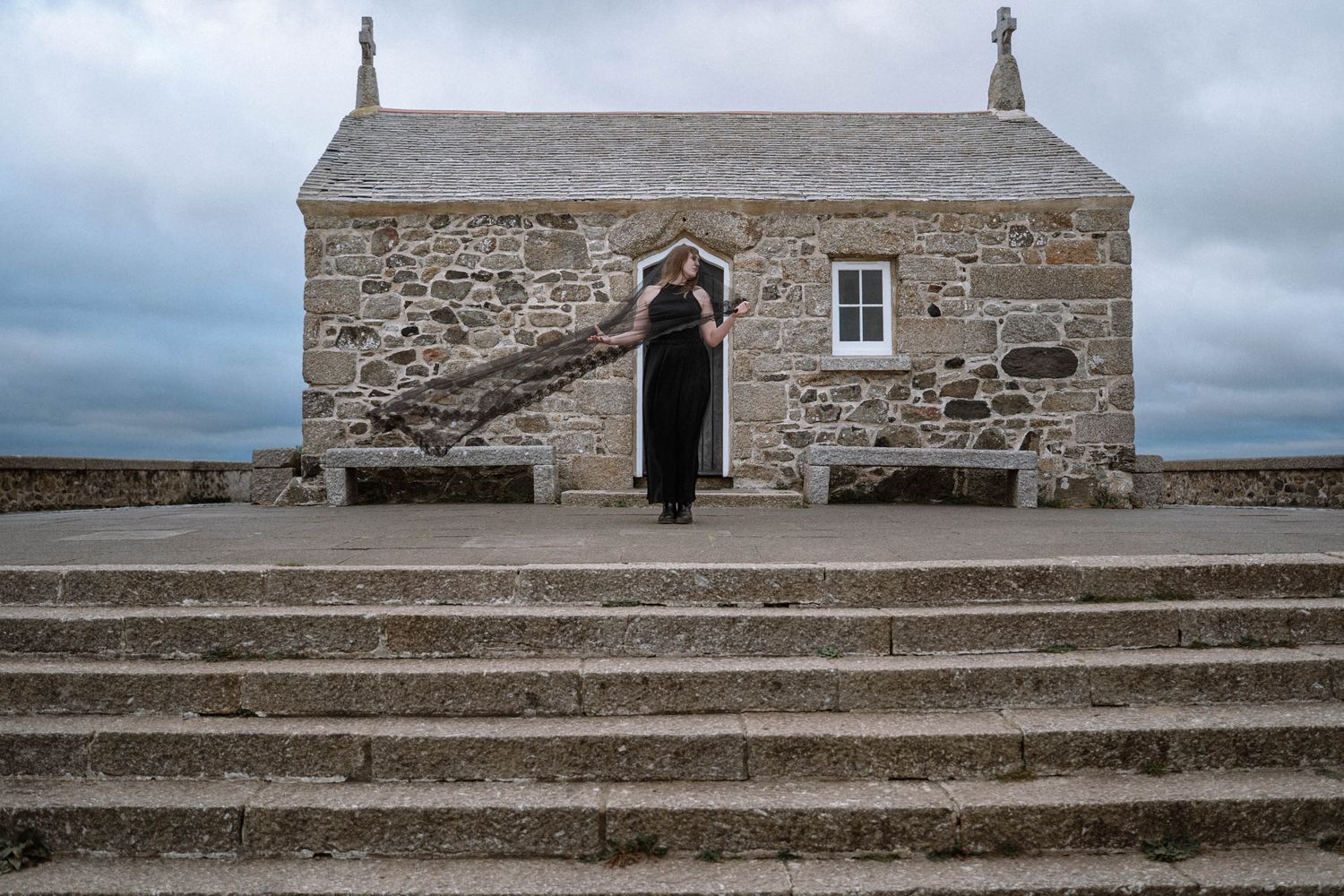
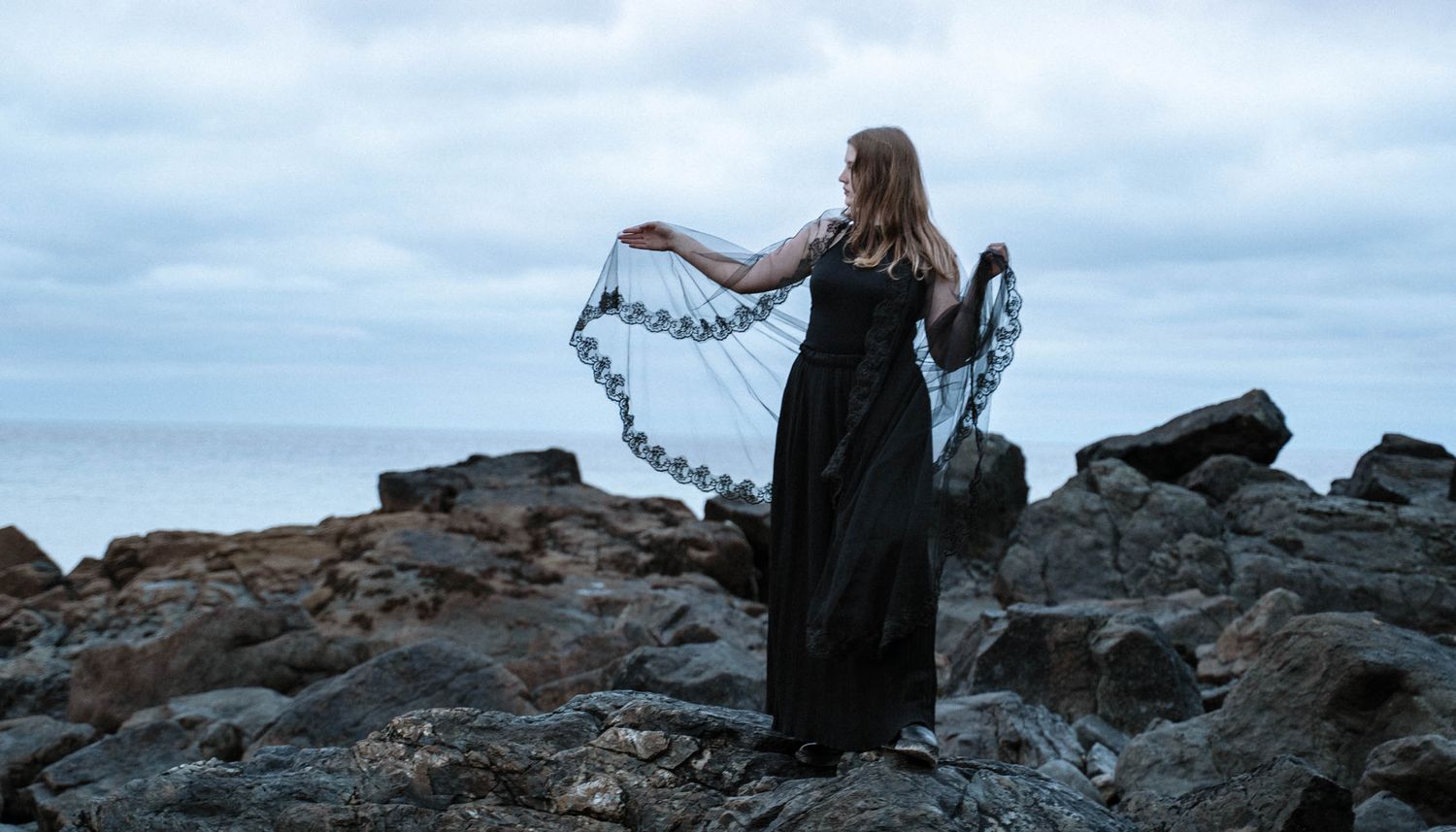
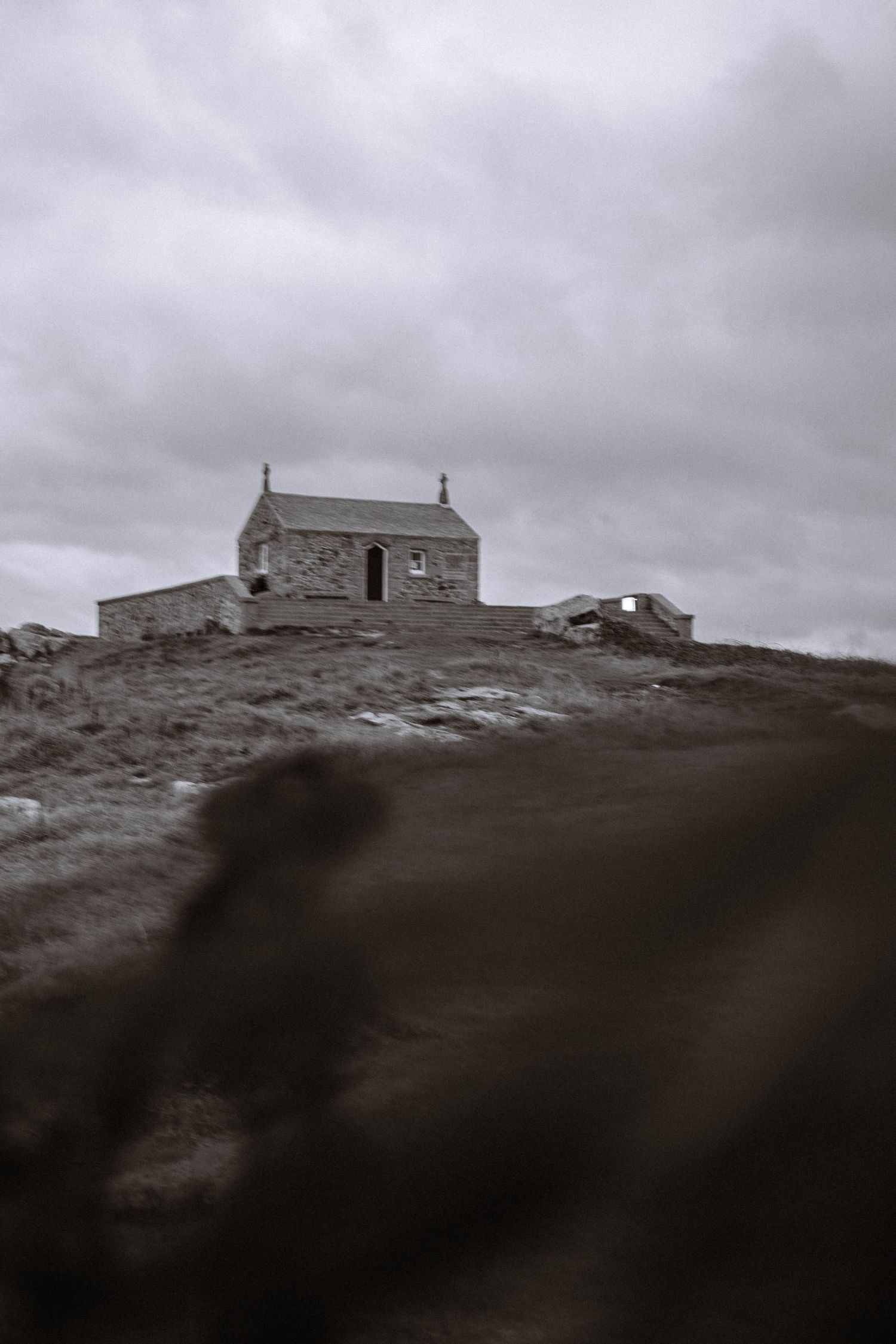
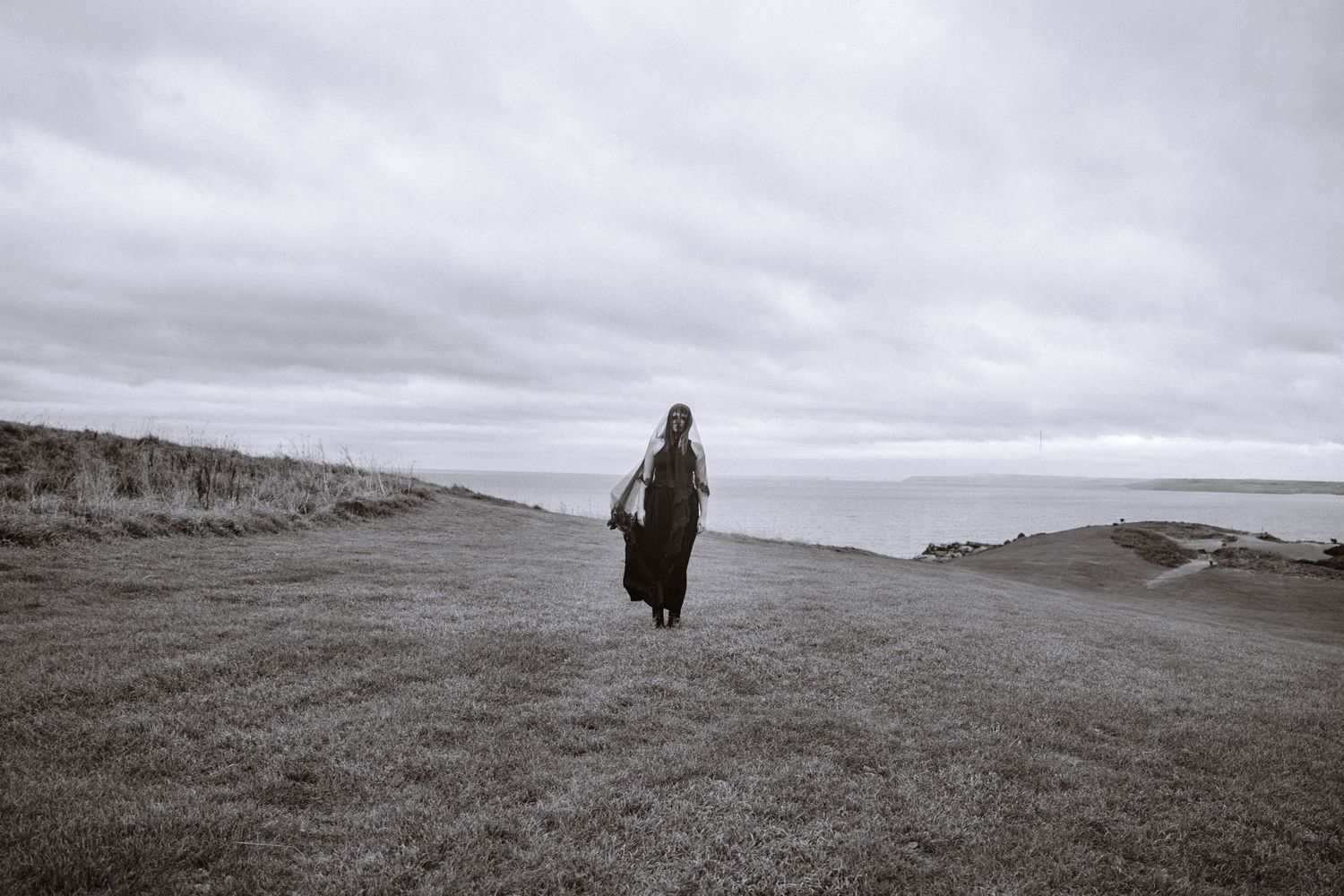
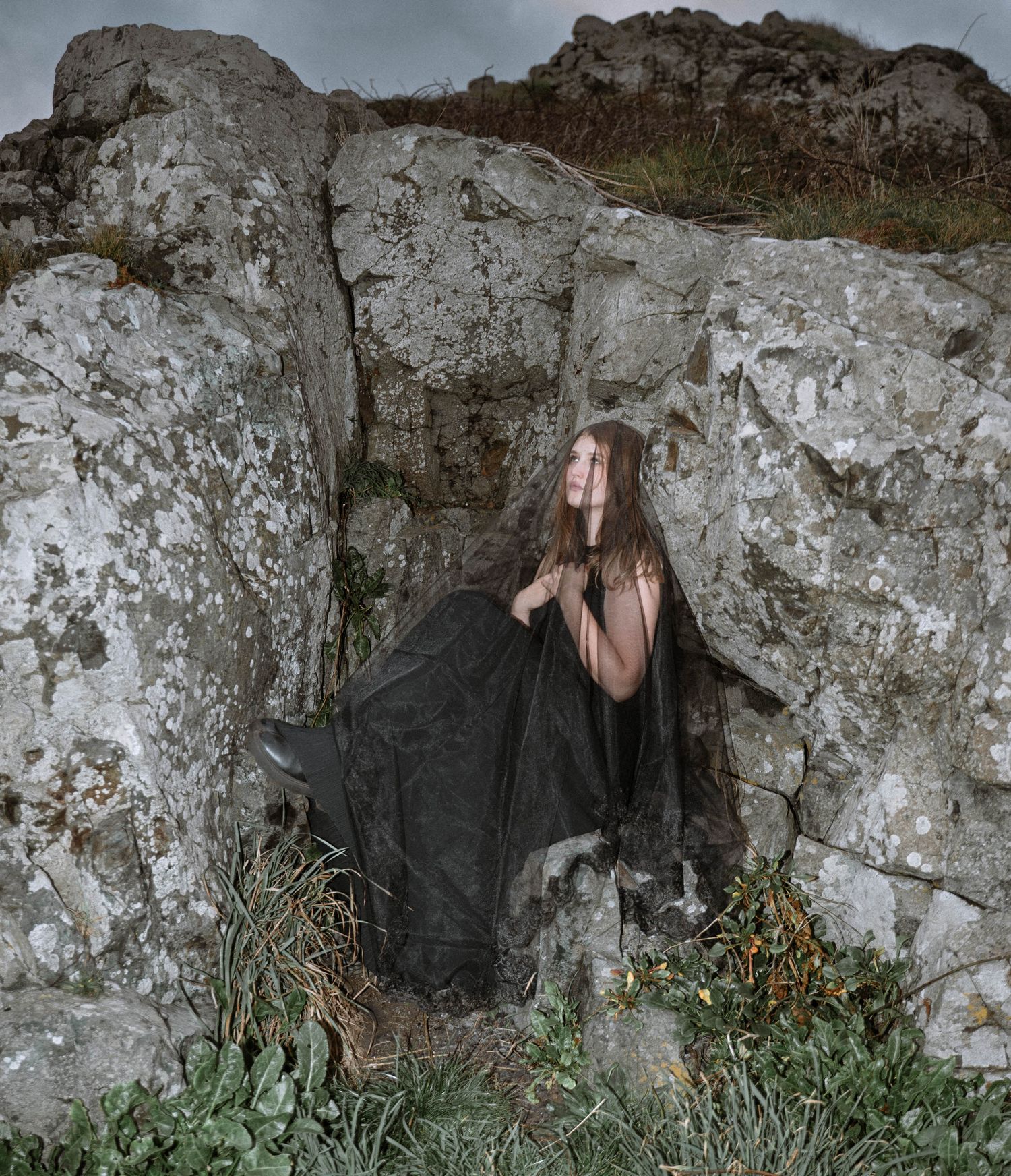
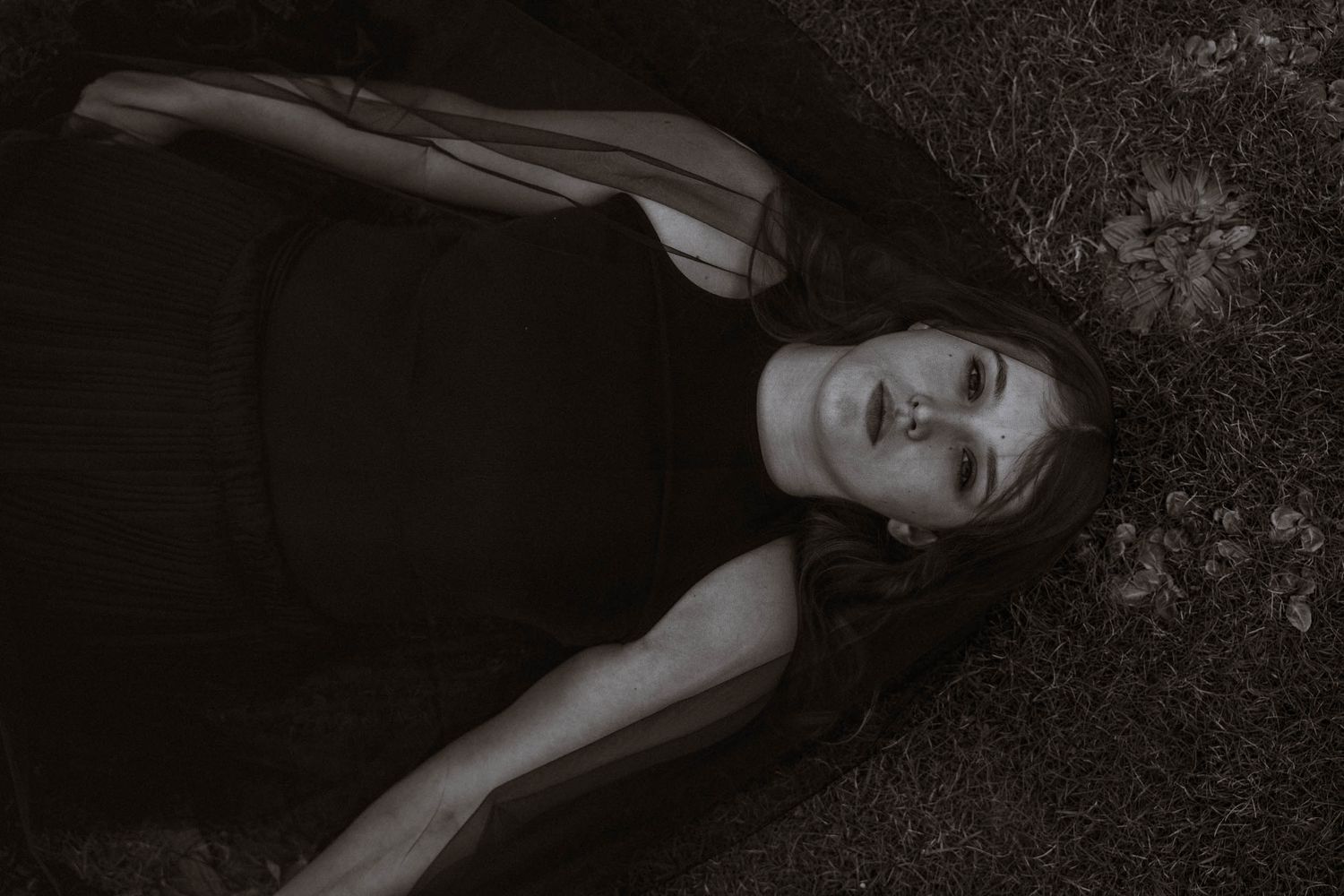
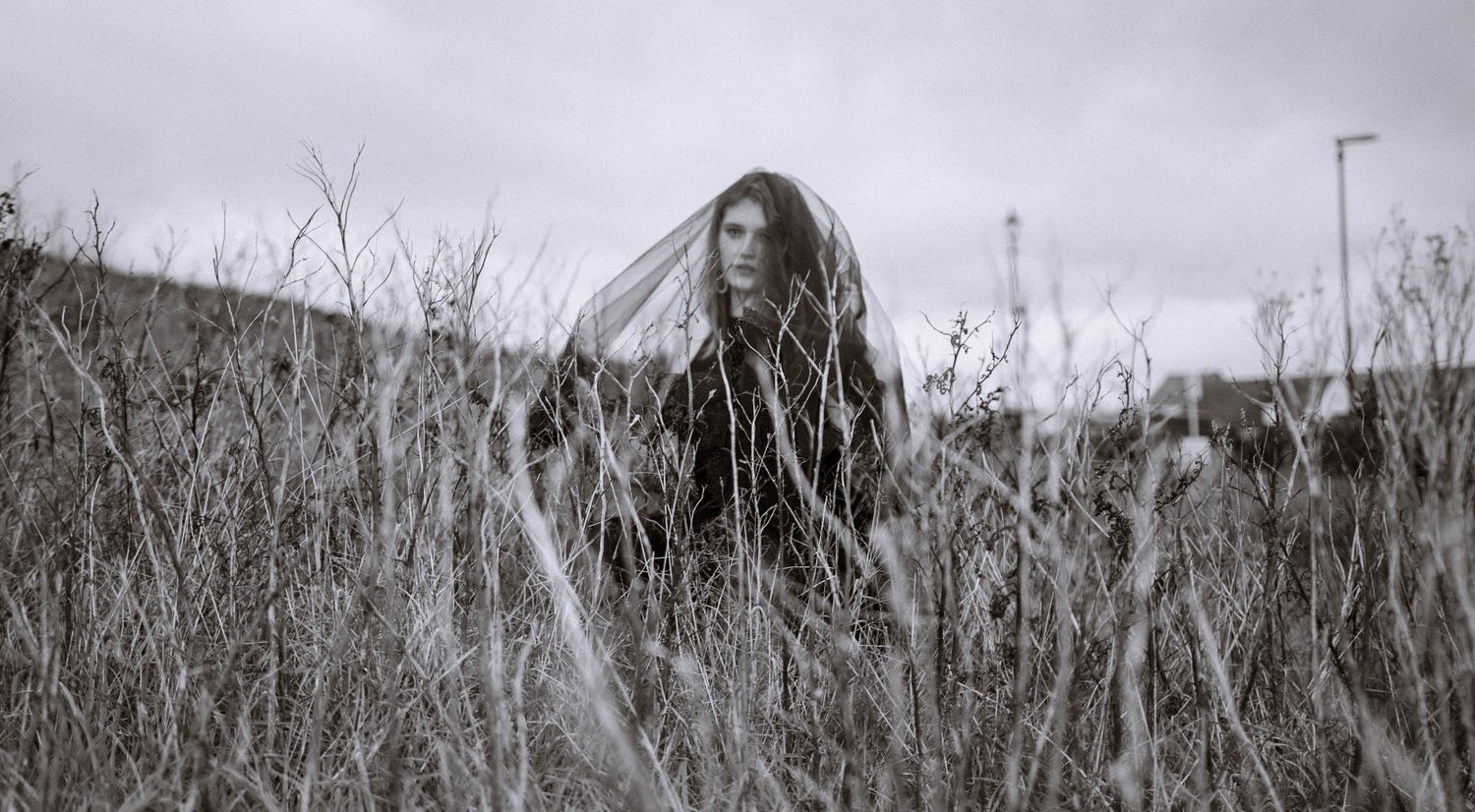
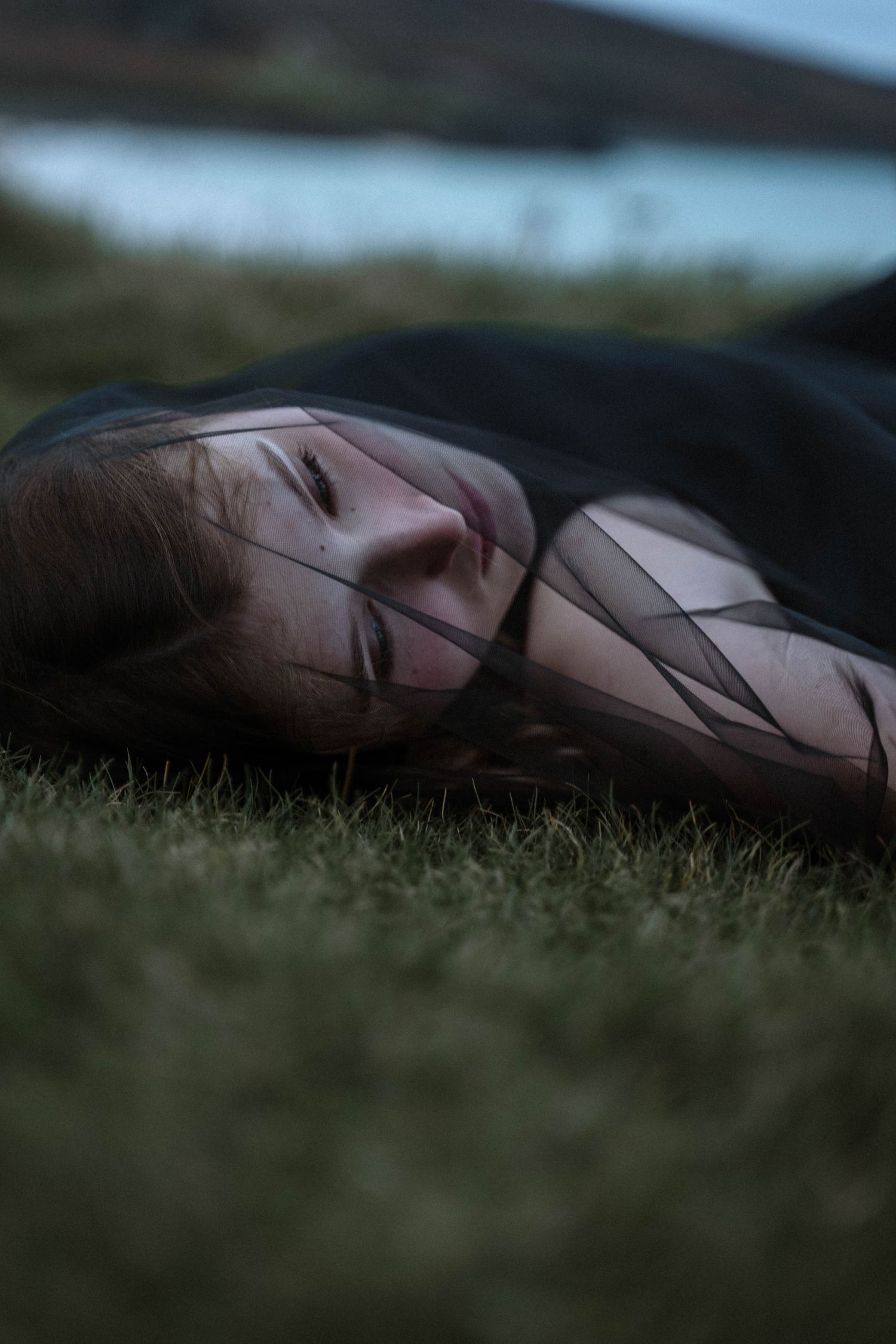
St Ives doesn’t need pushing towards gothic. It arrives there on its own if you catch it at the right time. That means off-season, blue hour, and wind picking up. During off season the headland stops looking like a postcard and starts feeling like something out of a du Maurier novel. The cliffs are uneven and exposed, the grass is quite literally desaturated, and St Nicholas Chapel sits slightly apart from everything else on the top of a small hike. It's stark and small against the sky. It’s not a gothic venue. It’s a landscape piece that is a sight for eyes.
The cliffs around St Ives Head are the obvious starting point. They’re rugged, cracked, with drops and patches of tall grass. You feel exposed up there in a way that works for the aesthetic in which nothing is sheltered. The wind shapes everything: fabric, hair, posture. You don’t fight it, you let it do the work.
Lower down, Porthmeor Beach gives you a coastal rock formation made against soft sand, with water cutting through. The contrast is immediate and it photographs without needing to be styled. It lets you also swap between two distinct locations without walking miles upon miles, its a simple skip away.
What makes St Ives work specifically for elopements is the proximity between locations. You’re not driving between spots. You start on the headland, move up the small hike to the chapel and then drop down to the beach, and the whole thing flows within walking distance. The day moves with the landscape rather than against it.
Timing is the only thing that matters. In summer there are tourists everywhere, leaving no space to work. If you come between October and March you get the place to yourself with the moody light that actually creates the gothic atmosphere.
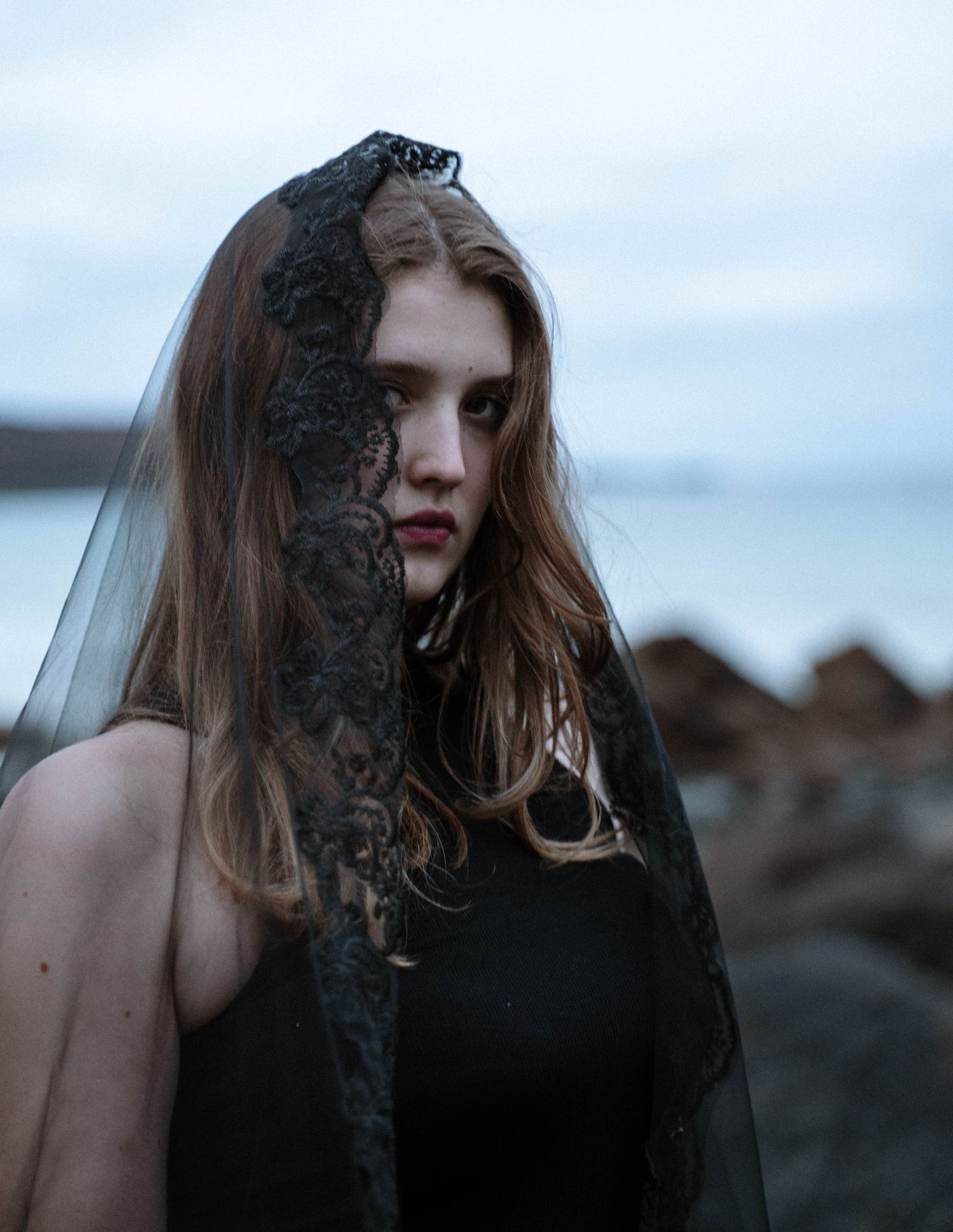
Blue hour arrives perfectly in winter. It's quick but it transforms the whole headland (until it goes an actual pitch-black). The chapel contrasts against the sky, the sea loses its colour, and everything feels quieter and heavier than it has any right to.
For the full planning guide to eloping in Cornwall, read our Cornwall elopement guide HERE.
Whitby, North Yorkshire
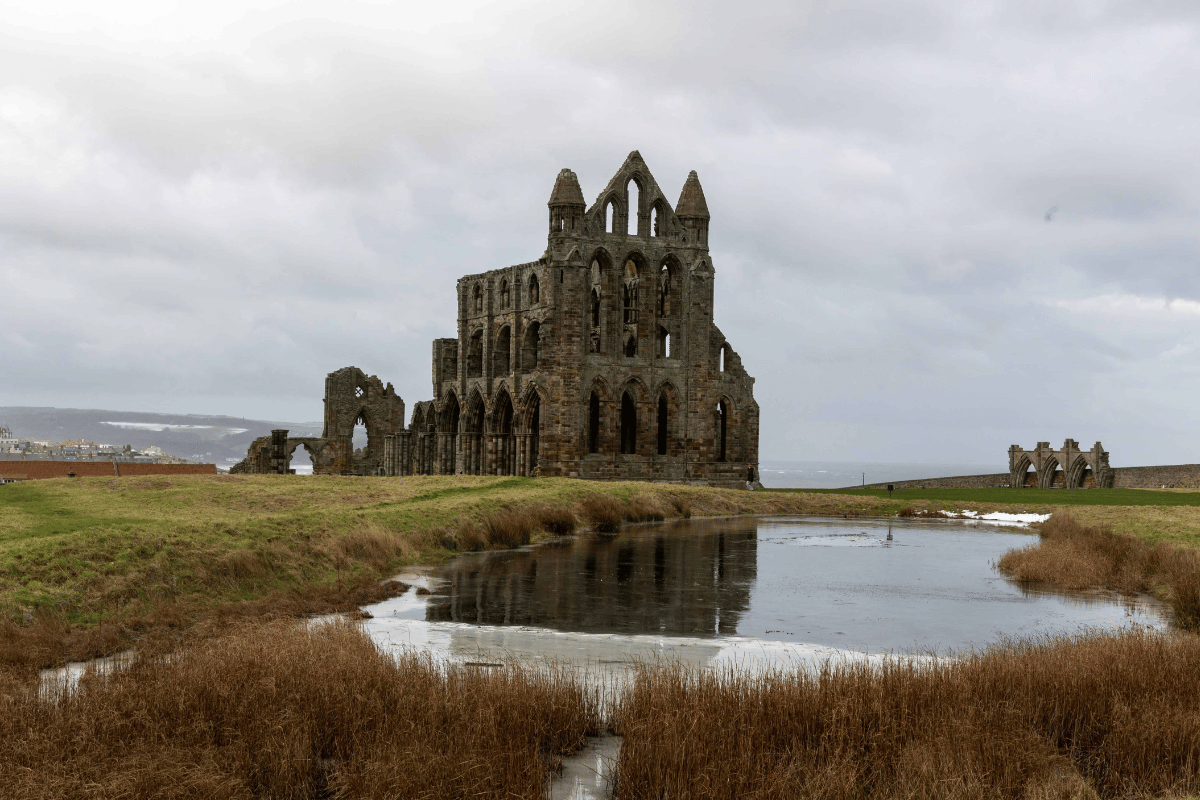
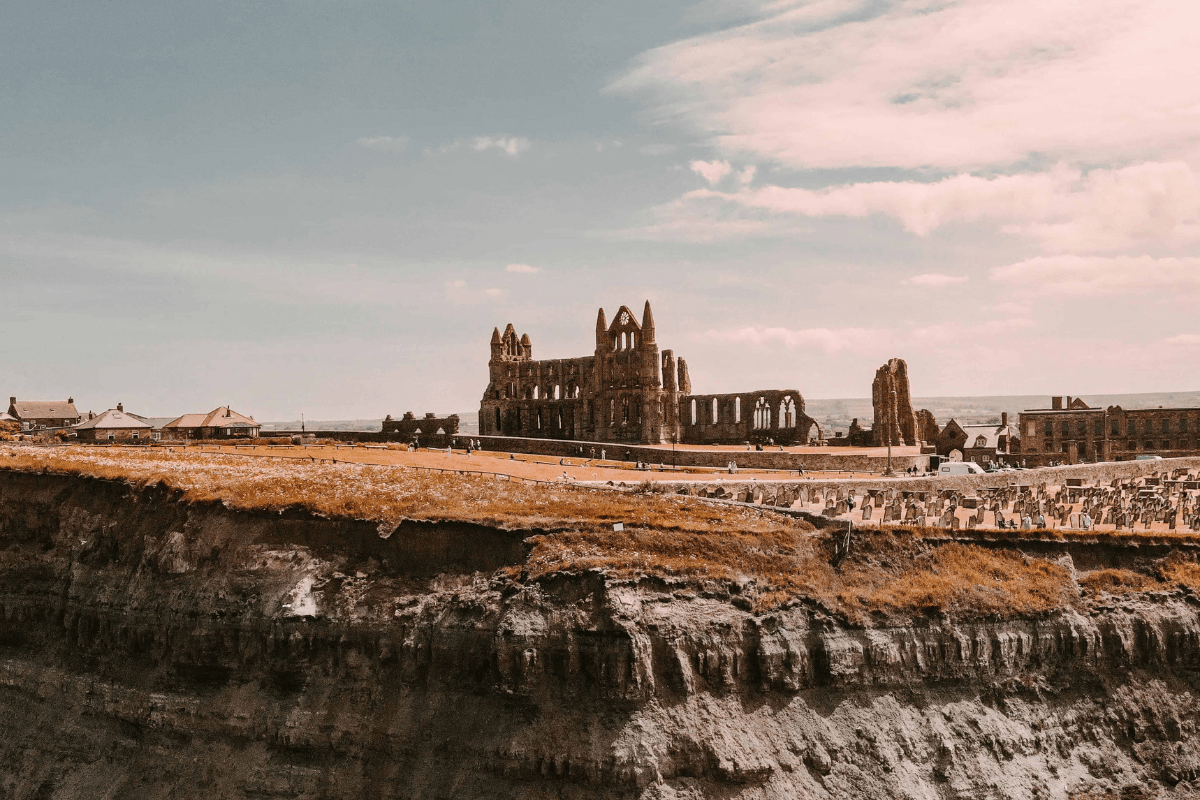
If there’s one place in the UK that doesn’t need the word “gothic” explained, it’s Whitby. Bram Stoker set Dracula’s arrival in England here. The ruined abbey sits on the clifftop above the town and is visible almost everywhere. The 199 steps that lead up through a graveyard feel ripped straight from a horror film because it actually is one.
The whole town leans into its history without making it a theme park but instead it pays homage to it. It’s atmospheric because it’s real, not because it’s been styled like an attempt to cosplay the word.
For elopements, the abbey ruins are the obvious draw. Roofless stone arches framing the sky, weathered walls, grass growing through the floor. It’s dramatic without effort. The graveyard on the way up is equally striking, as it has leaning headstones, worn inscriptions, and the sea itself being visible only adds to the atmosphere. If you want ceremony photos that look like they belong in a gothic novel, this is probably the strongest single location in the country.
Beyond the abbey, Whitby’s harbour and the East Cliff offer a different register. The old town is narrow and built from dark stone, this extends into the sea and the beach below the cliffs gives you the coastal element if you want it. The whole town photographs well in overcast conditions. This means that you want a grey sky. It allows the muted colour palette to come through.
Practically: Whitby is remote. It’s on the North Yorkshire coast with no motorway access meaning the drive is slow and winding. That’s part of the appeal to some but it means planning travel carefully as incidents can cause delays.
The abbey is managed by English Heritage and there are access considerations if you want to use the ruins specifically. Most here do a celebrant ceremony on the clifftop near the abbey rather than inside the ruins (due to the legal admin) and it's the more practical approach for an elopement. The legal ceremony would need to happen separately at a registry office.
Read HERE on our guide to registry offices and the full planning guide.
Tutbury Castle, Derbyshire
Tutbury Castle is one of the few places in the UK that offers midnight wedding ceremonies. That alone puts it in a different category. The castle is an 11th-century ruin overlooking the Dove Valley in Derbyshire. It has roofless walls, crumbling towers, and a history that includes Mary Queen of Scots being imprisoned there. It’s not a pretty ruin. It’s a heavy, weathered, genuinely atmospheric one with history behind it.
For a gothic elopement, the appeal is obvious. You can have floodlit ruins at night with stone walls that open to the sky. Or maybe have a ceremony lit purley by candles or under moonlight with the valley dropping away behind you. The atmosphere is yours to play with.
Tutbury also offers handfasting ceremonies, which suit the alternative aesthetic better than a standard civil format.
The castle has a reputation for being haunted (yes, I'm not joking). It’s been featured on paranormal television which either adds to the atmosphere or makes you roll your eyes, depending on your stance on the superstition.
Practically: Tutbury is in the East Midlands, easily accessible from Birmingham, Nottingham, Derby, and Leicester. It’s one of the more logistically straightforward gothic elopement locations because it’s not remote which means you’re not driving four hours to get there. The castle operates as a venue and can handle the legal ceremony on-site, which simplifies the two-ceremony approach that most English elopements require. Check directly with the castle for current availability and pricing as midnight slots book up quick.
Tintern Abbey, Monmouthshire, Wales
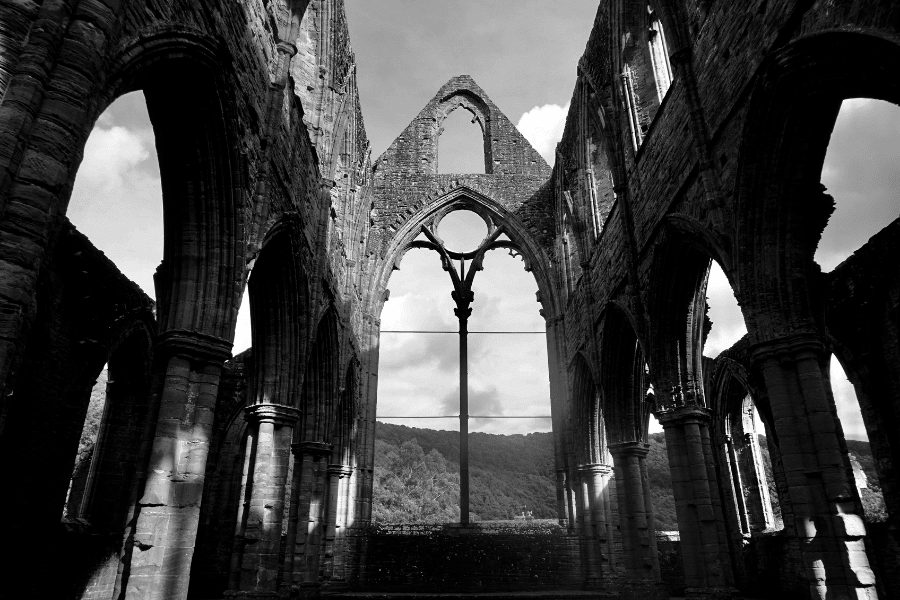
Tintern Abbey is a 12th-century Cistercian ruin in the Wye Valley on the Welsh border. It’s one of the most photographed ruins in the UK and for good reason as the nave is open to the sky, the window tracery frames the trees and clouds behind it and the scale of the remaining walls makes you feel like you’re standing inside a cathedral that nature is slowly reclaiming. Wordsworth wrote a poem about it. Turner painted it. It’s been a symbol of gothic romance in the literary sense for over two hundred years.
For elopement photography, the interior of the ruin is extraordinary. Light comes through the empty windows and the open roof, creating patterns on the stone floor that shift throughout the day. Late afternoon gives you directional light cutting through the arches. Overcast days give you soft moody illumination that suits the darker aesthetic perfectly.
The surrounding woodland and the River Wye add a softer more organic element if you want contrast and not just ruins.
Practically: Tintern Abbey is managed by Cadw and is a visitor attraction. Formal ceremonies inside the ruin would need specific permission. The more practical approach is portraits at the abbey and a legal ceremony at a nearby registry office, Chepstow is the closest.
The Wye Valley is accessible from Bristol, Cardiff, and the Midlands, making it a reasonable day trip rather than requiring overnight accommodation. Visitor numbers are lower than you’d expect outside of summer weekends, so off-season timing gives you the space to use the ruins properly.
Castell Coch, South Wales
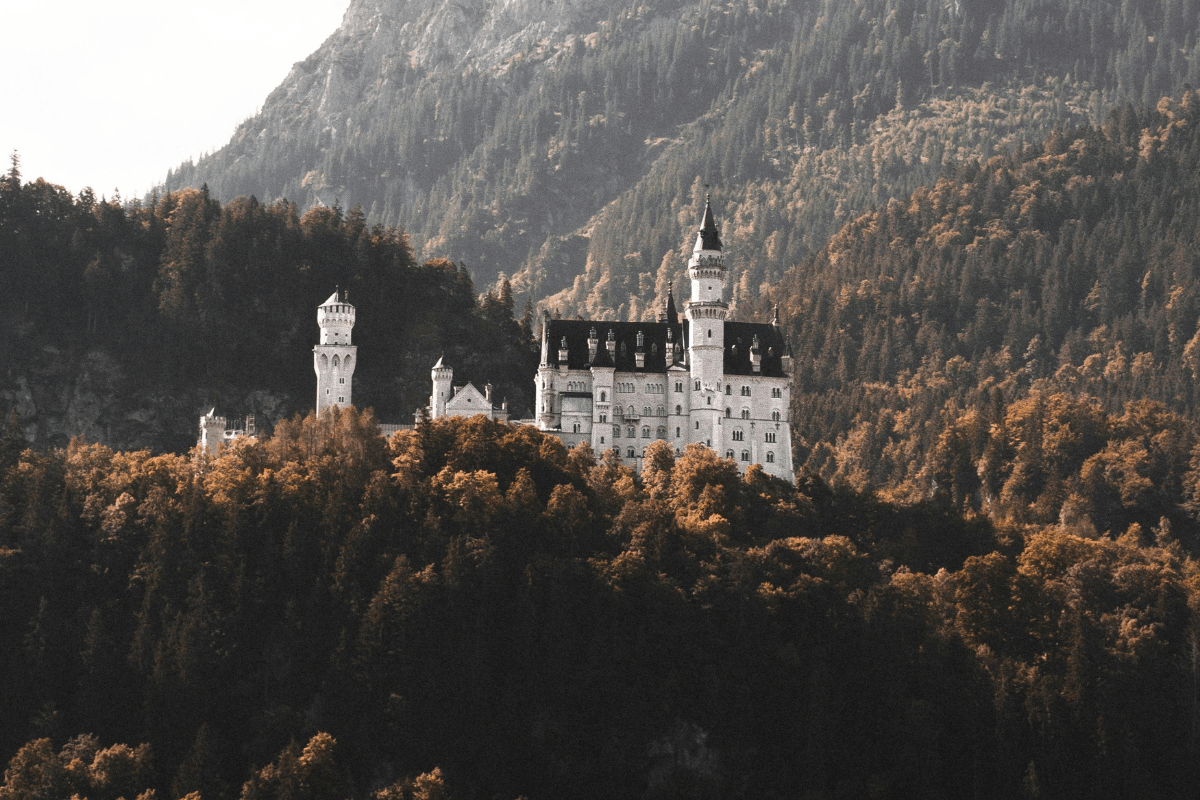
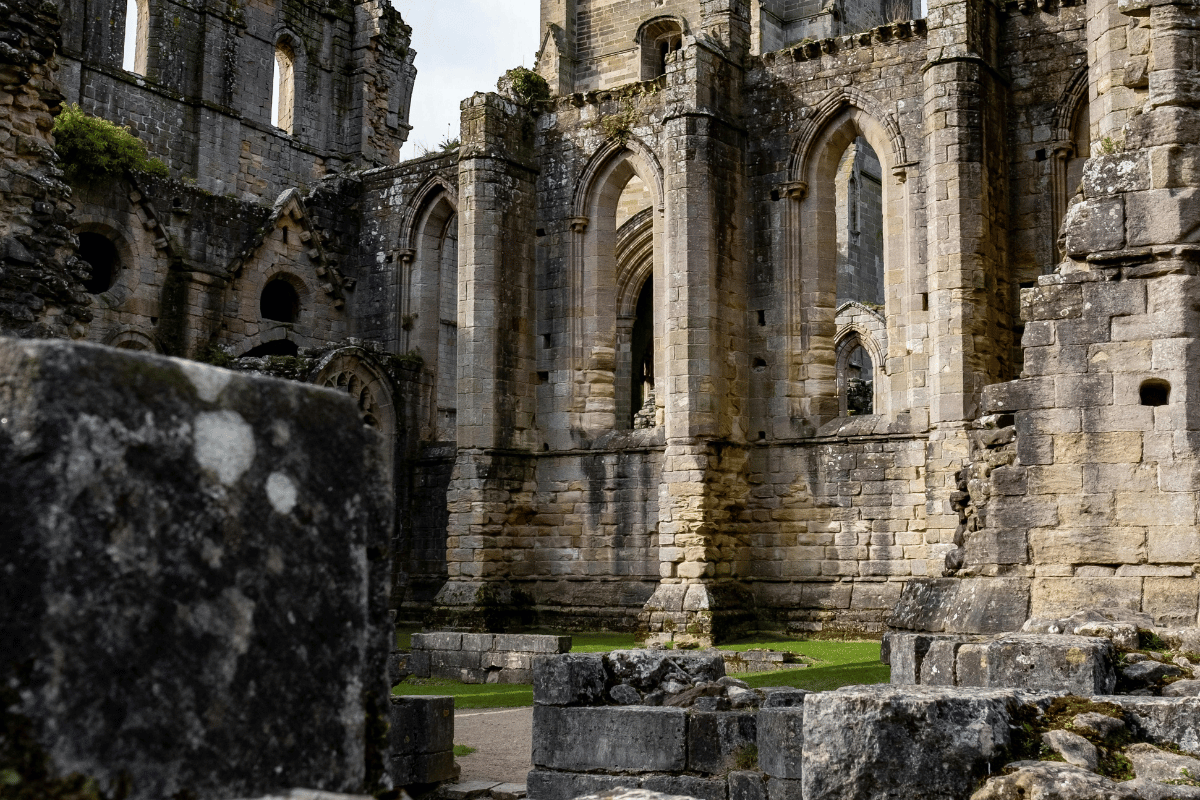
Castell Coch looks like someone built a castle specifically for a gothic elopement and then hid it in a forest. It’s a Victorian Gothic revival castle set deep in beech woods just outside Cardiff. It has circular towers, conical roofs, and an interior that’s more opulent than the exterior suggests. Inside you’ll find vaulted ceilings, painted murals, and a drawing room with a fireplace depicting the Three Fates from Greek mythology. It’s not subtle. That's good.
The exterior is where it works best for elopement photography. The castle emerging from the trees looks something straight out of Lord of the rings, the approach through the woods gives a fantasy feel and the towers against the sky only make it more medieval. In autumn the beech woods turn gold and red which gives you warmth against the cold stone. In winter the bare branches and grey light push it firmly into darker territory. The contrast between the ornate architecture and the surrounding woodland creates images that don’t look like anywhere else in the UK. If you're leaning more to fantasy woodlands then Autumn is your bet, but if you prefer more a dark-academia aesthetic then Winter is what you'd want.
Practically: Castell Coch is managed by Cadw (Welsh heritage) and is a visitor attraction, so access and ceremony permissions need to be checked directly. For elopements, the exterior and surrounding woodland are the main draw as you’d likely have your legal ceremony at a Cardiff registry office and use the castle location for your celebrant ceremony or portraits. Cardiff is fifteen minutes away, making the logistics straightforward.
Eloping near Cardiff? We have a inclusive guide which showcases our work around the city. Click HERE for more details
Dunnottar Castle, Aberdeenshire, Scotland
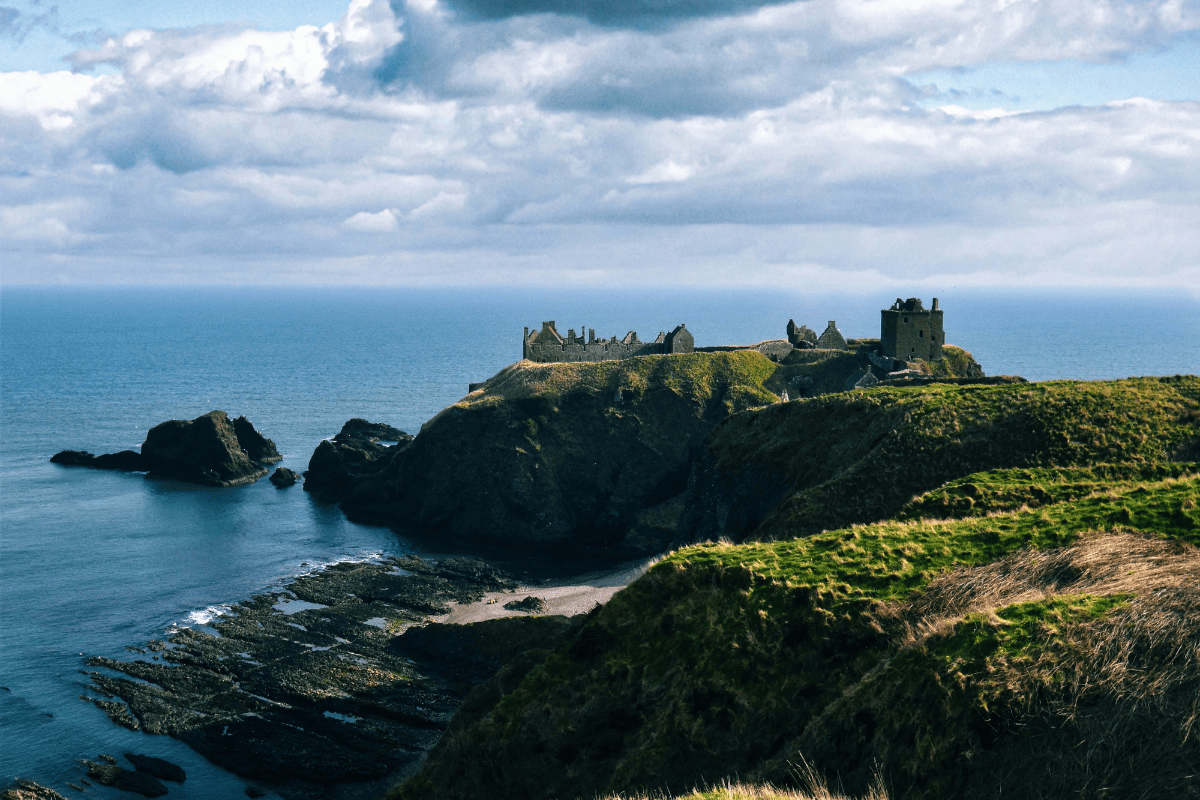
Dunnottar Castle is a ruined medieval fortress perched on a rocky headland above the North Sea, just south of Stonehaven in Aberdeenshire. The approach is a walk along cliffs with the castle growing larger as you get closer. It’s the kind of location that looks like a film set but isn’t. There's roofless halls, stone walls dropping into the sea, and on an overcast day the whole thing feels like it’s been deliberately designed to make you feel like you're in a 1800's gothic literature piece.
For elopements, Scotland has a significant advantage over England: you can legally marry almost anywhere with an approved celebrant, meaning you can have your ceremony at or near the castle without needing a separate registry office visit. The legal process requires an M10 form submitted to the local registrar at least 29 days before which is different from the English system but straightforward once you understand it. Read HERE on the entire process of an M10 Form and how to fill one out.
The castle itself is managed by a private trust and there are access considerations. Ceremonies within the ruins may require permission and potentially a fee. Many couples choose to have their ceremony on the clifftop path approaching the castle with the ruins as a backdrop. This avoids the venue booking complexity while keeping the dramatic setting. It gives it a very much gothic look, almost reminiscent of an A24 film.
Practically: Aberdeenshire is remote. The nearest city is Aberdeen. Stonehaven is a small coastal town. This is a destination elopement rather than a day trip. Plan accommodation locally and build in time for the M10 process. The upside of the remoteness is that you’re unlikely to be competing with other visitors for space, particularly during off-season.
For the full Scottish legal process, read our guide to eloping in Gretna Green, the M10 form and notice requirements are the same across Scotland. HERE
Carnglaze Caverns, Cornwall
A former slate quarry in Cornwall that’s been converted into an event space built around a subterranean lake. Ceremonies take place deep inside the cavern, illuminated by hundreds of candles reflected in the blue-green water. That's right, it's underground. The acoustics are extraordinary. Your voice carries through the stone chamber in a way that makes even a whispered vow feel significant.
It’s the most theatrical location on the list and the least natural, but for couples who want their gothic elopement to feel genuinely otherworldly rather than just moody, Carnglaze delivers something no outdoor location can match. The darkness, the water, the candlelight, the enclosed stone, it all creates a lovecraftian environment and that’s a different register of gothic that some couples are specifically looking for. If you want less Dracula and something more abstract this is your location.
Practically: Carnglaze operates as a licensed venue and can host legally binding ceremonies, which simplifies the process significantly. This means no separate registry office is needed. It’s near Liskeard in east Cornwall, accessible from the A38. The only thing to be wary of is capacity is limited (which suits elopements perfectly) and the cavern environment is cool and damp year-round, so dress accordingly.
Photography in low light is a consideration as you want a photographer comfortable working with candles and minimal ambient light. It’s not a point-and-shoot environment, it's something you need to curate and be aware of.
Photographing a Gothic Elopement
Gothic elopements need a photographer who’s comfortable working in difficult light. Low light, changing light, no light except candles. If your photographer’s portfolio is all golden hour and bright sunshine, they may struggle with the conditions that create the atmosphere you’re looking for. Look at their work in overcast, dusk, and indoor settings. That tells you whether they can handle your day.
The other thing that matters is restraint. The location is doing most of the work. A photographer who tries to over-direct or over-style a gothic elopement usually ends up making it feel like a costume shoot rather than something real. The best gothic elopement photos happen when the couple is genuinely interacting with the space. Standing in the wind, walking through ruins, being dwarfed by architecture, praying to one another. This is what should be happening, your photographer shouldn't pose you in running fields and giggling and laughi.ng
The Legal Bit
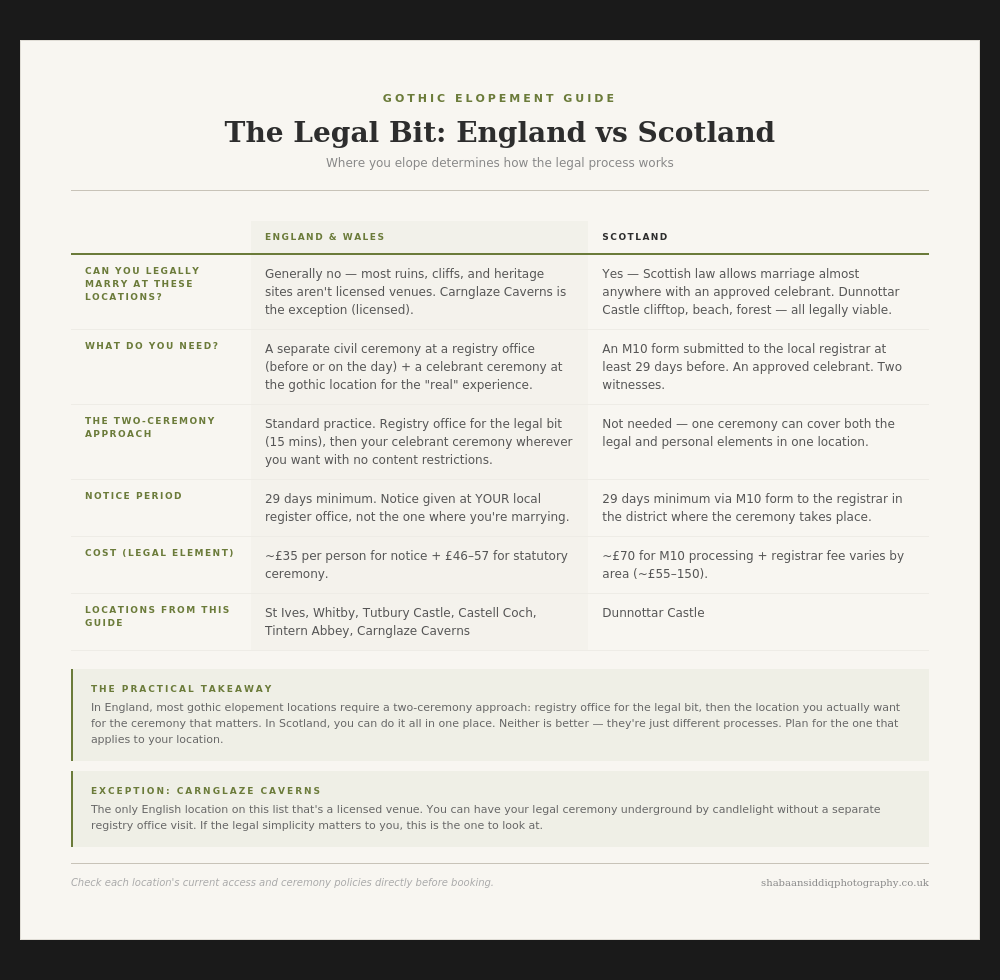
In England and Wales, you can’t legally marry at most of these locations. Carnglaze Caverns is the exception as it’s a licensed venue. For everywhere else, you’ll need a separate civil ceremony at a registry office, either on the day or beforehand, and then use the gothic location for a celebrant-led ceremony and portraits. This is the same two-ceremony approach used in most English elopements.
In Scotland, the rules are different. You can legally marry almost anywhere with an approved celebrant, which means locations like Dunnottar Castle become legally viable ceremony sites without needing a registry office visit. The Scottish process requires an M10 form submitted at least 29 days before.
For the full legal process, read our guides to eloping in Gretna Green (Scotland), What to expect at a registry office wedding (England), and civil vs religious ceremonies.
Planning a Gothic Elopement?
If you want a photographer whose style naturally fits that aesthetic rather than someone who’ll try to make it look like every other wedding then get in touch. I’ve shot at St Ives in exactly these conditions. I work with the light, the weather, and the location rather than against them. The images I produce in those conditions are some of my favourite work.
Exploring elopement locations? Read our guides to Cornwall, Gretna Green, and the Lake District.