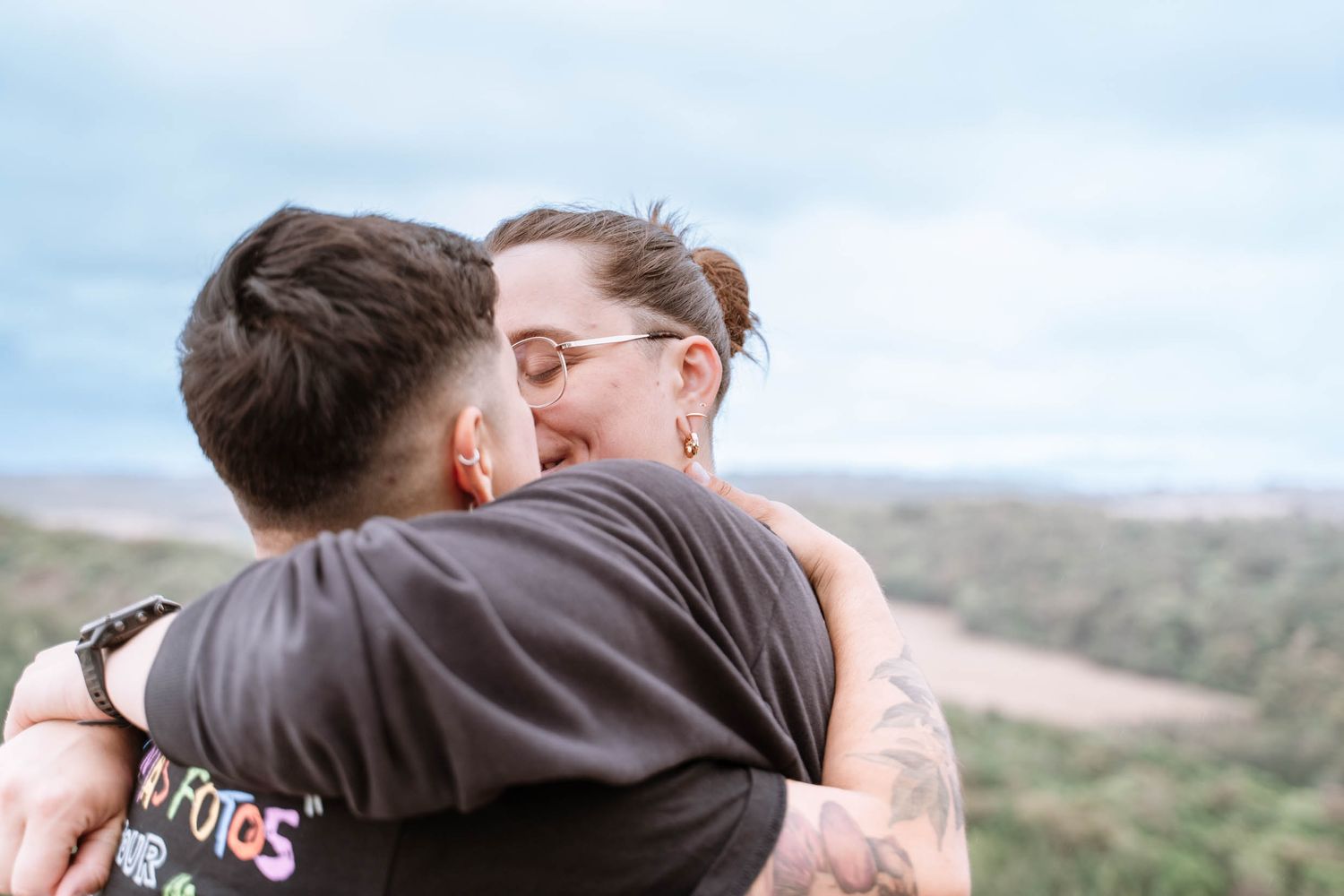
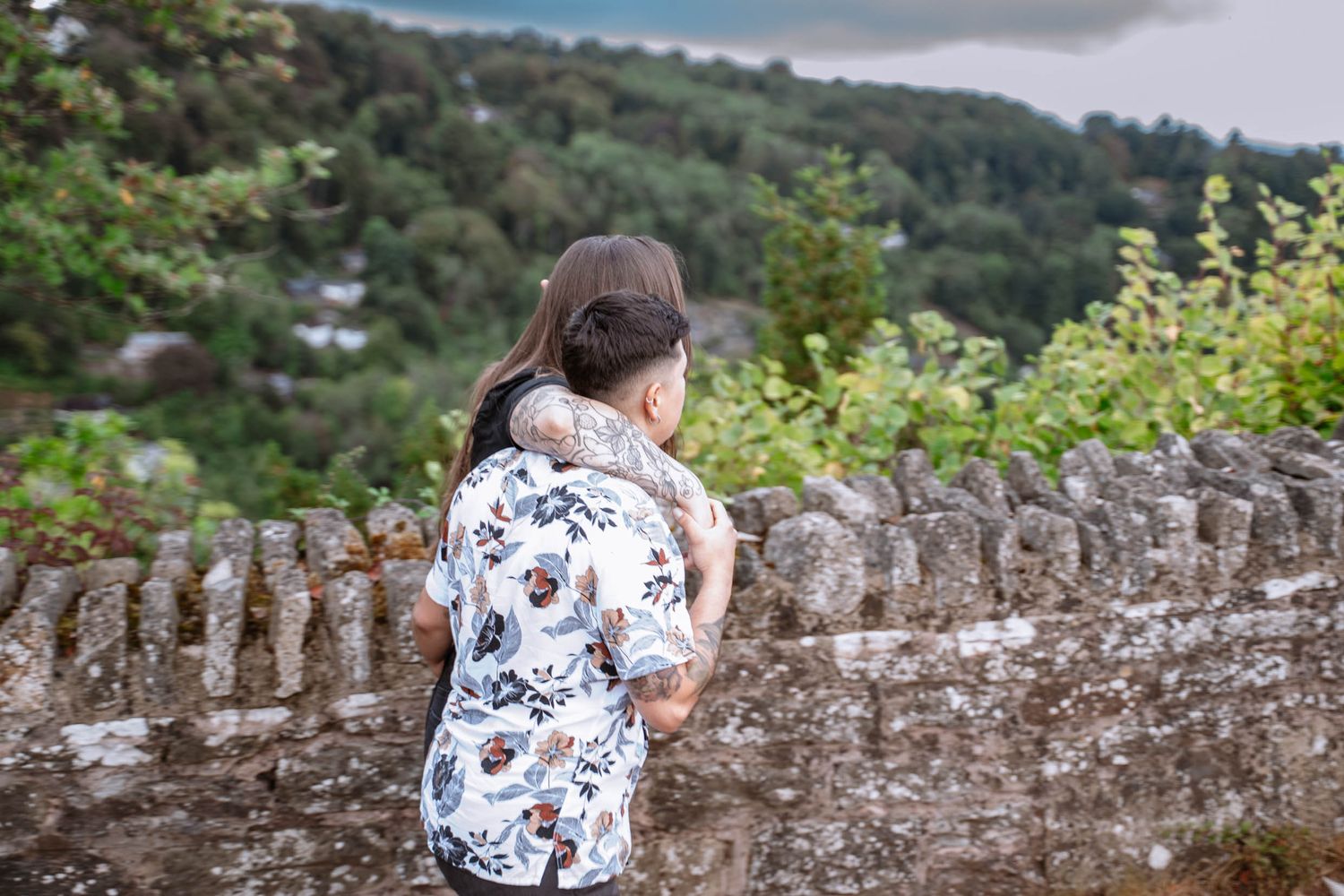
Maria proposed to Stella at Symonds Yat Rock after ten years together. Not in a restaurant, not somewhere aggressively decorated with candles, and not with a violinist appearing from behind a shrub. At Yat Viewpoint, with the Wye Valley doing most of the set design.
This was the kind of proposal that suited them because it was romantic without becoming overly polished. Maria had reached out weeks beforehand, settled on the exact viewpoint and was trying to plan the timing without letting Stella realise what was happening. The important part was keeping the surprise intact while still giving the photographs enough room to breathe afterwards. That balance is much more useful than a list of generic proposal poses.
How it all happened
Maria and Stella had already been together for ten years, so this was not a proposal built around proving that they were in love. They knew each other. They had the shorthand, the comfort and the slightly ridiculous familiarity that comes from having spent a decade as partners and friends as well as a couple. The photographs needed to hold onto that.
Maria got in touch weeks before the day and chose Symonds Yat Rock because the location meant something without needing to explain itself. She had a particular spot in mind at Yat Viewpoint and sent over the precise Google Maps pin once the plan became more definite. That mattered because there are two viewing platforms in the same general proximity, and “meet me at Symonds Yat Rock” is not quite the same instruction as “meet me at this exact patch of ground”.
There was also the small problem of not looking like a proposal was about to happen. Maria was working out whether 4pm or 5pm would be better, keeping an eye on the weather and quietly getting Stella to scout the conditions. Stella could read a synoptic chart, which is a very useful skill when planning a proposal and a completely unnecessary way to make the rest of us feel underqualified.
My cover story was simple: on the day, Maria could ask me to take photographs because I was pretending to be a hiking photographer. It was believable enough, especially at a viewpoint where people are already taking pictures and looking at the landscape. I arrived well before them so I could get into position and avoid making the first few minutes feel like a badly disguised ambush.
The day itself
Maria and Stella arrived at the viewpoint at roughly 4:20pm and shared their location as they got closer. The weather had been uncertain all day. It might rain, which can either give a landscape some atmosphere or make everyone regret leaving the house. Usually both things are possible within the same hour.
Once they were in the right place, the cover story did its job. Maria asked me to take some photographs, and the moment could unfold without a large production forming around it. That is the useful thing about a proposal in a public landscape: you do not need to create a scene. You need to know where to stand, what direction the light is coming from and when to stop pretending that the view is the main subject.
The exact pin mattered because there are two viewing platforms in the same general proximity. Symonds Yat Rock is a useful destination name, but it is not always a precise meeting point. The chosen angle also changes the photographs. A wide landscape can make the moment feel expansive, but the wrong position can allow the background to do all the work while the couple disappears into it.
Because the viewpoint is public, the photographer has to be present without becoming the event. Someone else may walk through the background. A visitor may stop at the view at exactly the wrong moment. That does not mean the proposal has failed; it means the plan needs enough flexibility to keep moving. The aim is not to manufacture an empty landscape. It is to photograph the couple clearly while the location still feels like a real place they happened to be in.
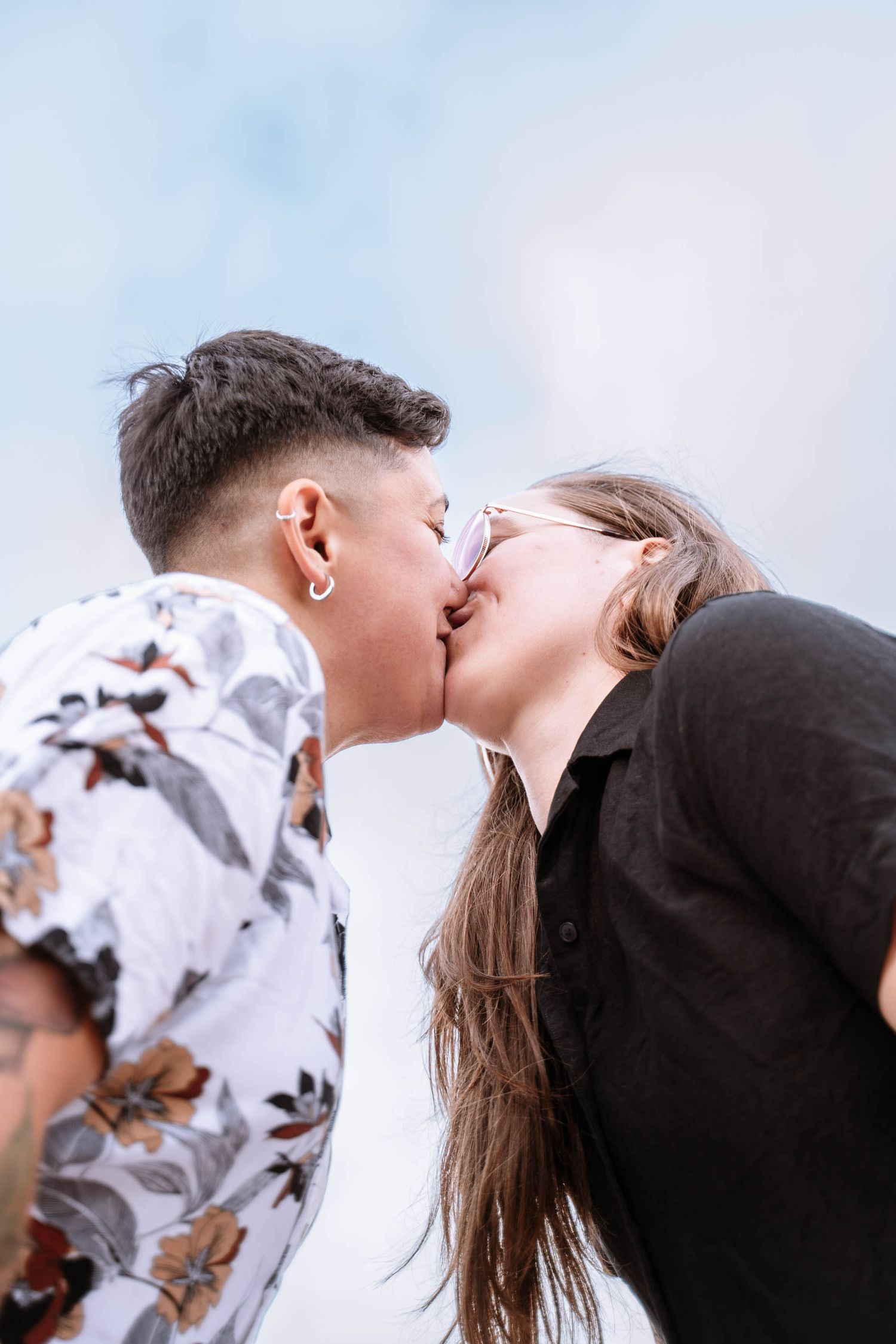
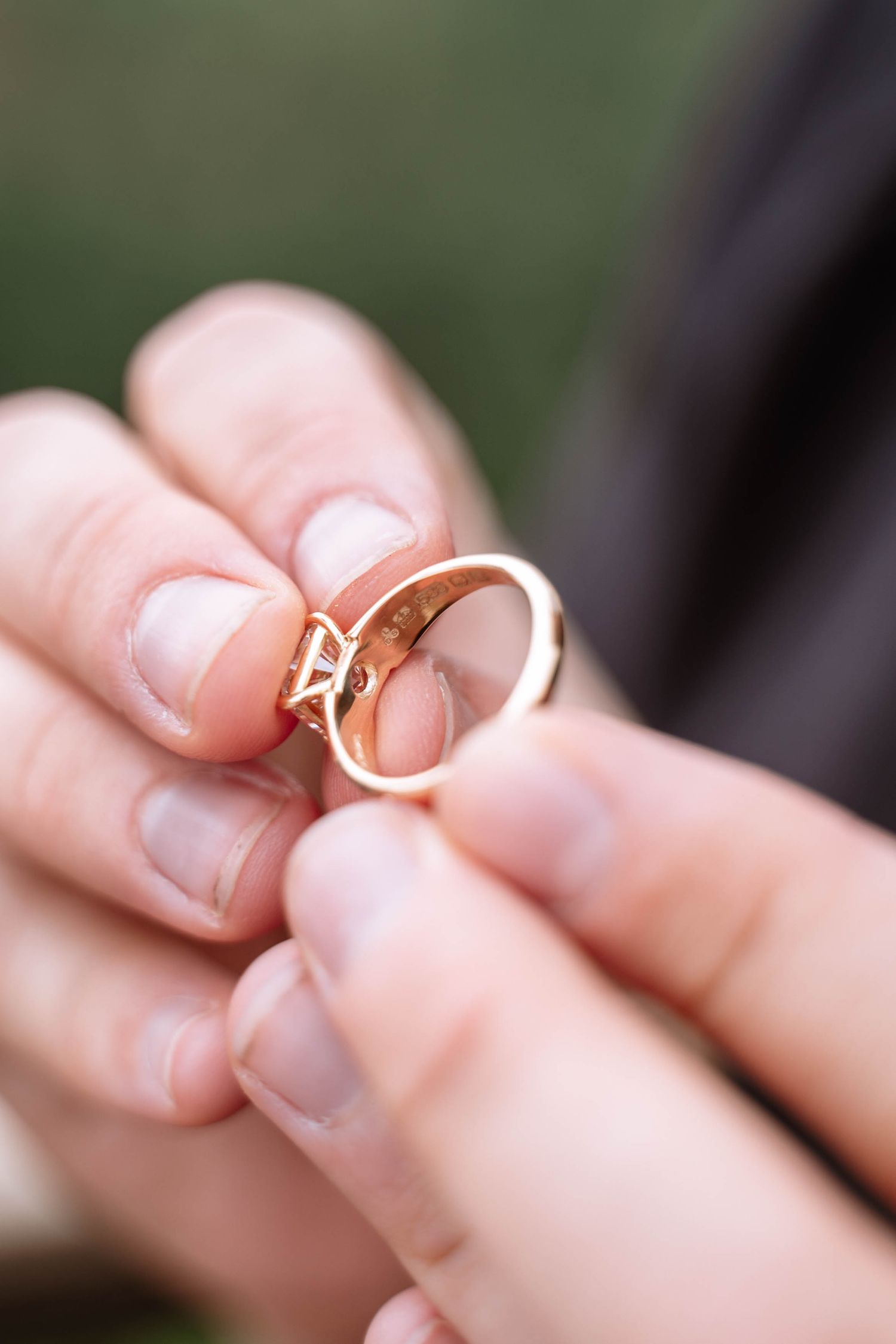
The proposal itself is shown in a fairly complete sequence. Maria gets down on one knee. Stella realises what is happening. There is the ring, the reaction, the embrace and the kiss. The photographs work because the order of events is allowed to stay visible. It does not begin and end with a single wide shot of a person kneeling in front of a landscape. You can see the question, the answer and the immediate shift in the two of them once the surprise is no longer a surprise.
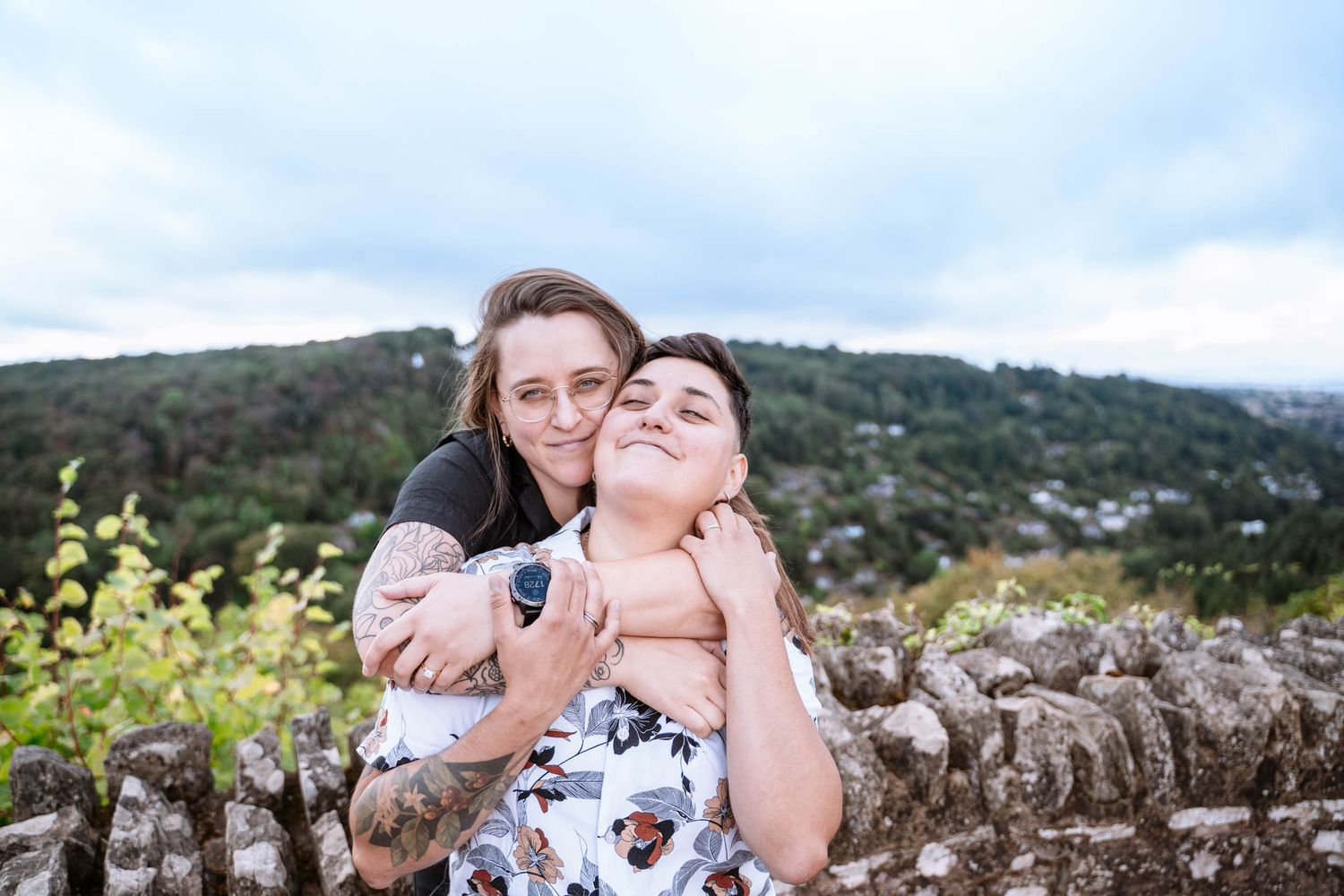
That sequence also gives the location its correct role. Symonds Yat Rock is present, and the valley gives the proposal scale, but the landscape is not asked to carry the entire story. The important thing is still Maria and Stella looking at one another. The view is the context. It is not a substitute for a personality.
What Made the Photographs Work?
After the proposal, there was no need to launch straight into a formal engagement session. They had just experienced a fairly significant change to the day, even if the relationship itself had already been in place for ten years. The first photographs afterwards were about giving them space to register it, then following the energy that was already there.
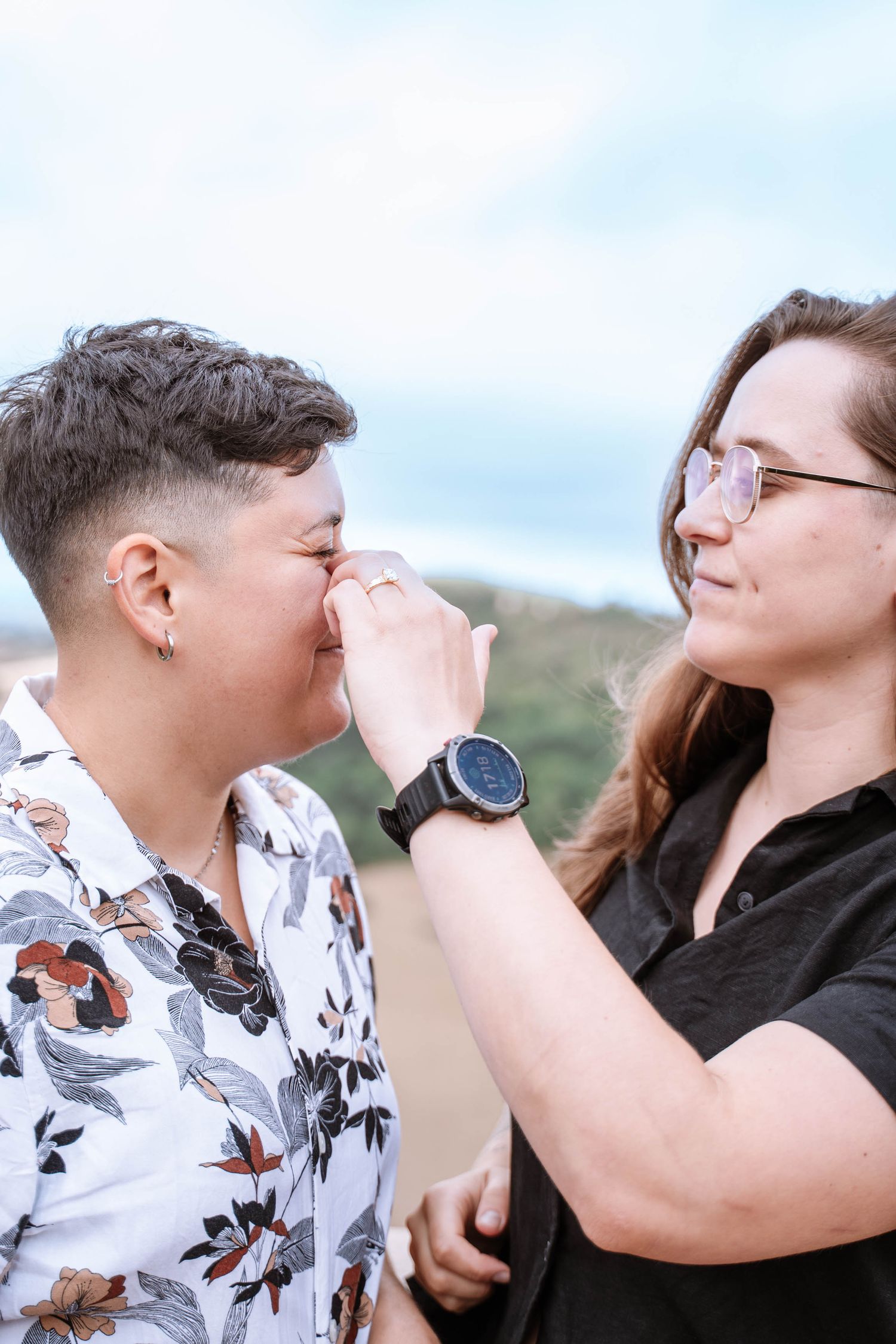
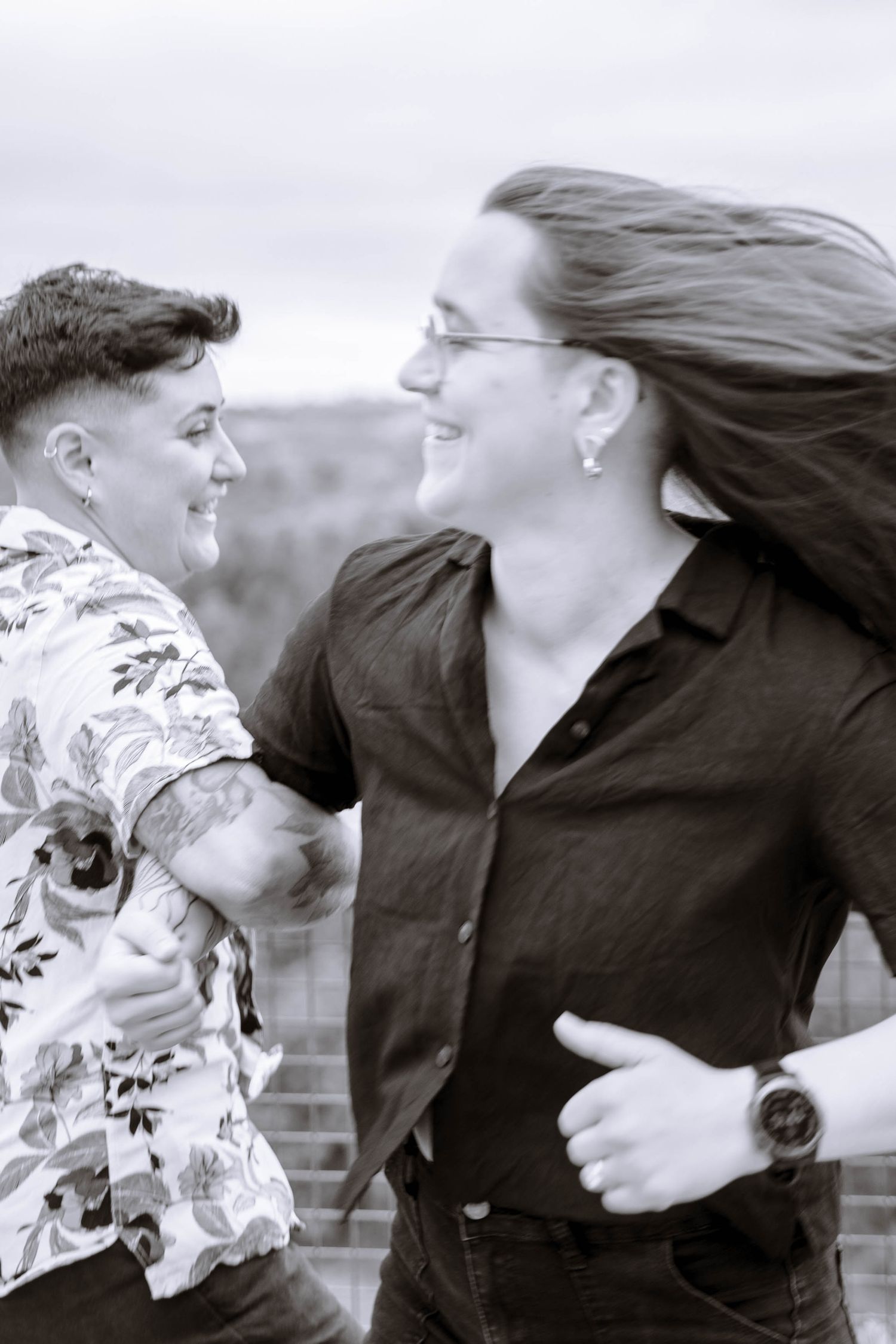
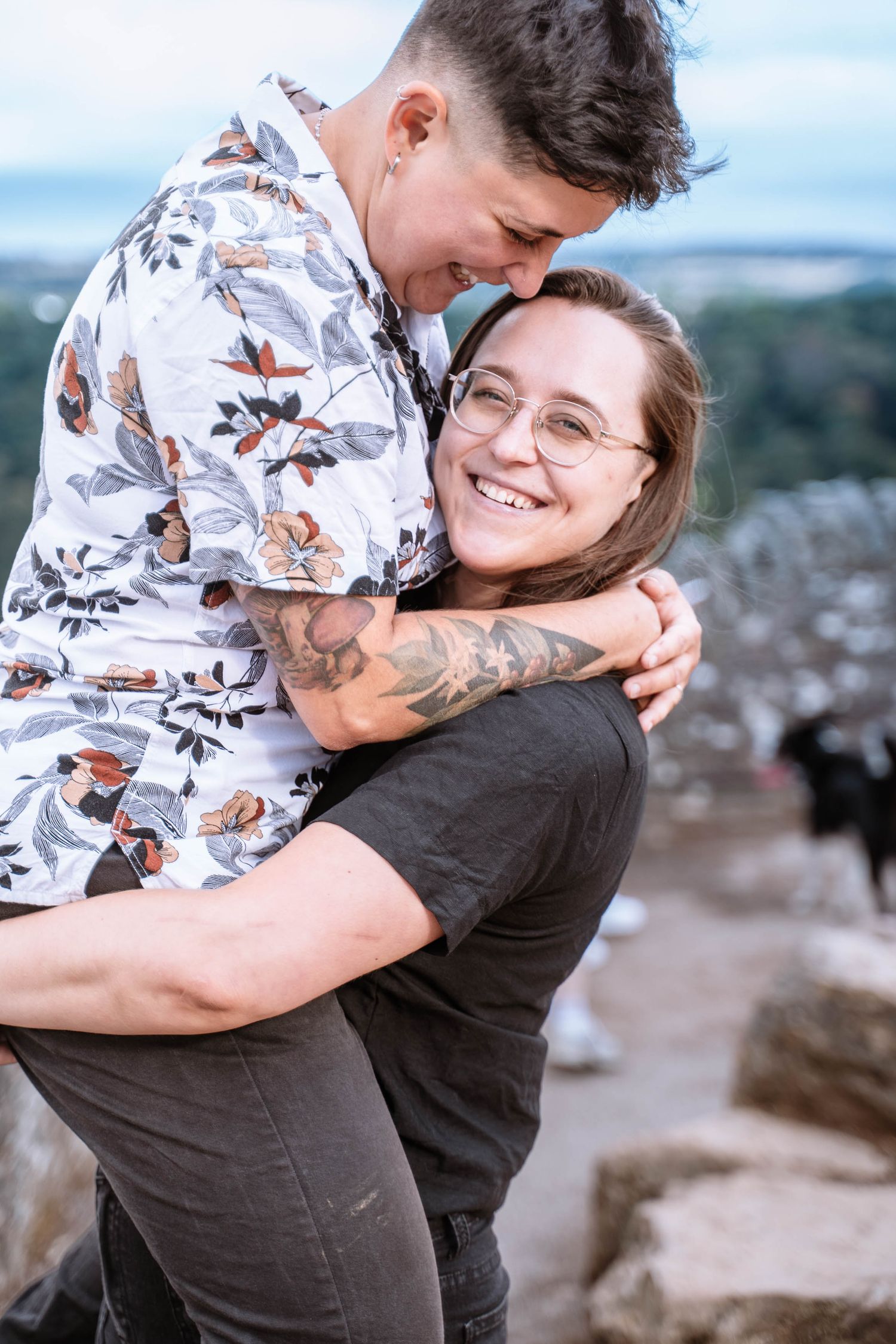
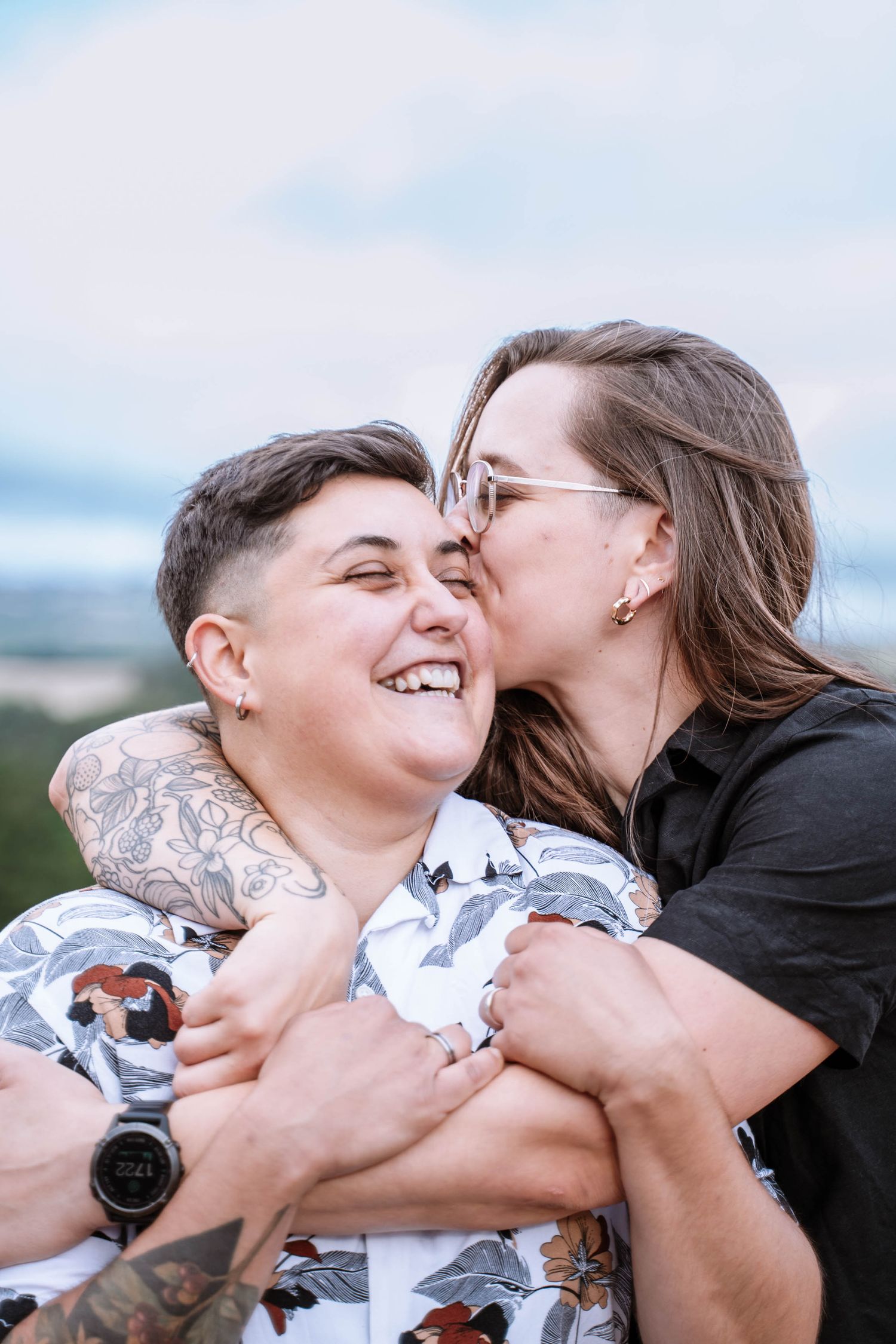
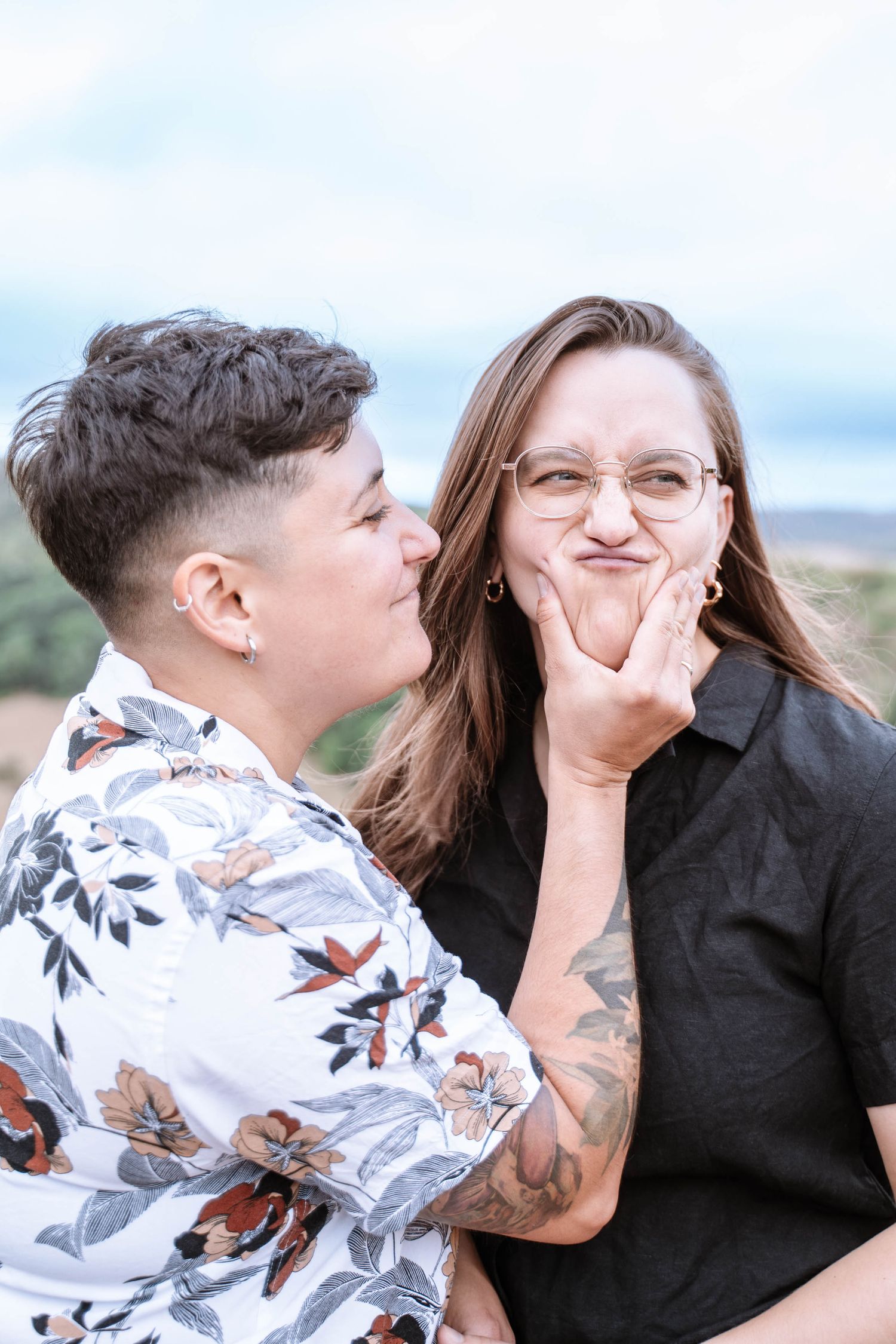
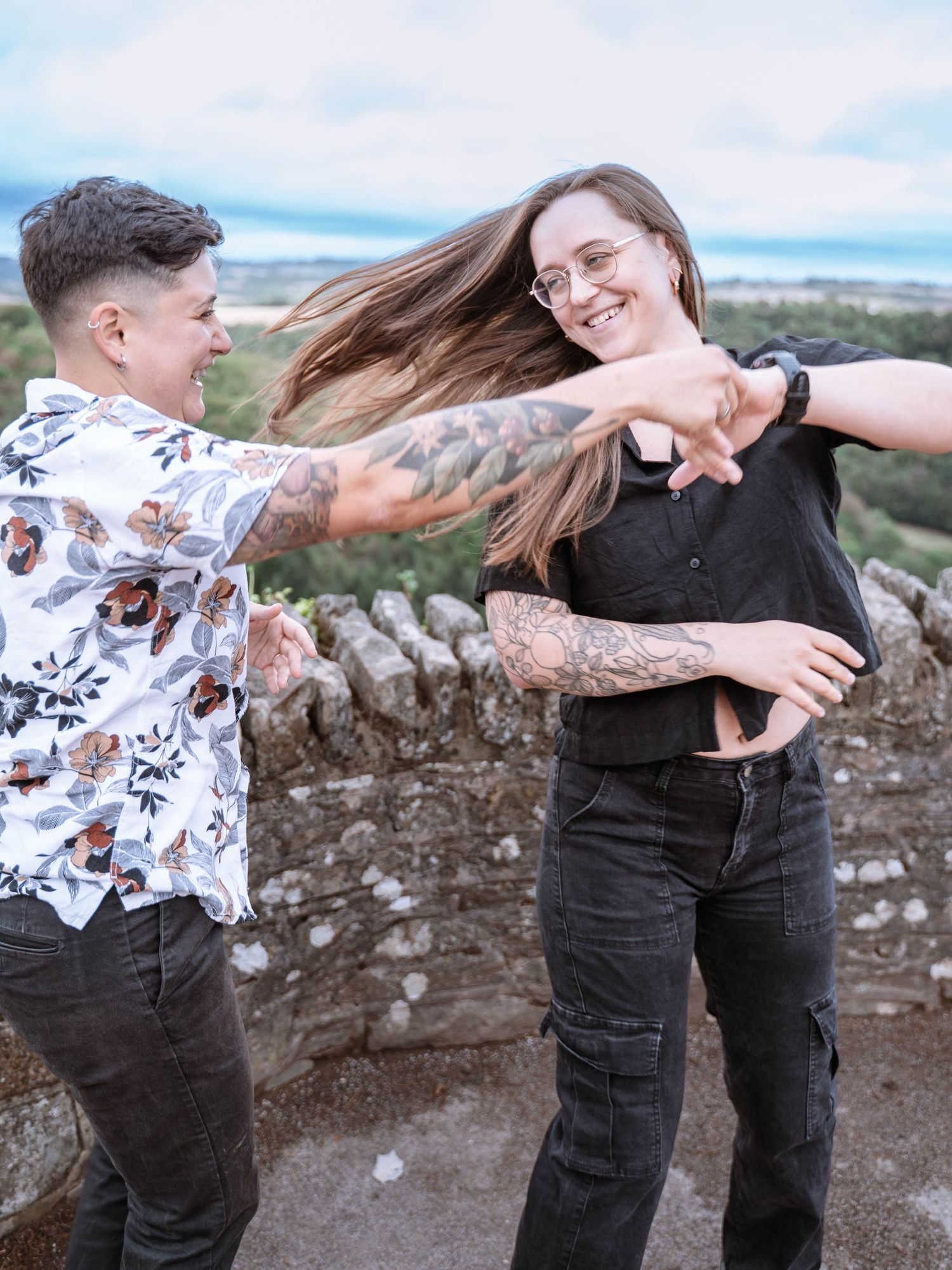
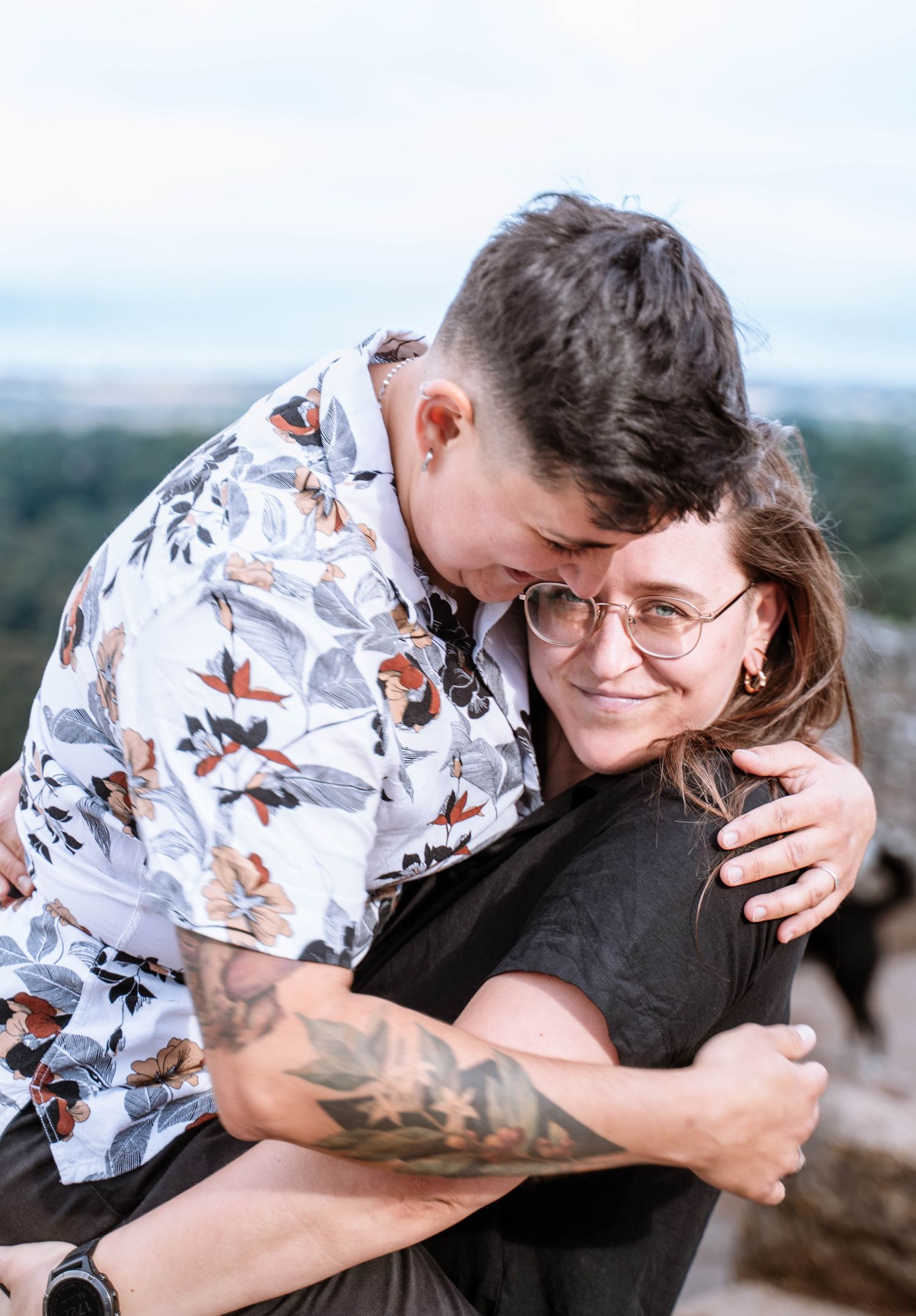
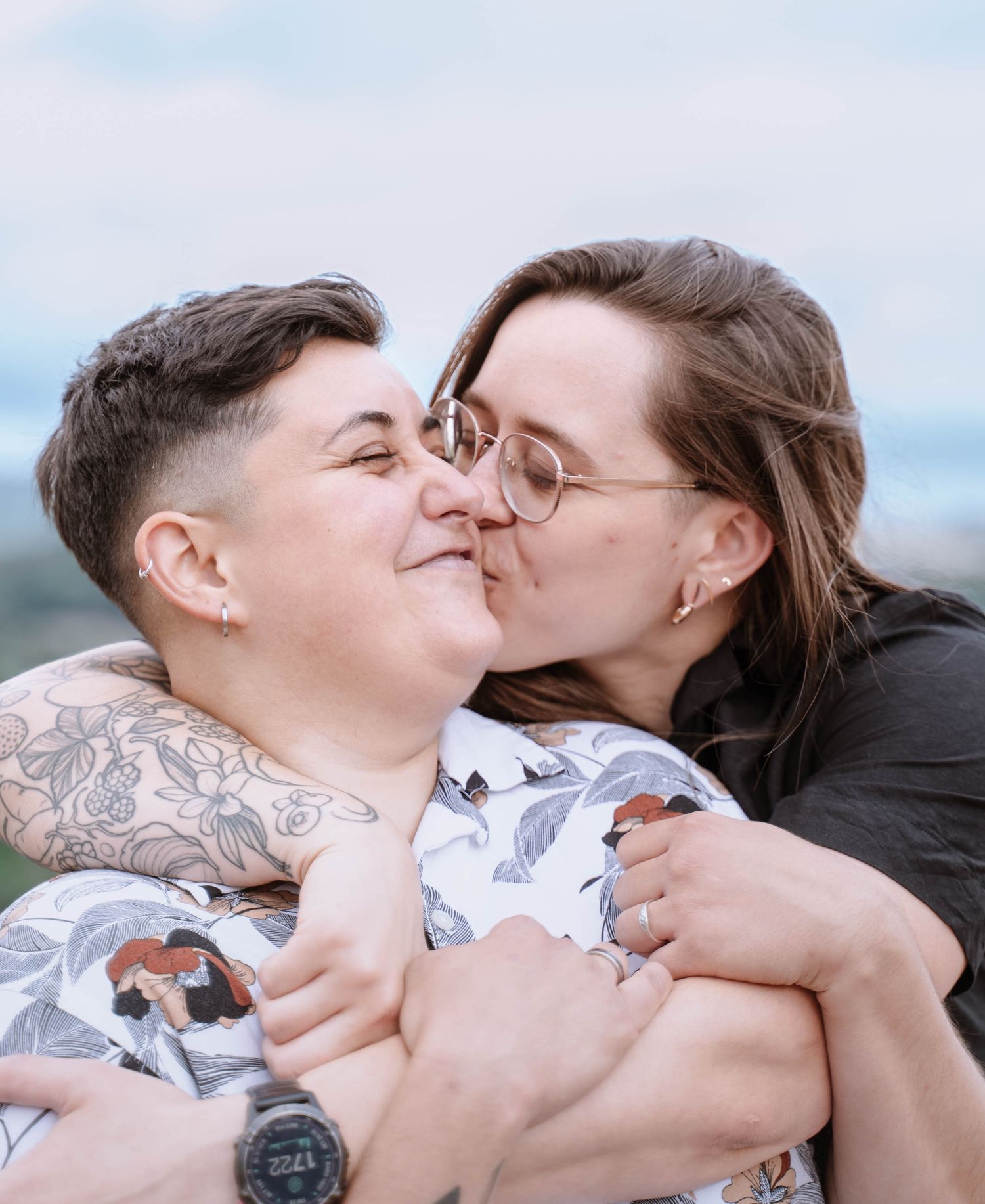
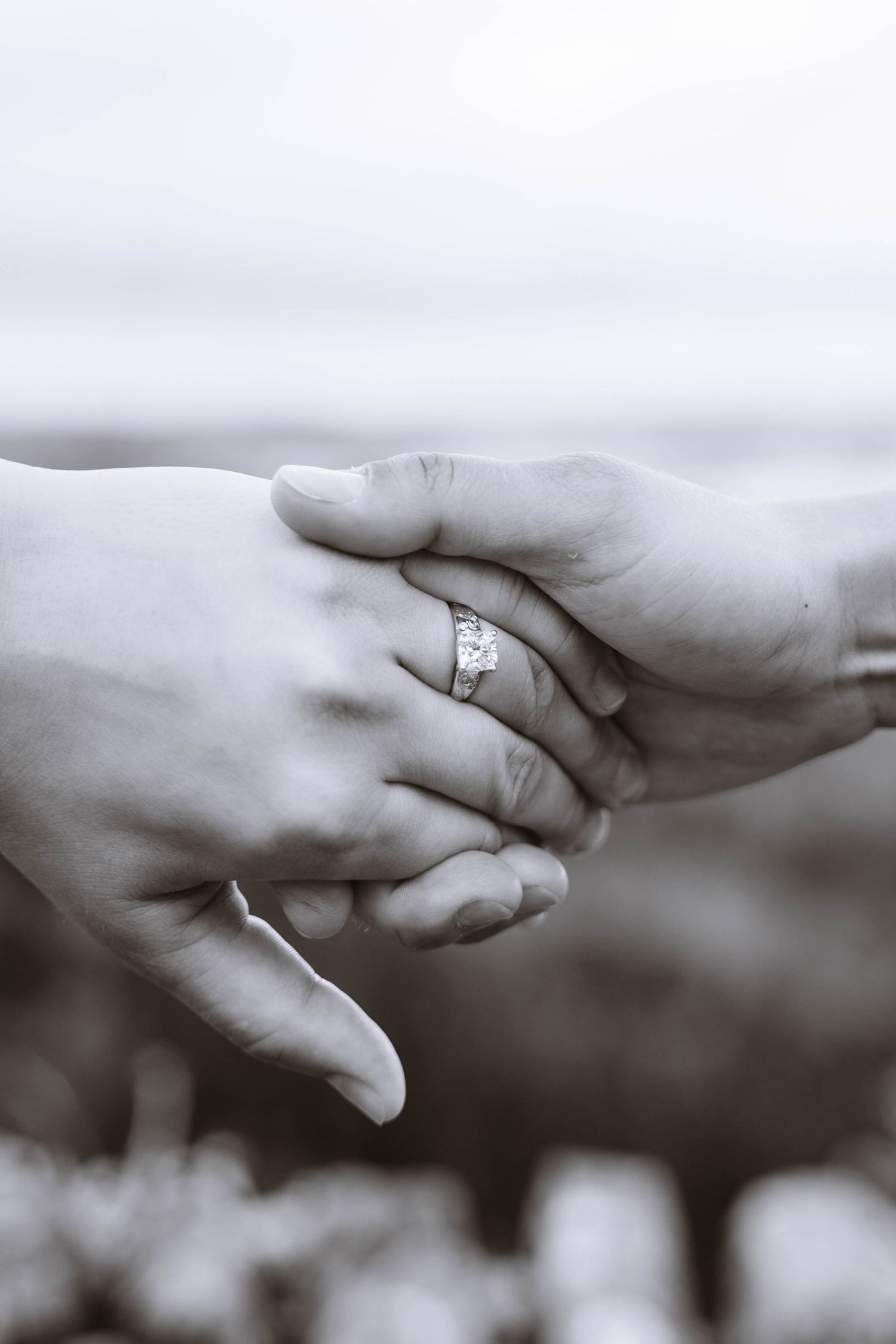
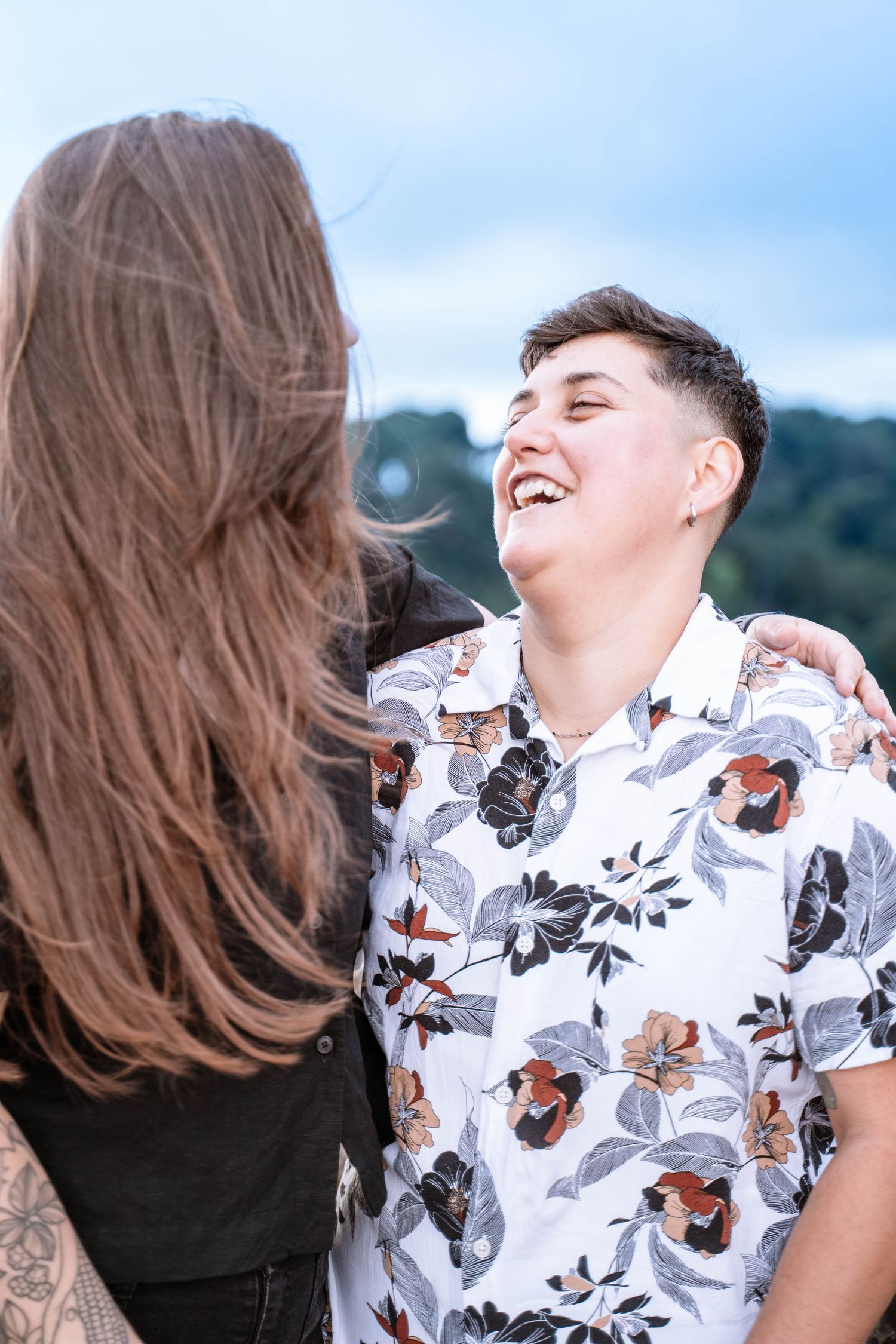
The gallery moves between close frames and wider portraits. There are photographs of the ring and hands, but they are not treated as the whole point of the session. There are black-and-white images, kisses, embraces and the sort of physical closeness that comes from people who are genuinely comfortable with each other. There are also more playful frames, where the relationship feels like friendship as much as romance. That combination is important. It makes the images feel like Maria and Stella rather than two strangers being directed into an engagement-photo template.
This is where a location like Symonds Yat Rock helps. You have the large view when you need distance and scale, then enough room to bring the photographs back in close. A proposal can look very dramatic from far away, but it can also become anonymous. The closer photographs give the story its detail: the ring, the hands, the way they stand together, and the fact that a ten-year partnership does not suddenly become a different relationship because one person has asked a question.
I also prefer leaving room for movement after the proposal. People who have just got engaged do not usually need a twenty-minute lecture on how to hold their hands. They need a minute, perhaps a walk, and a few simple prompts if they want them. The photographs become more useful when they include the transition from the planned moment into the rest of the day.
Frequently Asked Questions About a Symonds Yat Rock Proposal
Is Symonds Yat Rock a good place to propose?
Yes, particularly if you want a proposal with a strong landscape and a location that does not need much decoration. The view gives the photographs scale, while the personal part of the day remains between the two of you. It works best when you choose the exact viewpoint in advance rather than treating the whole area as one meeting point.
How far in advance should I contact a photographer?
There is no single correct timeline, but Maria reached out weeks before the proposal. That gave us time to talk through the location, the cover story, the possible timings and the exact pin. A shorter lead time can still work, but the more secretive or specific the plan is, the more useful it is to give the photographer room to understand it properly.
Can a proposal at Symonds Yat Rock be photographed discreetly?
It can, but discreet does not mean invisible. The photographer still needs to arrive early, know where to stand and have a believable reason for being there. A simple cover story can help, especially at a viewpoint where people naturally take photographs. Share the precise location and your estimated arrival time, then update the photographer while you are travelling rather than leaving everyone to guess from a pin that has not moved in forty minutes.
What happens if it rains?
You decide how much weather you are willing to accept before the day. Rain may give the landscape more atmosphere, but you also need to consider comfort, visibility, muddy ground and whether the person being proposed to will want to continue with portraits afterwards. A little flexibility is more useful than pretending the forecast is irrelevant. If the conditions become miserable, the proposal can still happen and the photographs can be kept shorter.
Do we need to pose for engagement photographs afterwards?
No. The proposal already gives you a real moment to photograph. Afterwards, I would rather start with what you naturally do than put you straight into a sequence of stiff poses. We can take a few portraits, use the view, photograph the ring and make some quieter frames, but there is no requirement to perform being engaged. Ten years together has already provided enough evidence.
What should I send the photographer before the proposal?
Send the exact map pin, the likely arrival time, the route you expect to take, the cover story you are comfortable using and anything that would make the surprise fail. Tell them if there are two nearby viewpoints or if your partner is likely to wander away from the original plan. On the day, share your live location when you are close. It is much easier to adapt a plan when the photographer knows where you actually are.
What if my partner starts to suspect something?
Do not panic and start improvising three new plans at once. That usually makes the day look more suspicious, not less. Keep the cover story simple, let the photographer behave naturally and remember that the proposal does not need to happen at the first possible second you reach the viewpoint. A short pause, a photograph of the view or a small change of position can give everyone time to settle without making the moment feel staged.
Do we need to decide the exact time weeks in advance?
Not necessarily. Maria had a rough timing in mind and kept checking the weather and the day around it. The useful thing was having a clear location and a way to update me while they were travelling. For a proposal at a viewpoint, the exact arrival time may move because of traffic or the rest of the day. The photographer needs enough notice to be ready, not a timetable that pretends real journeys are ever that obedient.
If you are planning a proposal at Symonds Yat Rock and want the moment photographed without turning it into a production, get in touch. We can talk through the exact viewpoint, the cover story, the weather and what you want to happen after the surprise is over.
Read next
If you're interested in our Fletcher Moss Proposal, then read here!
We recently also covered a wedding at The Lodge! Read Here!