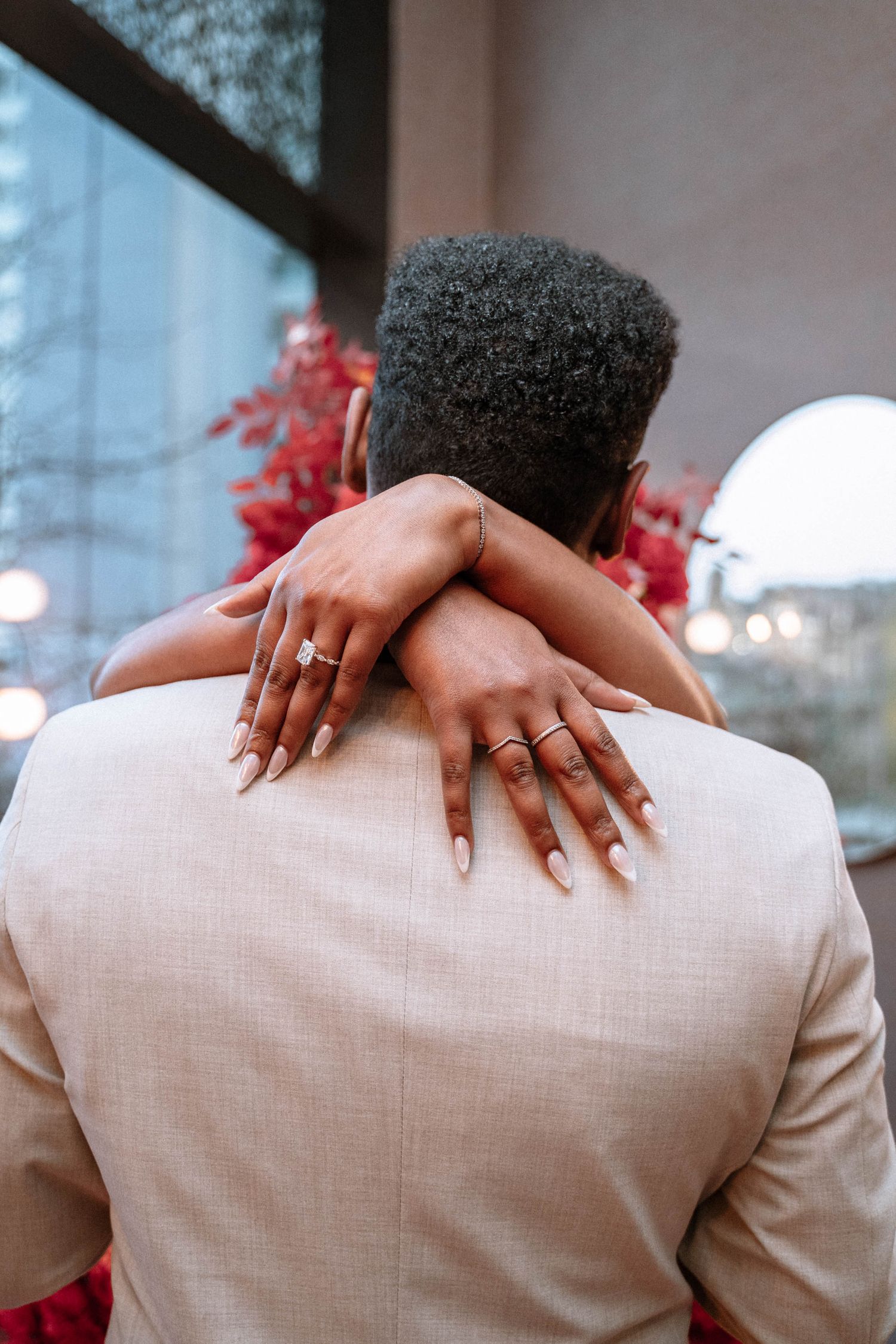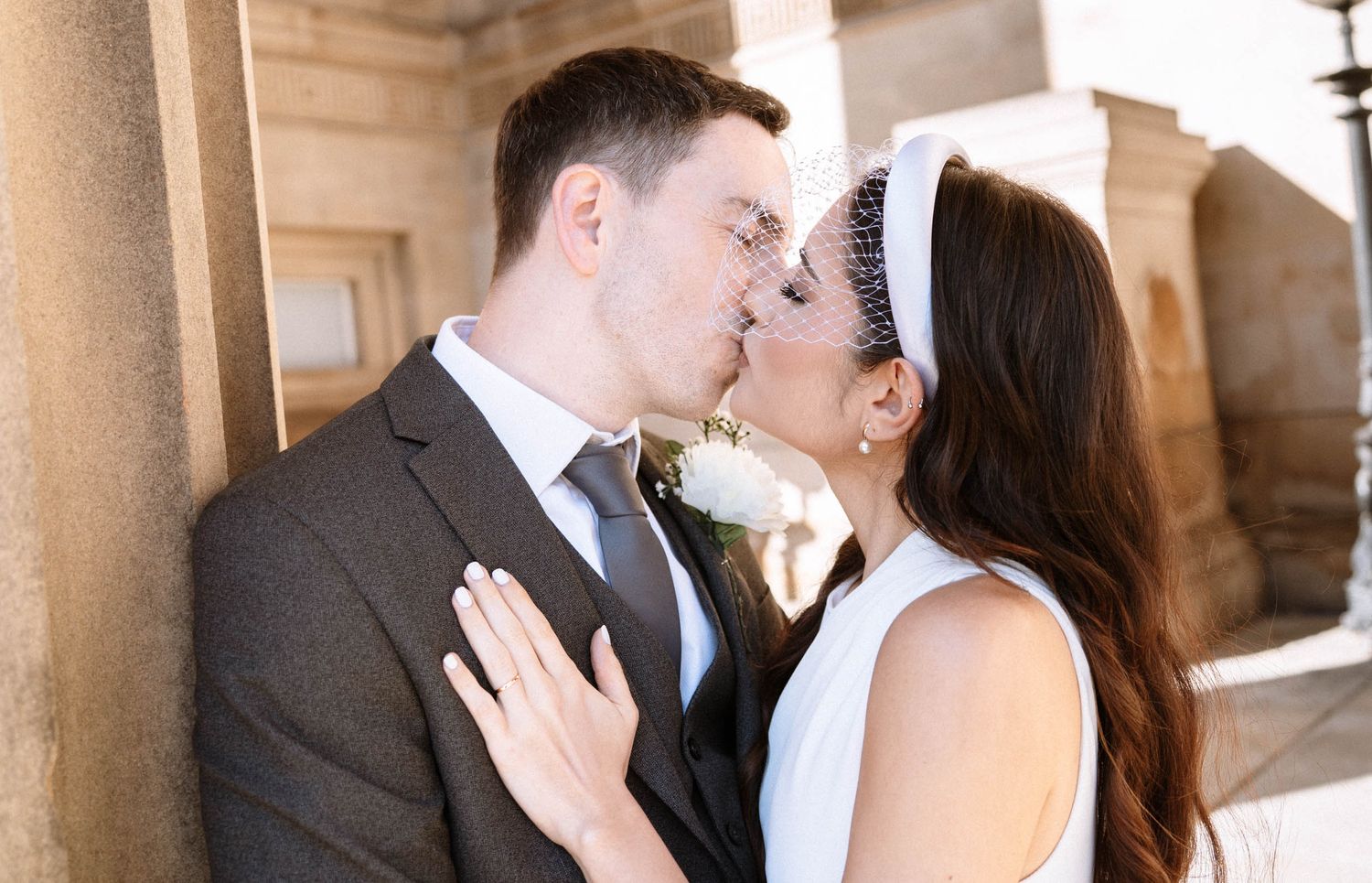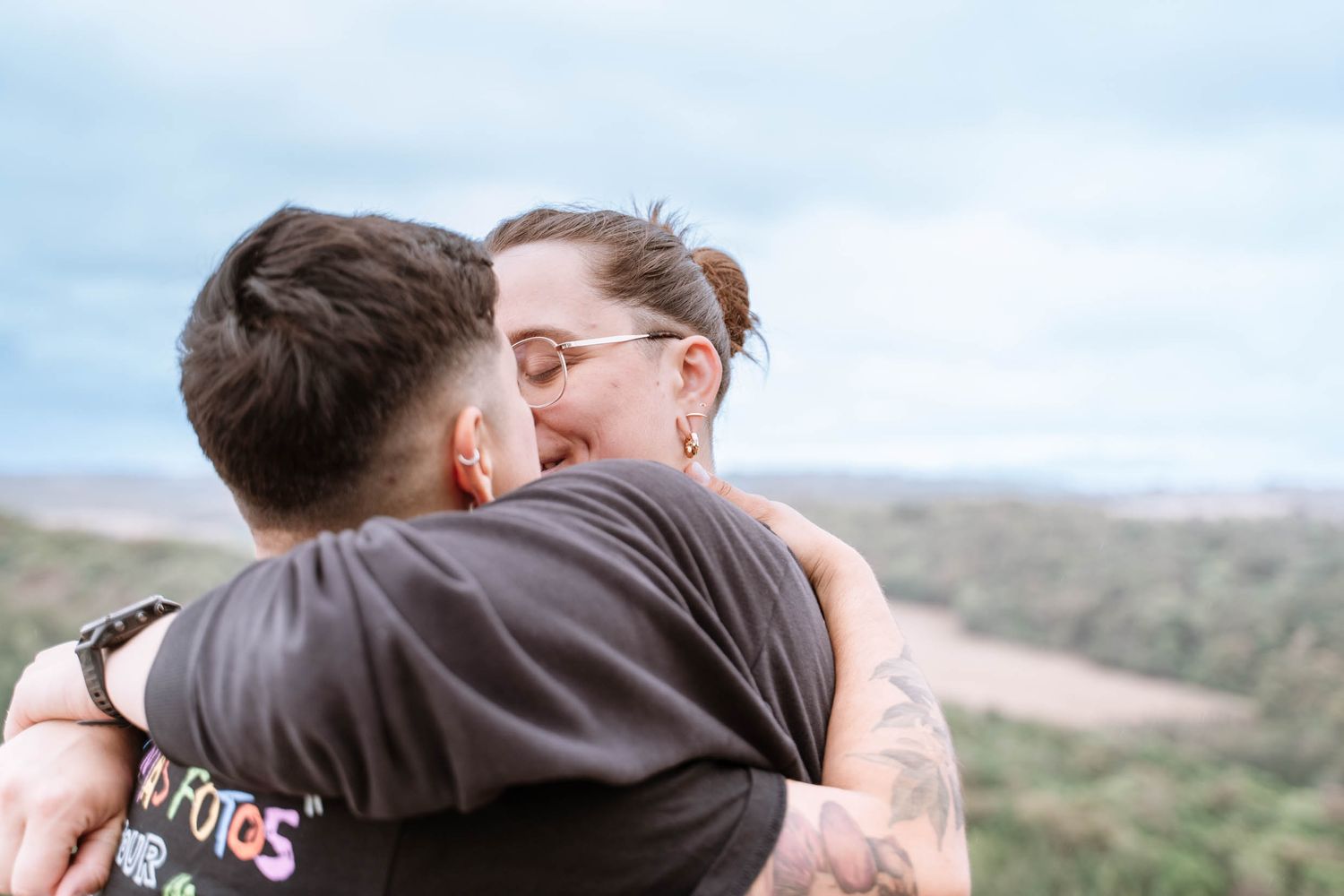
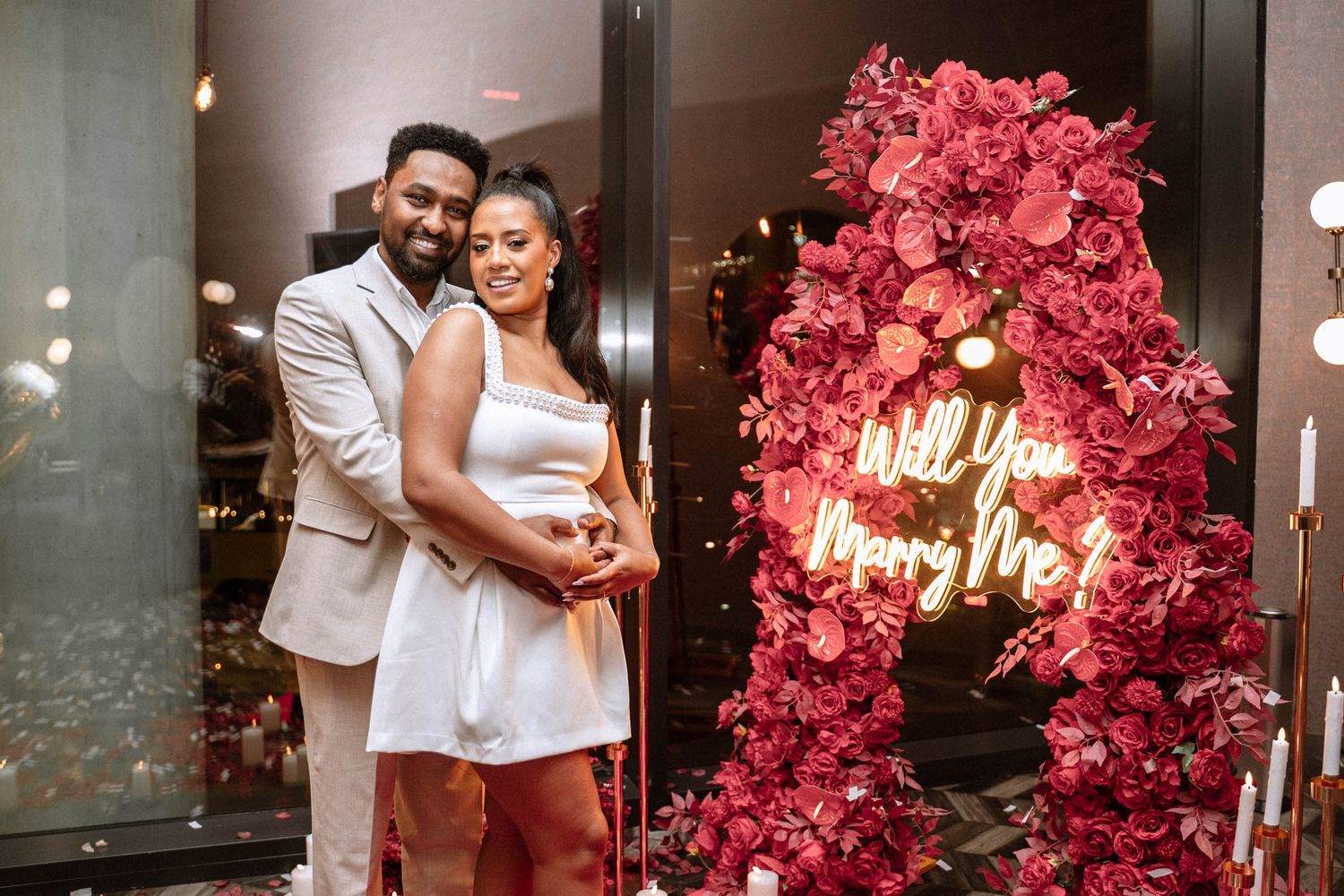
Introduction
So. You decided to do an engagement shoot and now you’re staring at your wardrobe wondering what to wear, Googling “best engagement shoot locations” and getting Pinterest boards full of lavender fields you’ve never been to all whilst quietly panicking about whether you’re going to look awkward in every single photo and if your partner can smile authentically and not look like he's been held hostage.
Here’s the good news: planning an engagement shoot is not that complicated. The internet makes it feel like a production because every guide is trying to sell you a vision of what your shoot “should” look like. In reality, the best engagement shoots are the ones where the couple showed up in clothes they feel good in, went somewhere that photographs well, and trusted their photographer to handle the rest.
This guide covers the practical stuff. What to wear without overthinking it, where to go without needing a Pinterest board, when to book it, what happens on the day, and the things that actually make a difference versus the things that don’t matter at all.
What to Wear to Your Engagement Shoot
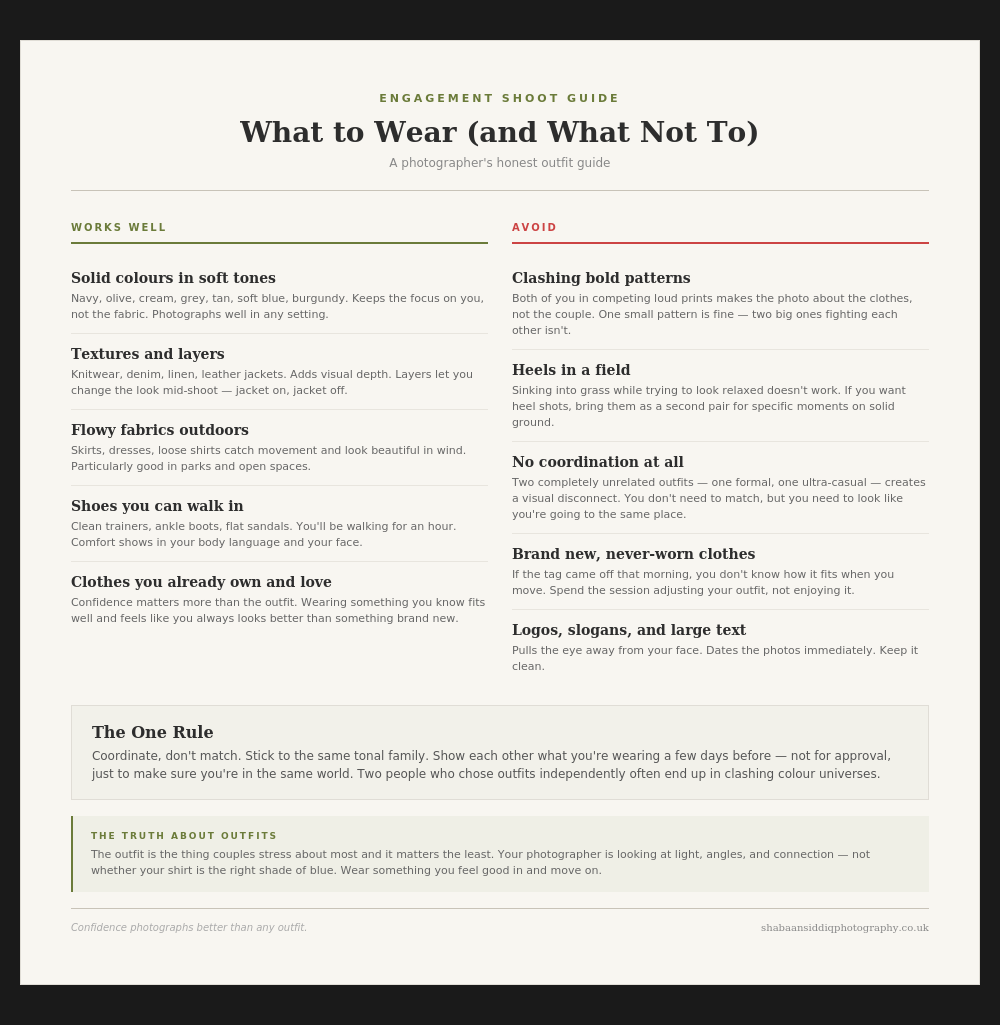
The Simple Rule: Coordinate, Don’t Match
You don’t need to wear the same colour. You don’t need to buy new outfits. You need to look like two people who are going to the same place at the same time. If one of you is in a cocktail dress and the other is in joggers and trainers, that disconnect shows in photos. If you’re both in smart-casual that sits in the same tonal range, you’ll look like a couple, not two people who arrived separately and the photographer just had a camera on them.
Stick to a loose colour palette. Soft neutrals, muted tones, earth colours as these photograph well in almost any setting. Think navy, olive, cream, grey, tan, soft blue, burgundy. You don’t both need to wear these colours, but if your outfits sit in the same range then the photos will feel cohesive without looking staged.
What Works on Camera
Solid colours are your safest bet (see the pattern here?). They keep the focus on you rather than your clothes. Textures add depth without being distracting, knitwear, denim, linen, leather jackets all photograph well because they give the image something to work with beyond flat colour. Layers are useful because they let you change the look between shots without a full outfit change! Jacket on, jacket off, sleeves rolled up. Simple.
I know it sounds like I'm directing a vogue shoot, I'm not, I just have a love for fashion and a background in fashion photography, so it helps carrying it over to make your everyday photos look much better.
Flowy fabrics, skirts, dresses, loose shirts, all look great in outdoor settings because they catch movement. Wind becomes your friend rather than your enemy. Fitted clothes work better for urban settings where clean lines suit the backdrop.
What Doesn’t Work
Bold clashing patterns. If one of you is in a loud floral and the other is in heavy stripes, the image becomes about the clothes, not you. A small pattern on one person is fine but if both of you are wearing competing prints then it all falls apart fast and flat.
Impractical shoes, yes. If we’re walking through a park or along unpaved paths, you might have heels on and those are going to sink into the ground and you’ll spend the session thinking about your feet placement instead of your partner. Wear shoes you can actually walk in. You can always bring a second pair for a few specific shots if you want.
Brand new clothes you’ve never worn before is a no go. If the tag came off that morning, you don’t know how it fits when you move, whether it rides up, or whether you’ll be adjusting it every two minutes. Wear something you already know you look and feel good in. The confidence shows more than the outfit.
Logos, slogans, and anything with large text. They pull the eye away from your face and date the photos immediately. If something looks trendy now, think if it will in the next few months. Fast-fashion is an issue, but wearing logos and slogans from a while ago show it's not dated or "trendy".
Don’t Overthink It
The outfit is the thing couples stress about most and it matters the least. Your photographer isn’t judging your fashion choices. They’re looking at light, angles, and connection. Wear something you feel comfortable in, keep the colours in the same family, and move on to the things that actually matter.
When to Book Your Engagement Shoot
How Far Before the Wedding
Three to six months before the wedding is the sweet spot for most couples. It's close enough that the photos are current but also far enough out that you can use them for save-the-dates or your wedding website if you want to. If you’re doing it purely to get comfortable with your photographer before the big day, one to three months works well as that's close enough that the familiarity carries over.
If your photographer includes a pre-wedding shoot free with the wedding package, book it in as early as you can. Photographer diaries fill up and leaving it too late means less flexibility on dates and times.
Time of Day
Late afternoon is the best time for an engagement shoot. The light in the hour or two before sunset is great and photographers call it “golden hour” and they’re not being dramatic, it genuinely makes everyone look better. The light becomes naturally warm, soft, and flattering. It wraps around you rather than hitting you from above, which is what midday sun does. Midday light is harsh, creates unflattering shadows under the eyes and nose, and makes everyone squint.
If golden hour isn’t possible (it happens as astronomy is weird in ways I can't describe), overcast days are actually great for photos. Cloud cover acts as a giant soft light, spreading it evenly. You won’t get the warm golden tones, but you also won’t get harsh shadows. Cloudy days are a photographer’s second-favourite weather after golden hour.
Avoid midday in direct sun if you can. It’s the hardest light to work with and the photos will show it.
Seasonality
Every season works. Spring gives you blossom and fresh greens. Summer gives you long golden evenings. Autumn gives you warm colours and dramatic skies. Winter gives you moody atmosphere, bare trees, and the option to lean into cosy outfits and warm light.
The only season-specific advice: if you’re shooting outdoors in the UK between November and February, golden hour arrives early (sometimes before 4pm) and disappears fast.
How to Prepare (Without Overdoing It)
Talk to Your Photographer
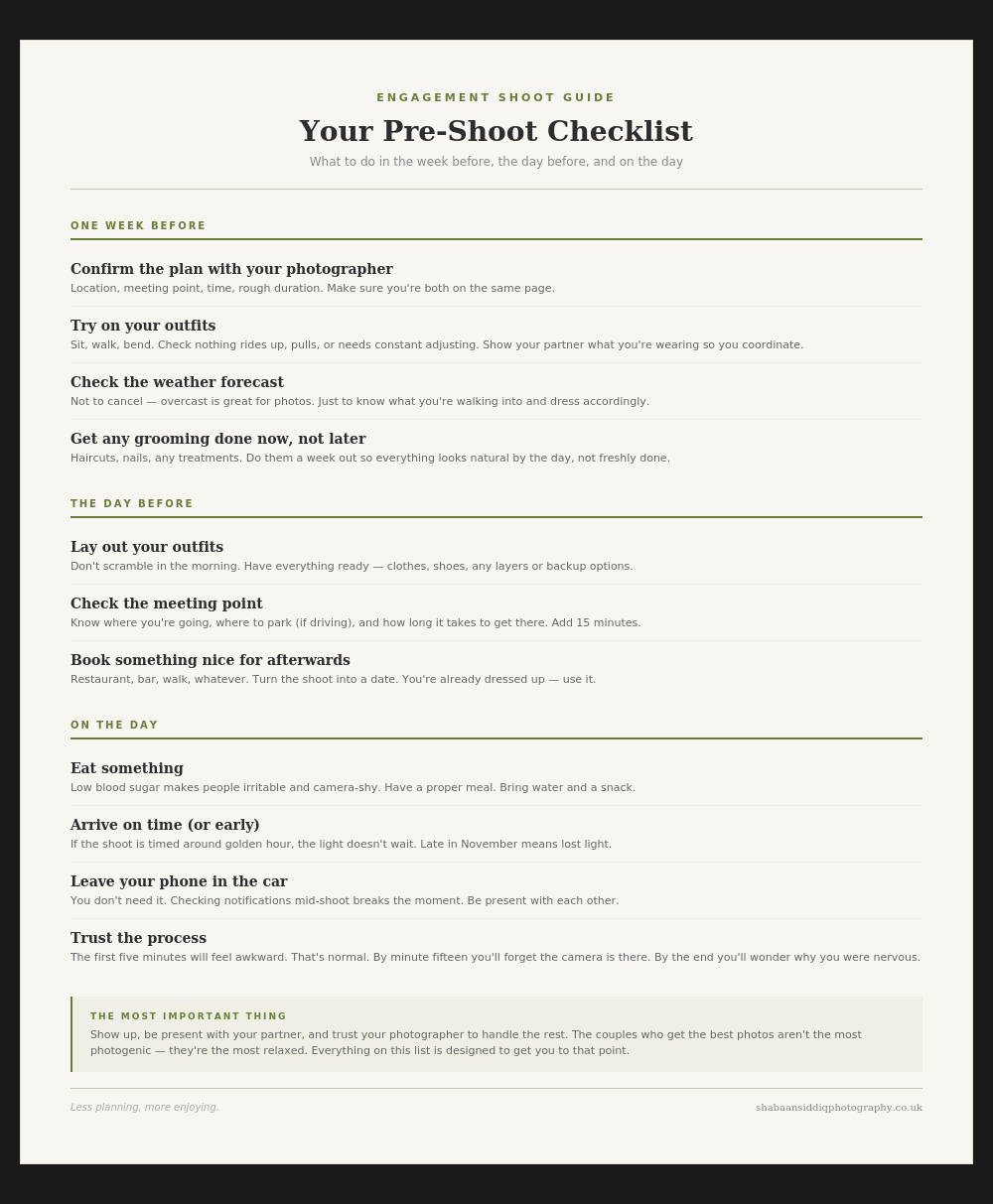
Before the shoot, have a conversation with your photographer about where you’re going, what you’re wearing, and roughly what to expect. A good photographer will give you guidance on all of this without you needing to ask. If yours doesn’t, ask or find a new one. The more aligned you are on the plan, the smoother the day runs.
Try On Your Outfits in Advance
Do this in advanced and not the morning of which can cause a panic-fuelled wardrobe explosion. A few days before is good. Just check how they feel, if they're tight, walk around for a few minutes. If something feels off at home, it’ll feel worse when there’s a camera involved.
Coordinate with Your Partner
Show each other what you’re planning to wear. Not for approval but just to make sure you’re in the same tonal family. Two people who independently pick their outfits without comparing often end up in clashing colour worlds. A quick “I’m wearing this, what are you thinking?” solves it. You can judge each other too but just make sure no arguments happen.
Don’t Change Anything Drastic
Don’t get a dramatically different haircut the day before. Don’t try a new fake tan for the first time. Don’t experiment with makeup you’ve never worn. Use what you know works and what makes you feel like yourself. The photos should look like you on a really good day, not like someone you’ve never met.
Eat and Drink Something
Seriously. Low blood sugar makes people irritable and camera-shy. Have a proper meal before the shoot. Bring water. If the session is late afternoon, a snack in the car beforehand goes a long way. You’d be surprised how many couples arrive on an empty stomach because they were too nervous to eat.
Plan Something Nice Afterwards
Book a restaurant, head to a bar, go for a walk somewhere you love. The shoot itself is about 60 to 90 minutes. Making an evening of it turns the whole thing into a date rather than an appointment. You’re already dressed up and in a good mood use that energy than just going home and flopping onto the sofa to binge Netflix.
What Happens on the Day
You arrive. You meet your photographer. You make small talk for a couple of minutes while everyone settles in. Then you start walking and being prompted; not posed but prompted.
The first five minutes feel awkward. This is universal. Every couple, without exception, feels slightly ridiculous being photographed in a public space. Your photographer knows this and shoots through it without making a big deal of it. The warm-up shots rarely make the final gallery as they’re there to get you moving and comfortable. Trust me, it's routine to us, foreign to you.
After about ten to fifteen minutes, something shifts. You stop noticing the camera. You’re responding to gentle prompts from your photographer, it's more “walk towards me,” “whisper something funny,” “just look at each other for a second”. It starts to feel natural. This is where the real photos happen.
Your photographer will move you between a few different spots within the location. It's wherever the light is best, wherever there’s visual interest. Some gently directed portraits happen here and there like hold him like x, hold them like y, hold her like z. They take about 30 seconds each and don’t feel forced because by this point you’ve relaxed into it. In between the directed moments, the photographer is capturing candid reactions! From the laughing, the eye contact, the small interactions that happen naturally.
The whole session runs about 60 to 90 minutes. It usually feels shorter than that. By the end, most couples say some version of “that was actually fun” and mean it.
Your photographer then goes home and edits the images and delivers a gallery! Typically within a couple of weeks.
Things That Don’t Matter as Much as You Think
The Exact Location
As long as there’s decent light and some visual variety, the specific location matters far less than you think. Your photographer turns ordinary settings into good photos every day. The location is the backdrop. You’re the subject.
Posing
You don’t need to practise poses. You don’t need to study Pinterest for “couple pose ideas.” Your photographer will guide you. The best engagement shoot photos aren’t posed at all, they’re prompted. “Tell each other what you love about them” produces a better photo than “stand like this and look at the camera.”
The Weather
Overcast is great for photos. Light rain can be beautiful if you lean into it. Wind makes flowy clothes look dramatic. The only genuinely difficult weather is heavy downpour, and most photographers will reschedule if that happens. Don’t cancel because it’s “not sunny enough.” Some of the best couples shoots happen on grey days.
Being ‘Photogenic’
There is no such thing as being photogenic or not. There’s being comfortable in front of a camera or not. That’s what the engagement shoot helps with and it’s what your photographer’s prompts are designed to create. You don’t need to be a model. You need to show up and trust the process.
Things That Actually Make a Difference
Being On Time
If your shoot is timed around golden hour, the light doesn’t wait. Running 30 minutes late in the summer might not matter. Running 30 minutes late in November means you’ve lost the best light entirely. Arrive on time or a few minutes early can change your shooting perspective. Your photographer should arrive a few minutes early too to set up too and get a layout for the location.
Being Present with Each Other
The couples who get the best photos are the ones who focus on each other, not the camera. Look at your partner, not the lens (unless your photographer specifically asks). The connection between you is what makes the photos work. The technical stuff is your photographer’s job.
Trusting Your Photographer
If they ask you to do something that feels odd, go with it. “Whisper something in their ear” feels silly but produces genuine reactions. “Walk towards me without looking at the camera” feels weird but creates natural movement. The prompts are designed to look good on camera even when they feel strange in the moment. Trust it.
Ready to Book?
If you’ve got a shoot coming up, hopefully this has made the planning feel simpler. If you’re looking for a photographer for your engagement session or couples shoot, I’d love to hear from you.
Here's what else you should read!
Still deciding whether an engagement shoot is worth it? Our honest guide covers when it's worth it, when it isn't, and what actually happens on the day. Read Here